
15+
Years Optical Precision R&D
164+
Supported Real-time Languages
< 50g
Ultra-Lightweight Ergonomics
99.4%
OCR & Object AI Accuracy
Flagship Smart Assistive Eyewear Product Series
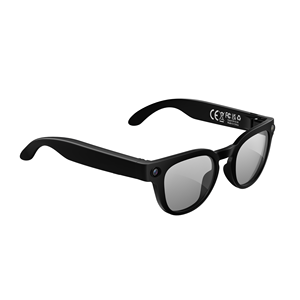
Designed for B2B distributors, healthcare procurement, and brand partners. Engineered with high-frame-rate cameras, bone-conduction/open-ear directional audio, offline AI processing, and prescription-ready lens frames.

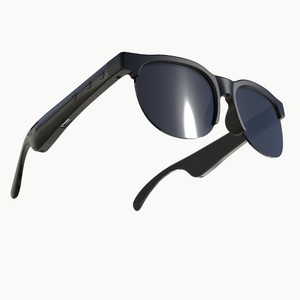
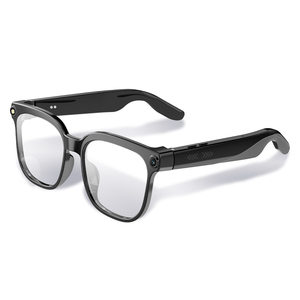
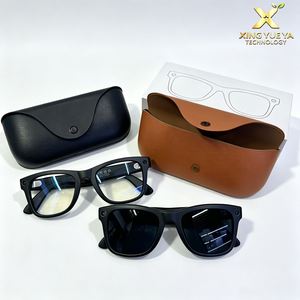
The Technological Paradigm Shift in Visual Assistive Eyewear
An in-depth analysis of the shift from passive optical magnifiers to edge-AI computer vision wearables, detailing manufacturing standards, hardware convergence, and global procurement dynamics.
1. Evolution of Assistive Eyewear: From Lenses to Neural Processing
Historically, the visual assistive market relied predominantly on handheld optical magnifiers, desktop closed-circuit television (CCTV) systems, and high-diopter static lenses. While effective for localized reading, these solutions lacked mobility, spatial awareness, and real-time contextual adaptation.
The contemporary landscape is defined by the integration of ultra-compact CMOS image sensors, low-power edge Neural Processing Units (NPUs), and real-time Text-to-Speech (TTS) natural language synthesis. Modern smart spectacles capture high-definition environment frames, process visual tokens locally via optimized Large Vision Models (LVMs), and convert visual data into immediate acoustic feedback for visually impaired and low-vision users.
2. Architectural Breakdown: Core Hardware Stack
Building high-yield, medical-grade assistive eyewear requires seamless mechanical and electro-optical synchronization within a total weight envelope under 50 grams. Key engineering layers include:
- Optoelectronic Capture: 8MP to 4K ultra-wide lens modules featuring dynamic range compensation (HDR) to ensure OCR usability across erratic lighting conditions.
- Acoustic Spatial Integration: Dual directional open-ear audio drivers that beam sound directly into the ear canal via acoustic phase cancellation, preserving the user’s environmental hearing.
- Thermodynamic Dissipation: High-k thermal conductivity graphite sheets integrated within lightweight TR90 or titanium temple arms to prevent thermal build-up during continuous AI inference.
Information Gain Insight: The competitive barrier in AI assistive eyewear has shifted from raw sensor megapixels to latency reduction and NPU power optimization. Sub-second scene narration without cloud dependency is now the benchmark for high-value government and institutional procurement tenders.
Comparative Matrix: Assistive Technology Generations
| Specification / Capability | Legacy Optical Aids | 1st Gen Bluetooth Smart Frames | Next-Gen Edge-AI Assistive Spectacles |
|---|---|---|---|
| Primary Functionality | Static visual magnification | Audio playback & basic telephony | Real-time scene analysis, OCR, Object recognition |
| Environmental Perception | None (Manual positioning) | None | Head-height obstacle detection & spatial mapping |
| Offline AI Processing | N/A | N/A | On-board ultra-low latency inference engine |
| Translation & Language Support | None | App-dependent tethering | 164+ Languages on-chip / real-time voice response |
| Prescription & Lens Compatibility | Fixed optical prescription | Basic standard lenses | Universal clip-on & customizable optic chassis |
Future B2B Procurement Trends (2025–2030)
Strategic purchasing guidelines for healthcare agencies, accessibility distributors, and electronics brands sourcing from China's manufacturing ecosystems.
1. Edge-Native Multimodal AI Integration
Future tenders heavily mandate hybrid processing: running local computer vision for safety-critical obstacle detection and instantly leveraging secure cloud models for rich conversational descriptions when connected to Wi-Fi/5G.
2. Modular Electro-Optical Prescription Frames
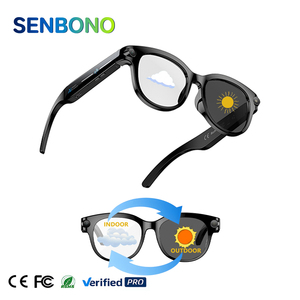
Procurement channels are moving away from sealed non-prescription models. High-volume buyers demand modular chassis that accept standard prescription optical lenses, blue-light filtering, and photochromic (chromatic transition) lenses seamlessly.
3. Stringent Privacy & Local Data Compliance
With strict regulatory standards like GDPR, HIPAA, and CCPA, global healthcare institutions require manufacturers to implement end-to-end device encryption, local temporary storage clearing, and non-persistent video frame processing.
Why Source Assistive Eyewear From Our China Production Hub
Combining decades of precision optical molding with cutting-edge AI consumer electronics assembly lines in Shenzhen and Dongguan.
Vertical Integration & Supply Chain Control
From frame injection molding using lightweight Swiss Grilamid TR90 memory material to surface-mount SMT placement for micro-circuitry, our integrated facilities reduce production cycle times by up to 35% compared to fragmented suppliers.
- Automated optical calibration chambers for 8MP/4K wide-angle lenses
- Anechoic testing chambers for precise directional speaker tuning
- In-house IPX5 and IPX7 dust/waterproof sealing verification
Turnkey OEM/ODM Firmware & Application Tailoring
We do not just supply hardware; we provide complete White-Label solutions. Our dedicated software R&D team supports firmware customization, multi-language speech engine integration, custom Bluetooth pairing protocols, and branded mobile SDKs.
- Custom wake-word and voice gesture integration
- Over-The-Air (OTA) firmware update architecture
- Compliance-ready documentation for regional FDA & CE filings
Accelerate Your Smart Eyewear Sourcing Today
Leverage our engineering team for private-label branding, customized NPU firmware optimization, or competitive wholesale factory pricing.
Get a QuoteFrequently Asked Procurement Questions (FAQ)
Essential guidance for global buyers, institutional suppliers, and brand managers evaluating Chinese manufacturing partners for assistive smart spectacles.
What is the typical Minimum Order Quantity (MOQ) for OEM/ODM smart glasses?
For standard wholesale catalog orders with stock firmware, MOQ starts as low as 50 to 100 units. For complete OEM customization (custom frame tooling, customized logo printing, bespoke packaging, and custom voice prompt flashing), our baseline MOQ is typically 500 to 1,000 units per batch depending on specifications.
How do you ensure quality control (QC) across high-tech electro-optical production?
We operate under strict ISO9001 and ISO13485 quality management systems. Every manufactured unit undergoes a rigorous 5-stage inspection process: 100% incoming material inspection (IQC), automated optical inspection (AOI) during SMT assembly, functional audio/camera testing, 24-hour thermal aging burn-in tests, and final sampling inspection (AQL 0.65/1.0) prior to export packaging.
Can these assistive glasses be equipped with custom prescription lenses?
Yes. Our frames are designed with standardized optical grooves and flexible bridge structures. We can supply non-prescription demonstration lenses, blue-blocker lenses, or pre-fitted polarized sun lenses. Furthermore, we provide local optical distributors with frame CAD dimensions so they can cut and glaze custom prescription lenses for end-users easily.
How are offline translation and object recognition functions maintained?
Core safety and communication models (such as offline OCR text reading, immediate hazard alerts, and multi-language basic translation) are embedded directly within the frame's flash memory. Richer, generative scene descriptions utilize connected smartphone processing or secure cloud APIs when internet connectivity is active.
What certifications do your assistive eyewear products carry for international export?
Our standard smart glasses series carry full CE-RED, FCC ID, RoHS, REACH, and UN38.3 (battery transport safety) certifications. For specialized medical visual aids, we assist our brand partners in obtaining FDA Class I/II registrations and EU MDR compliance documentation.
What is the typical lead time from contract signing to shipment delivery?
Standard catalog wholesale orders ship within 3 to 7 business days. Custom OEM orders requiring laser engraving and custom software flashing generally require 15 to 20 business days. Full ODM projects involving custom plastic injection tooling typically take 45 to 60 days from initial industrial design (ID) freeze to pilot sample run.