
newspaper Insights & Updates
Blog & Vision Tech News
Explore articles, research updates, and stories on AI-powered vision technology for low-vision and blind users.
Blog
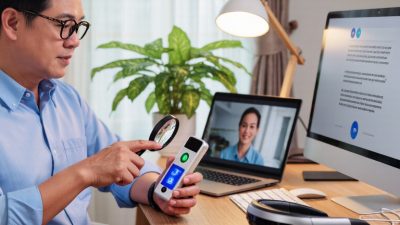
How to Choose Visual Assistive Technology Devices in 2026
Choosing visual assistive technology devices in 2026 requires more than comparing prices or magnification levels. The right device should fit a person’s daily routines, visual needs, environment, and confidence with technology. A pocket magnifier may help in a supermarket, while OCR glasses could read a medicine label aloud. A desktop video magnifier may work better for extended reading. Small details matter.
Sir Tim Berners-Lee, a leading accessibility authority, said, “The power of the Web is in its universality. Access by everyone regardless of disability is an essential aspect.” His principle applies directly to visual assistive technology devices. Accessibility should feel practical, reliable, and respectful. This guide will examine screen magnification, text-to-speech, OCR accuracy, contrast controls, battery life, portability, comfort, and customer support. It will also consider compatibility with phones, computers, and existing low-vision tools.
Real use reveals more than product brochures. A device that performs well in a quiet office may struggle in a crowded train station. Bright sunlight can weaken screen visibility. Small buttons can frustrate users with limited dexterity. Training may be necessary.
No choice is perfect.
Some recommendations may depend on personal preference, budget, or changing eyesight. That uncertainty deserves honest attention. Readers should test devices whenever possible, consult qualified vision professionals, and review return policies before purchasing. The most suitable option is not always the newest model. It is the device that supports safer, more independent tasks with the least daily friction.
Read more »
 By:Ethan
- September 17, 2026
By:Ethan
- September 17, 2026

2026 Best AI Smart Glasses for Visually Impaired Buyers?
Choosing AI smart glasses for visually impaired users in 2026 requires more than comparing cameras, prices, and impressive demonstrations. The best device should support real routines, such as identifying a bus number, reading a medicine label, or locating a familiar doorway. It should also provide clear audio without overwhelming the wearer in a busy street. Comfort matters after ten minutes, but it matters even more after six hours. Battery life, prescription compatibility, phone requirements, connectivity, and repair support deserve equal attention.
This guide examines AI smart glasses for visually impaired buyers through practical and professional criteria. It considers hands-on usability, accessibility features, voice interaction, recognition accuracy, privacy controls, and product reliability. Feedback from blind and low-vision users can reveal problems that polished advertisements miss. Orientation and mobility specialists, occupational therapists, and accessibility reviewers may also offer valuable perspectives. Still, no glasses can replace a cane, guide dog, training, or personal judgment in every situation. That limitation should remain visible.
Some claims are difficult to verify.
Manufacturers may describe fast recognition, yet performance can change with glare, rain, accents, crowded rooms, or weak internet connections. A device may read a sign correctly but misunderstand a street crossing. That difference matters. Buyers should test products with familiar tasks and realistic environments whenever possible. They should also check whether data is processed locally or uploaded to a cloud service. The strongest choice may not be the newest model. It may be the one that feels dependable, comfortable, understandable, and useful during an ordinary day.
Read more »
By:Ethan
- September 17, 2026

Why Choose AI Powered Smart Glasses for the Blind?
For millions of people with vision loss, ordinary tasks can become uncertain. A medicine label, bus number, or uneven curb may require assistance. The World Health Organization’s World Report on Vision estimates that at least 2.2 billion people have near or distance vision impairment worldwide. Its findings show a substantial need for accessible, practical technologies.
AI-powered spectacles for blind users aim to convert visual information into speech or tactile feedback. Cameras may identify text, faces, colors, products, and nearby obstacles. Research and Markets has identified assistive technology as a growing segment within the broader smart-glasses industry. However, market growth does not prove real-world safety. A device must perform in dim rooms, crowded streets, and unfamiliar buildings.
Chieko Asakawa, an IBM Fellow and accessibility researcher, has said, “Accessibility is essential for innovation.” Her perspective remains highly relevant to wearable AI design. Good glasses should support independence without pretending to replace human judgment. They should also protect private conversations and personal images.
The technology is not magic.
Recognition errors still happen. A system may confuse a bicycle with a parked object, or misread a prescription label. Users need clear confidence signals, adjustable speech speed, offline functions, and dependable customer support. The following discussion examines why these devices matter, where they perform well, and what limitations buyers should consider. Evidence matters more than impressive demonstrations. So does honest testing in daily environments.
Read more »
 By:Evelyn
- September 17, 2026
By:Evelyn
- September 17, 2026