
Flagship Visual Assistive & AI Smart Eyewear Range
Explore China's top-tier export configurations featuring integrated neural processing, high-definition micro-cameras, edge multi-lingual translation, and open-ear acoustic architectures.
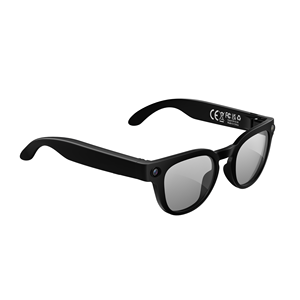
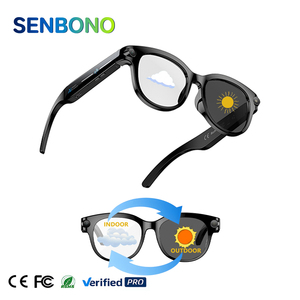

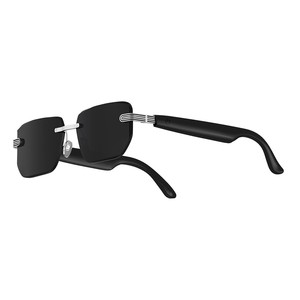
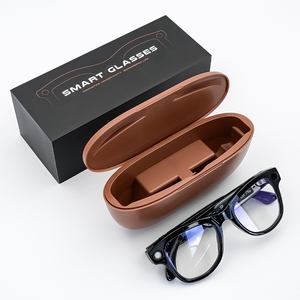
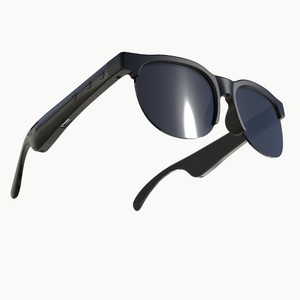
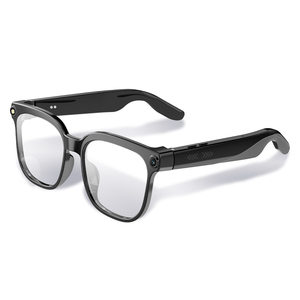
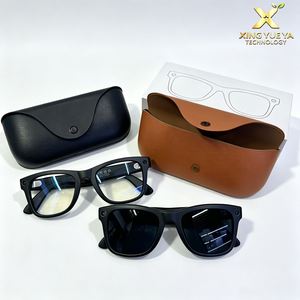
The Evolution of Visual Assistive Technology: China's Manufacturing Dominance
The global visual aid sector is undergoing an unprecedented paradigm shift. Traditional handheld magnifiers, desktop closed-circuit televisions (CCTV), and passive optical lenses are rapidly giving way to multimodal AI-driven wearable devices. According to global healthcare market metrics, the market for low vision assistive technology is projected to cross $4.8 Billion by 2030, accelerated by an aging global demographic, higher prevalence of age-related macular degeneration (AMD), diabetic retinopathy, glaucoma, and retinitis pigmentosa.
As the world's premier electronic manufacturing ecosystem, China has transitioned from high-volume assembly to leading foundational innovation in sensor miniaturization, edge computing chips, open-ear acoustics, and optical engineering. Modern Chinese vision aid manufacturing combines high-throughput precision optics with advanced artificial intelligence, giving birth to lightweight (<49 grams) wearable visual assistive spectacles capable of transforming raw visual data into immediate, natural-sounding audio descriptions.
Computer Vision at the Edge
On-device neural network processing guarantees that text recognition (OCR), currency detection, face recognition, and immediate head-height hazard alerts execute locally without requiring stable cellular internet connections, protecting user privacy and ensuring low-latency safety.
Open-Ear Directional Acoustics
Low-vision and blind users rely heavily on contextual spatial hearing. Modern Chinese OEMs utilize micro-directional acoustic drivers located near the temples that project audio straight into the ear canal without plugging it, leaving natural ambient traffic sounds fully audible.
Ergonomic & Modular Chassis
Using aircraft-grade titanium alloys and ultra-lightweight TR90 polymers, frame engineering ensures all-day comfort. Clip-on prescription adapters and custom filter lenses allow seamless alignment with individual optical profiles.
Why Partner with Our Manufacturing Facility in China?
From custom SMT PCB layouts and custom optical tuning to localized firmware flashing and clinical verification, our turnkey OEM/ODM infrastructure scales your accessibility business seamlessly.
Turnkey OEM/ODM Engineering
We provide comprehensive end-to-end original equipment manufacturing services. Whether you require custom frame colors, branded firmware boot screens, white-label packaging, or custom iOS/Android companion applications, our in-house industrial designers and hardware engineers execute your specifications within 4 to 6 weeks.
- Custom frame molds (TR90, Acetate, Titanium)
- Dedicated SDK and API integration for software developers
- White-label packaging & clinical marketing kits
Rigorous Quality Assurance & International Certifications
Operating out of Class 100,000 cleanrooms, our assembly lines adhere strictly to medical-grade quality standards. Every manufactured pair of AI vision aid smart spectacles undergoes rigorous testing protocol prior to shipment.
- ISO 13485 (Medical Devices) & ISO 9001 certified facilities
- Full compliance with CE-MDR, FCC, RoHS, and UN38.3 battery standards
- 100% optical alignment, drop-test, and thermal chamber inspection
Future Development & Sourcing Trends in Vision Aids (2026-2030)
1. Transition from Standalone Hardware to Generative AI Multimodal Copilots
Historical vision aids focused solely on simple magnification or isolated Optical Character Recognition (OCR). The next generation of devices, showcased in our current export series, incorporates Generative Multimodal LLMs. Sourcing managers must prepare for hardware that doesn't just read text, but answers complex contextual questions: "Where is the nearest door in this room?", "Is this medicine bottle past its expiration date?", or "Summarize the visual layout of this train station platform."
2. Miniaturization and All-Day Dual-Battery Power Architecture
A major friction point for visually impaired end-users has been battery bulk and weight. Future procurement criteria strictly prioritize devices weighing under 50 grams with dual-battery temple distribution. USB-C fast-charging cases that offer up to 24 hours of extended runtime are now mandatory baseline features for government accessibility grants and clinical distribution tenders.
3. Localization & Cross-Border Offline Multi-Language Models
Global distributors are increasingly demanding multi-lingual capability out of the box. Modern devices feature onboard multi-dialect text-to-speech engines capable of switching seamlessly between English, Spanish, French, German, Arabic, Japanese, and over 160 other languages. Offline capabilities ensure compliance with strict regional data privacy regulations (such as GDPR and HIPAA) by eliminating mandatory cloud transmission of personal visual recordings.
Vision Aid Technology Comparison Matrix
A comprehensive technical evaluation comparing traditional visual assistive devices against modern Chinese Edge-AI Smart Spectacles.
| Evaluation Feature | Traditional Magnifiers & CCTV | Basic Smart Audio Glasses | Next-Gen Edge-AI Smart Glasses (Sprhava OEM) |
|---|---|---|---|
| Primary Function | Optical enlargement of text | Bluetooth audio calls & music | Real-time scene narration, OCR, object & hazard detection |
| Hands-Free Usability | No (Requires hand holding) | Yes (Audio only) | 100% Fully Hands-Free (Voice command & single tactile key) |
| Processing Latency | Instant (Analog optical) | N/A | Sub-second (<80ms Edge AI inference) |
| Obstacle Alerting | None | None | Head-height hazard detection, kerb & step warnings |
| Offline Capability | 100% Offline | N/A | Core OCR & obstacle models run 100% offline on-device |
| Prescription Lenses | Not applicable | Limited frame options | Fully compatible with custom prescription and filter clips |
| B2B White-Labeling | Low customization potential | Consumer packaging only | Full OEM/ODM software, SDK, casing & firmware customization |
Frequently Asked Questions for B2B Procurement
Key operational and technical queries answered for importers, rehabilitation organizations, low-vision clinics, and government buyers.
Accelerate Your Accessibility & Vision Aid Offerings
Request detailed B2B wholesale pricing, clinical trial whitepapers, OEM/ODM specification kits, or factory audit reports directly from our engineering team.