
Next-Gen Wearable Smart Eyewear Showcase
Explore our engineering breakthroughs in real-time language translation, high-definition visual capture, open-ear directional audio, and AI-assisted vision hardware.
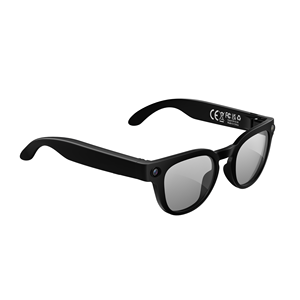
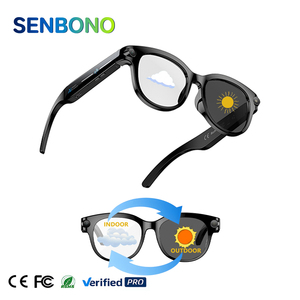

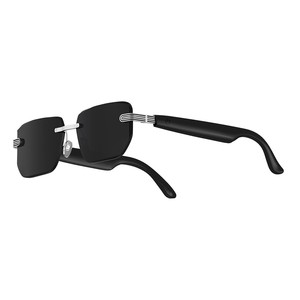
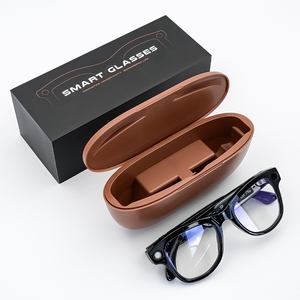
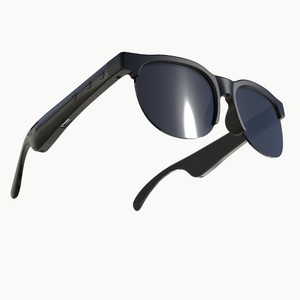
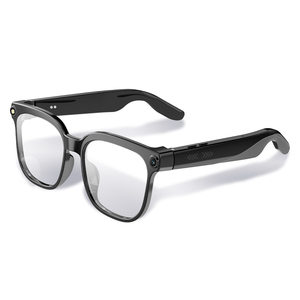
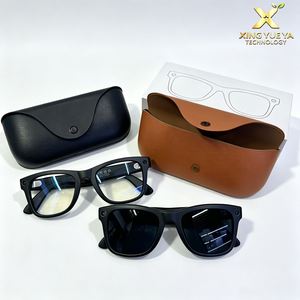
State-of-the-Art Smart Eyewear Manufacturing Infrastructure
An in-depth evaluation of China's advanced optical electronics production pipelines, automated SMT cleanrooms, and turnkey ODM capabilities for international tech brands.
Vertical Integration: From Silicon Design to Optical Calibration
As a leading Chinese wearable technology factory and premier global exporter, our infrastructure combines high-density surface-mount technology (SMT) with ultra-precise optical alignment processes. Unlike traditional assembly facilities, consumer and enterprise AI smart glasses require sub-millimeter tolerances to house multi-element optical lenses, high-resolution visual sensors (up to 8MP 4K recording capabilities), dual directional open-ear micro-speakers, and dense Li-Po battery modules within ultra-lightweight frames weighing under 50 grams.
Our ISO 9001:2015 and ISO 14001:2015 certified manufacturing base operates Class 10,000 dust-free cleanrooms equipped with automated optical inspection (AOI) systems, six-axis robotics for micro-dispensing, and proprietary acoustic test chambers. This holistic integration ensures that every pair of AI translation glasses, photochromic smart sunglasses, or visual assistive eyewear leaving our floor adheres to rigorous global compliance standards, including CE, FCC, RoHS, REACH, and FDA Class I/II regulatory frameworks.
High-Density SMT & Flexible PCB Assembly
Our surface-mount lines utilize 0201 component placement precision, accommodating multi-layer rigid-flex printed circuit boards (FPCBs) engineered specifically for the tight contours of eyewear temples and nose bridges.
Optical Engineering & Lens Customization
In-house optical lab specialized in photochromic (light-adaptive) lenses, anti-blue light coatings, polarized sunglass filters, and prescription (Rx) frame compatibility designed for specialized visual assistance applications.
Acoustic Tuning & Beamforming Mics
Incorporating dual and quad-microphone arrays coupled with AI noise suppression algorithms (ENC) to achieve crystal-clear voice pickup and speech recognition in noisy ambient environments up to 85dB.
Key Technological & Architecture Development Trends
Understanding the hardware, software, and multimodal AI shifts defining the next era of wearable smart spectacles.
1. Transition from Cloud-Dependent Voice to On-Device Multimodal VLMs
The primary evolution in AI-powered smart eyewear lies in moving inference processing from remote cloud servers down to Edge AI Neural Processing Units (NPUs) embedded directly within the eyewear chassis. Early generations relied heavily on high-latency Bluetooth tethering to mobile devices, which introduced substantial delays during real-time multi-language translation and object recognition tasks.
Modern architectural roadmaps prioritize small-footprint Vision-Language Models (VLMs) running locally. This enables instant context evaluation (under 200ms latency) for instant OCR text-to-speech reading, local obstacle identification, and gesture control without requiring active cellular network connectivity—a game-changer for accessibility devices, overseas travelers, and industrial field technicians.
2. Micro-OLED, Waveguide Optics & Ergonomic Weight Distribution
While early video glasses suffered from bulky, top-heavy frames, manufacturing advancements in optical waveguides (diffractive and reflective) combined with Micro-OLED displays allow light engines smaller than 0.5cc. By decoupling power storage into twin micro-batteries positioned symmetrically in the left and right temple arms, engineers achieve an optimal 50:50 center-of-gravity balance across the user's ears and nose bridge, permitting comfortable all-day continuous wear.
3. Open-Ear Directional Spatial Audio Architecture
Consumer feedback consistently favors open-ear directional audio over bone-conduction or in-ear drivers. By utilizing micro-acoustic cavities that project phase-canceled soundwaves directly toward the ear canal, privacy is preserved while preventing audio leakage to nearby individuals. Crucially for visually impaired users, open-ear design leaves the ear canal completely unobstructed, preserving vital environmental ambient awareness required for safe navigation.
Future Procurement Trends for International Importers & Brands
A tactical guide for sourcing directors, brand owners, and assistive technology distributors negotiating OEM/ODM contracts with Chinese manufacturers.
Shift Toward Turnkey SDK & API Firmware Customization
Global buyers no longer look solely for hardware assembly; they demand complete software development kits (SDKs) for iOS/Android integration. Custom enterprise firmware options allow white-label brand owners to seamlessly connect smart glasses to proprietary LLM backends, cloud translation servers, or enterprise workflow management engines.
Modular Battery & Charging Ecosystem Solutions
Sourcing strategies are prioritizing modular power delivery. Smart glasses bundled with high-capacity magnetic charging cases (providing 4x–6x full top-ups on the go) significantly outpace standalone models in consumer conversion rates, mitigating the physical constraint of small onboard Li-Po cells.
Universal Prescription & Modular Frame Toolings
To reduce inventory stock-keeping unit (SKU) complexity, importers are adopting modular front-frame designs. A single electronic temple core can snap onto various optical frames (business half-rim, athletic wrap-around sunglasses, anti-blue light computer glasses, or clip-on prescription vision modules).
Technical Benchmark: Smart Eyewear Categories
Direct comparison of core parameters across key product segments manufactured within our facilities.
| Product Class | Primary Application | Camera Resolution | Audio System | Battery / Case Life | Target Target Weight |
|---|---|---|---|---|---|
| AI Audio & Translation Glasses | 164+ Language Translation, Business Meetings | N/A (Audio Focus) | Dual Open-Ear Directional | 5-7 Hrs (Up to 30 Hrs with Case) | 38g - 44g |
| 4K HD Video Smart Sunglasses | Outdoor Sports, Content Creation, Vlogging | 8MP / 4K @ 30fps | Stereo Bluetooth 5.3 | 1.5 Hrs Video / 290mAh Cell | 48g - 55g |
| Visual Assistive AI Spectacles | Low Vision Aid, OCR Reading, Scene Narration | 8MP Wide-Angle Low-Light | Directional Spatial Speech | Full Day Duty Cycle (Offline NPU) | 45g - 49g |
| Photochromic Sport Smart Glasses | Cycling, Outdoor Calling, Hands-Free Voice | Optional 2MP Recording | Noise-Canceling Dual Mic | 8+ Hours Continuous Playback | 40g - 46g |
Frequently Asked Procurement Questions
Critical answers regarding minimum order quantities, customization options, quality control protocols, and global export compliance.
For ready-to-ship neutral stock models, MOQs start as low as 50 units. For custom silkscreen logo placement and branded packaging, MOQ is typically 500 units. Full ODM developments involving custom frame mold tooling, specialized optical lenses, or deep firmware modifications require an MOQ of 1,000 to 3,000 units depending on technical complexity.
We execute strict, legally binding Non-Disclosure Agreements (NDAs) prior to receiving any proprietary client assets. Custom firmware, localized AI translation models, and client-side application API keys are handled within secure, segregated software build environments with restricted access protocols.
All export models meet comprehensive international safety regulations: CE-RED, FCC ID, RoHS, REACH, UN38.3 (for lithium battery transport security), MSDS, and IEC 62471 eye safety standards. Medical visual assistance models can also be configured to meet FDA Class I or Class II registration requirements upon request.
Yes. Core operational features such as offline optical character recognition (OCR), basic translation dictionaries for major global languages (English, Chinese, Spanish, Japanese, French, German), and local voice control commands can run directly on the built-in NPU engine without an active internet or cellular connection.
Neutral stock orders are dispatched within 3 to 5 business days. Customized OEM packaging orders require 15 to 20 days. Full-scale mass production for brand-new ODM products (including optical mold fabrication, tooling validation, and pilot production runs) typically spans 45 to 60 days.
Every frame undergoes rigorous automated testing before factory exit, including IPX5/IPX7 water spray tests, 1.2-meter drop simulations, temple arm flex-cycle fatigue tests (10,000+ bends), and high-temperature/high-humidity thermal chamber aging to ensure maximum field reliability across global climates.
Partner with China's Premier Wearable Tech Manufacturer
Contact our engineering and enterprise sales teams today to request product samples, receive custom OEM/ODM price quotes, or schedule a virtual factory inspection tour.
Get a Quote