
Top-Ranked Wholesale Smart AI & AR Eyewear Devices
Direct export configurations featuring edge real-time translation, dual-camera spatial capture, photochromic optics, and open-ear directional audio arrays.
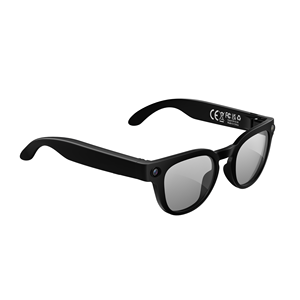
New Vision MT3 Smart AI Glasses With 8MP Camera HD Touch Button AI Translation Voice Assistant Fast Charging Sport BT Sunglasses
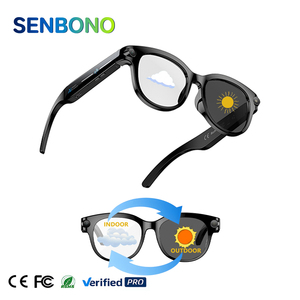
SENBONO M89 Smart Polarized Glasses Dual Camera 2MP IPX5 Waterproof Photochromic Lenses HD Video Recording 290mAh Battery AI

Professional AI Smart Translation Glasses 164+ Languages Real-Time Open-Ear Audio Anti-Blue Light Half-Rim Business Glasses
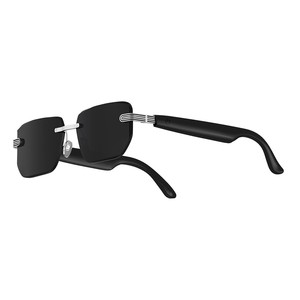
AI Smart Glasses Real-time Translation 145 Languages Photochromic Lenses Audio Video Calls Meeting Recording Voice Assistant
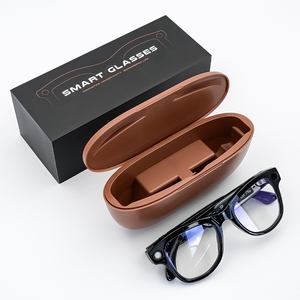
Newest SANVNET GS5 MAX 2026 AI Smart Glasses with Charging Case 8MP 4K Camera WIFI Smart Video Sunglasses Glasses Translation
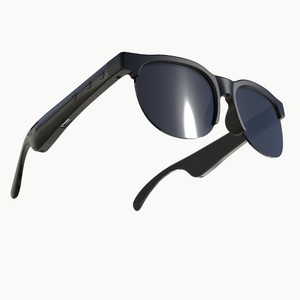
New Smart Glasses: Bluetooth Glasses with Open-Ear Bluetooth Calling for Outdoor Sports Cross-Border New Arrival
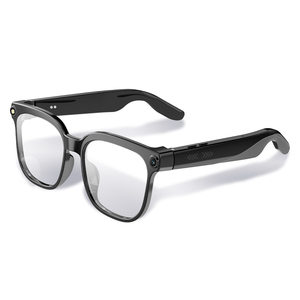
AI Smart Glasses with HD Camera Real-Time Translation Touch Operation Intelligent Recognition 16MB Camera Video Recording
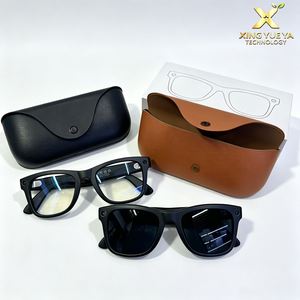
MT5-Ultra AI Smart Glasses Real-Time Trans 8MP Camera 1080P AI Translation Music Wi-Fi transmission with Charging case
The Landscape of China's Wholesale Augmented Reality & AI Eyewear Manufacturing Hubs
China has solidified its position as the undisputed epicenter for global Augmented Reality (AR) spectacles, Smart Audio Eyewear, and AI Vision Assistive Hardware production. Concentrated within the Greater Bay Area (Shenzhen, Dongguan, Huizhou) and the optical component clusters of Danyang (Jiangsu) and Wenzhou (Zhejiang), Chinese original equipment manufacturers (OEMs) and original design manufacturers (ODMs) control over 85% of the worldwide supply chain for smart frames.
For international enterprise buyers, brand owners, cross-border e-commerce distributors, and low-vision medical device suppliers, procuring directly from Chinese AR factories presents unparalleled economies of scale. However, navigating this complex tech ecosystem requires a thorough understanding of optical engine technologies, chipset architectures, micro-assembly tolerances, and firmware integration capabilities.
Optical Waveguide Assembly
Shenzhen-based optical facilities offer automated Active Alignment (AA) coupling for Surface Relief Grating (SRG) and Volumetric Holographic Grating (VHG) waveguides, achieving ultra-high optical transparency and sub-millimeter light-engine co-axial convergence.
Custom SMT & Board Flexing
Factory-floor Surface Mount Technology (SMT) lines utilize ultra-dense high-density interconnect (HDI) rigid-flex PCBs designed specifically to fit narrow 3.5mm temple arms without compromising heat dissipation or structural flex integrity.
Directional Open-Ear Acoustics
Engineered acoustic cavities utilize dual-driver reverse-phase wave cancellation to eliminate sound leakage, delivering private HD audio calls and AI voice prompts without blocking the user's ambient auditory environment.
Technical Benchmark: Waveguide Engines vs. Micro-Display Systems
When sourcing AR glasses from Chinese exporters, enterprise buyers must evaluate the optical system architecture based on target application scenarios—ranging from industrial enterprise head-up displays (HUD) to consumer video sunglasses and AI-powered assistive spectacles for the visually impaired.
| Optical Architecture | Display Engine | Luminance / Brightness | Transparency | Primary Commercial Use Cases |
|---|---|---|---|---|
| Diffractive Waveguide (SRG) | MicroLED (Monochrome/Full-Color) | 1,500 - 4,000+ nits | > 85% High Optical Clarity | Outdoor AR navigation, real-time speech translation, HUD text prompts. |
| Reflective Geometric Waveguide | MicroOLED / LCoS Engine | 800 - 1,500 nits | > 75% Visual Transparency | Enterprise remote maintenance, medical visual enhancement, hands-free logistics. |
| BirdBath Optical Engine | MicroOLED (1080p / 4K dual) | 500 - 1,200 nits | ~ 25%-30% (Dark Tinted) | Consumer spatial cinema, immersive gaming, private video consumption sunglasses. |
| Smart Audio / AI Camera (No Display) | N/A (CMOS Camera Sensor) | N/A | 100% (Standard Optical Lens) | Assistive vision reading, AI multimodal interaction, open-ear calling, sports recording. |
Recent manufacturing advances in 2025 have shifted significant factory volume toward AI-First Smart Frames. By pairing 8MP/4K ultra-low power CMOS sensors with localized edge processing AI algorithms, Chinese exporters are delivering frames under 50 grams capable of continuous scene narration, printed document text-to-speech (OCR), facial recognition, and real-time translation across 160+ languages.
Original Enterprise Advantages: Engineering Expertise & QA Standards
Leading Chinese exporters offer comprehensive turn-key manufacturing solutions tailored for brand owners seeking custom firmware, bespoke frame aesthetics, and rigorous medical/consumer electronics compliance. Based on proven factory operational frameworks, premier production lines feature:
1. Precision Optical & Acoustic Calibration
Factories operate ISO Class 1000 dust-free cleanrooms equipped with automated Modulation Transfer Function (MTF) testers, spectral luminance meters, and anechoic acoustic chambers to calibrate every microphone array and micro-speaker prior to final enclosure sealing.
2. Multimodal Firmware & Cloud SDK Customization
Exporters provide open API/SDK architecture compatible with Android/iOS, allowing enterprise clients to inject proprietary Large Language Model (LLM) endpoints, speech recognition engines, or clinical visual assistance algorithms into customized firmware packages.
3. Ergonomic Weight Distribution & Thermal Dissipation
By distributing high-capacity lithium polymer batteries evenly across both temple arms and employing aerospace-grade graphite heat spreaders, frames maintain temple contact temperatures under 38°C during prolonged camera recording or active AR rendering.
4. Environmental Reliability & Ingress Protection
Comprehensive environmental stress testing includes IPX5/IPX7 water projection testing, 1.5-meter drop testing, hinge salt-spray corrosion resistance, and UV aging verification for TR90, acetate, and titanium alloy composite frames.
Strategic Sourcing Outlook: Future Trends in AR Eyewear Sourcing (2025–2030)
As the international marketplace transitions from bulky Virtual Reality headsets toward sleek, wear-all-day spatial AI glasses, global buyers must position their procurement strategies to capture emerging technology waves:
- Transition to Multimodal Edge-AI Agents: Standalone Bluetooth calling glasses are rapidly giving way to camera-assisted AI wearables. Future OEM contracts will prioritize local neural processing units (NPU) capable of offline object detection, text recognition, and scene narration without relying on constant cloud connectivity.
- Prescription Lens Integration & Clip-On Modularity: Chinese optical manufacturers are expanding prescription-ready (Rx) frame lines featuring magnetic clip-on photochromic, anti-blue light, and polarized solar filters, enabling rapid retail customization for end consumers.
- Ultra-Low Power MicroLED Waveguides: The commercialization of full-color MicroLED micro-displays paired with high-efficiency diffraction optical waveplates will reduce power consumption by up to 60%, pushing all-day battery performance into standard-looking eyewear frames weighing under 40 grams.
- Supply Chain Compliance & Traceability: Major global importers are requiring factory audits validating ISO 9001 / ISO 13485 (Medical Quality Management), CE-RED, FCC ID, RoHS, REACH compliance, and ethical labor certifications across all assembly lines.
Frequently Asked Questions for B2B Importers & Exporters
Essential insights for enterprise sourcing teams, brand owners, and medical assistive technology distributors evaluating Chinese manufacturing suppliers.
For standard factory ready-to-ship models with custom laser-etched branding and customized packaging, MOQs generally start at 100 to 500 units. For complete ODM custom frame molds, unique optical engine integration, or customized PCB layouts, production MOQs typically range from 1,000 to 3,000 units depending on plastic injection tooling complexity.
Reputable Chinese AR exporters provide customizable SDKs supporting multi-language voice engines (e.g., Google TTS, Azure, OpenAI Whisper) covering 160+ languages and regional dialects. Software architectures allow international importers to point cloud traffic directly to their own secure regional servers, ensuring full compliance with GDPR, HIPAA, and local data protection frameworks.
Yes. Modern factory models incorporate edge-computing firmware that stores localized offline language packs, rapid OCR engines, and essential obstacle awareness vision algorithms directly on internal flash memory (16MB to 32GB depending on spec). While complex conversational LLM scene descriptions benefit from Wi-Fi/Cellular connectivity, core assistive reading and translation functions operate completely offline.
Smart audio and camera eyewear are commonly classified under HS Code 9004.90.0000 (Other Spectacles/Goggles) or 8517.62.0000 (Machines for the reception/transmission of voice/images). Exporters typically provide CE-RED (Europe), FCC ID (USA), RoHS, UN38.3 (Lithium Battery Air/Sea Safety Transport), and MSDS documentation required for seamless customs clearance.
Factories support customizable prescription lens mounting inner rings, magnetic snap-on yellow contrast filters, photochromic transitions, and wide-angle camera modules fine-tuned for macro text reading (distance 20-50cm). Clip-on modular designs are also available for users who prefer keeping their existing ophthalmic lenses while adding hands-free camera vision and open-ear acoustic assistance.
Accelerate Your Wholesale AR & AI Eyewear Procurement
Connect directly with our engineering and export team to request factory audit reports, custom ODM samples, bulk pricing sheets, and firmware integration documentation.