
Wholesale Assistive AI Vision & Smart Eyewear Portfolio
High-margin, ISO-compliant assistive technology products engineered for global medical distributors, government accessibility programs, low-vision clinics, and B2B importers.
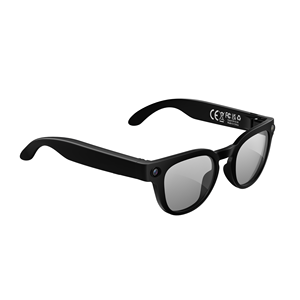
New Vision MT3 Smart AI Glasses With 8MP Camera & AI Voice Assistant
- Camera: 8MP HD Ultra-Wide Optics
- Audio: Dual Directional Open-Ear Speaker
- Features: Real-time AI Translation, BT Call
- Charging: Type-C Fast Charge Support
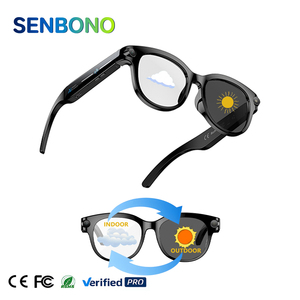
SENBONO M89 Smart Polarized Glasses Dual Camera IPX5 Waterproof
- Camera: Dual 2MP Synchronized Lens
- Protection: IPX5 Water & Dust Proof
- Lenses: Photochromic UV400 Polarized
- Battery: 290mAh Long-lasting Cell

Professional AI Smart Translation Glasses (164+ Languages Support)
- Translation: 164+ Global Languages Engine
- Design: Anti-Blue Light Half-Rim Frame
- Audio: Noise-Canceling Microphone array
- Target: Low-Vision Business & Travel
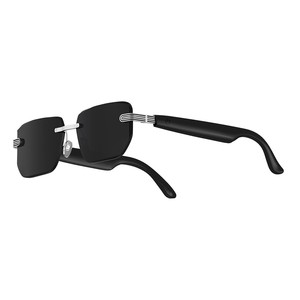
AI Vision Smart Spectacles (145 Languages & Photochromic Lenses)
- AI Chip: Real-time Visual/Audio Pipeline
- Recording: HD Video & Meeting Voice Notes
- Optics: Smart Tint Photochromic Glass
- Connectivity: Dual-band Bluetooth 5.3
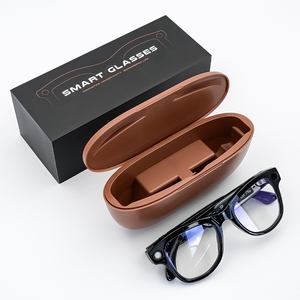
SANVNET GS5 MAX 2026 AI Smart Glasses with 4K/8MP & Charging Case
- Resolution: 4K Video Capture / 8MP Photo
- Case: Extended Power Charging Dock
- Network: Wi-Fi Direct High-Speed Transfer
- Assistant: Integrated Conversational VLM
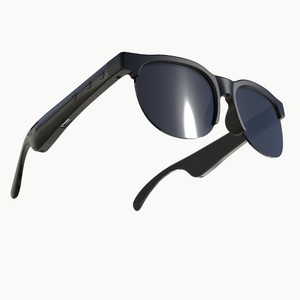
Open-Ear Audio Smart Glasses for Outdoor Orientation & Sports
- Audio: Bone Conduction / Open-Ear Acoustic
- Calling: Dual HD Mic Noise Suppression
- Weight: Ultralight Ergonomic 45g Frame
- Use Case: Daily Mobility & Outdoor Safety
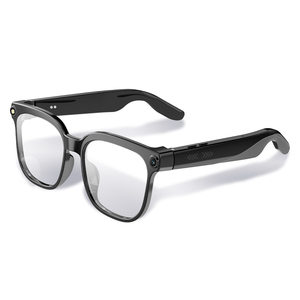
AI Assistive Smart Glasses with HD Camera & Intelligent Recognition
- Recognition: Real-time Object & OCR Engine
- Interface: Intuitive Touch Surface & Voice
- Memory: High-speed Onboard Processing
- Video: 1080P Continuous Stream Assist
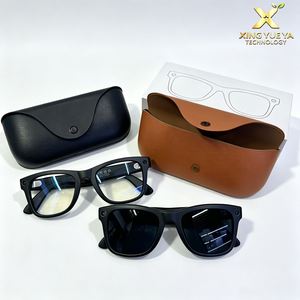
MT5-Ultra Flagship AI Smart Glasses (1080P, 8MP, Charging Case)
- Vision Engine: Sub-second Edge AI Inference
- Camera: 8MP Ultra-HD Dynamic Sensor
- Case: Fast Charging Portable Powerbank
- Sync: Ultra-fast Wi-Fi & Bluetooth 5.3
1. Strategic Overview: China's Role in Global Visual Assistive Technology Manufacturing
The global landscape for visual impairment aids and orientation mobility tech is undergoing a paradigm shift. According to data from the World Health Organization (WHO), over 285 million people worldwide live with visual impairments, including 39 million who are completely blind. Historically, procurement for this sector relied heavily on analog tactile aids (such as white canes and Braille embossers) or bulky desktop magnifiers. However, the integration of Edge AI processing, compact CMOS image sensors, and directional open-ear acoustics has unlocked a new era of wearable electronic orientation and mobility aids (EOMAs).
As China's premier wholesale blind aid manufacturer and exporter, our engineering facilities bridge the gap between cutting-edge consumer electronics supply chains and medical-grade accessibility standards. China's mature hardware ecosystem enables unprecedented economies of scale in optical assembly, low-power digital signal processor (DSP) integration, and micro-lithography lens production. For B2B importers, government procurement agencies, healthcare organizations, and accessibility distributors, partnering with a direct China manufacturer delivers significant strategic advantages: reduced bill-of-materials (BOM) costs, robust white-label/OEM capabilities, and accelerated product development cycles.
Key Market Drivers for B2B Importers & Distributors
- Demographic Realities & Aging Population: Age-related macular degeneration (AMD), diabetic retinopathy, and glaucoma cases are surging globally, creating immense demand for ergonomic, daily-wear low-vision aids.
- Legislative Mandates: Global accessibility laws—including the Americans with Disabilities Act (ADA) in the US and the European Accessibility Act (EAA)—are compelling public institutions, transit hubs, and educational systems to procure multi-sensory assistive equipment.
- Convergence of Consumer Wearables and Assistive Tech: End-users prefer discreet, fashionable smart glasses over stigmatizing traditional medical hardware. Modern AI-powered spectacles look identical to designer eyewear while delivering life-changing spatial perception.
2. Next-Gen Industry Trends: Technological Convergence in AI Smart Glasses
To capture market share in the evolving assistive device market, global procurement officers must evaluate hardware based on four key technological pillars:
Edge AI vs. Cloud Latency
Traditional vision aids rely on cloud server communication, introducing unsafe 2-to-5-second audio feedback delays. Modern OEM architectures feature localized NPU micro-chips running lightened YOLO and MobileNet vision models. On-device inference processes obstacles, curb steps, and exit signage in under 800 milliseconds, guaranteeing real-time safety even in offline environments like subways or rural zones.
Open-Ear Acoustic Directionality
Safety for blind navigators depends heavily on ambient environmental sound (traffic, footstep echo). In-ear headphones create hazardous auditory isolation. Our smart glasses utilize open-ear directional speaker modules that project clear voice narration directly toward the wearer's ear canal while keeping ambient acoustic space 100% uncovered.
Multimodal Vision-Language Models (VLMs)
The industry is transitioning from static object tagging (e.g., repeating "chair", "table") to rich conversational scene understanding. By incorporating lightweight Vision-Language Models directly onto frame firmware or companion mobile gateways, users can ask natural questions: "What is the price tag on this box?" or "Is the pedestrian light green?" The system synthesizes optical character recognition (OCR), spatial depth mapping, and context modeling into fluid, natural voice speech.
3. Procurement Trends & Sourcing Best Practices (2025–2030)
Sourcing electronic visual aids from China requires an understanding of technical compliance, clinical validation, and supply chain logistics. International procurement buyers should prioritize the following parameters when selecting an OEM exporter:
| Evaluation Parameter | Standard Consumer Eyewear | OEM Assistive AI Glasses (Our Factory Spec) | B2B Sourcing Importance |
|---|---|---|---|
| Optical Distortion | Standard spherical lenses | Wide-angle low-distortion zero-flare CMOS | Critical for accurate depth perception & OCR accuracy |
| Frame Weight | 35g – 60g | Under 50g balanced weight distribution | Prevents nasal fatigue during 8+ hour daily wear |
| Thermal Dissipation | Passive plastic housing | Magnesium-alloy thermal sinking in temples | Prevents temple overheating during continuous AI processing |
| Firmware Modularization | Fixed consumer UI | Open SDK / Custom Language Pack Firmware | Essential for regional distribution & language localization |
| Clinical Certifications | CE / FCC consumer standard | ISO13485, CE-MDR Class I Accessibility Compliance | Mandatory for government tenders & insurance reimbursement |
4. Enterprise Manufacturing Strengths & OEM/ODM Capabilities
As a leading China manufacturer specializing in assistive smart eyewear, our state-of-the-art facility in Guangdong integrates full-stack hardware engineering, optical calibration, and software customization under one roof. We empower global brand partners to quickly bring certified blind aids to market.
Full-Stack R&D Integration
Our engineering team encompasses hardware layout, optical lens design, embedded firmware developers, and machine learning software architects. We provide turnkey ODM solutions from industrial design sketches to finished retail-ready packaging.
Strict Quality Control & Cleanrooms
Optical assembly takes place in Class 10,000 dust-free cleanrooms. Every frame undergoes rigorous drop testing, water ingress evaluation (IPX5), thermal camera cycle testing, and acoustic frequency resonance checks before dispatch.
Global Certification Support
We provide full technical documentation dossiers (DHF/DMR), CE, FCC, RoHS, REACH, and UN38.3 battery transport certifications to streamline customs clearance and regulatory approvals across Europe, North America, the Middle East, and Asia-Pacific.
Whether you require white-label customization of our existing models (such as the MT3, GS5 MAX, or M89 series) or custom frame manufacturing engineered for prescription lens mounting (compatible with macular degeneration filters and high-diopter lenses), our factory offers flexible minimum order quantities (MOQs) and scalable production lines capable of supplying thousands of units monthly.
Frequently Asked B2B Procurement Questions
Clear insights for international buyers, healthcare procurement managers, and accessibility brand owners.
Partner with China's Premier Blind Aid Manufacturer
Expand your accessibility product catalog today. Contact our engineering and wholesale export team for product catalogs, wholesale price sheets, and OEM project evaluations.