
Featured Wholesale AI Navigation Aid Glasses & Hardware
Direct OEM/ODM catalog from leading Chinese manufacturing facilities featuring edge-computer vision, real-time audio narration, multi-language translation, and spatial awareness sensors.
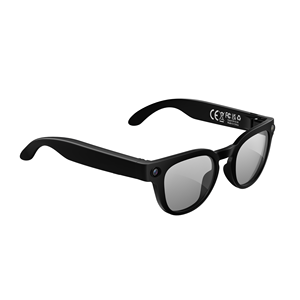
- 8MP High-Resolution Camera Module
- Fast Charging & Sport BT Connectivity
- Real-Time AI Audio Translation Engine
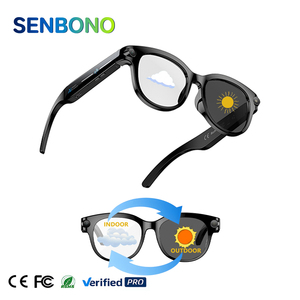
- Dual Camera Optics & IPX5 Waterproofing
- Photochromic UV400 Adaptive Lenses
- 290mAh High-Density Li-Po Battery

- 164+ Global Languages & Dialects
- Open-Ear Directional Acoustic Drivers
- Anti-Blue Light Half-Rim Business Frame
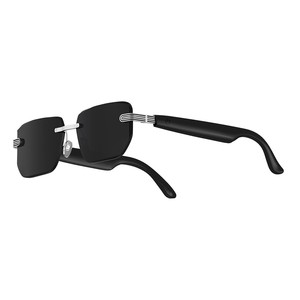
- Real-Time 145 Language Translation
- Photochromic Indoor/Outdoor Lenses
- Voice Assistant & Meeting Recording
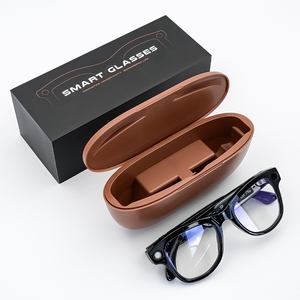
- 8MP Sensor with 4K Video Capture
- High-Speed Wi-Fi & Bluetooth Sync
- Dedicated Fast-Charging Travel Case
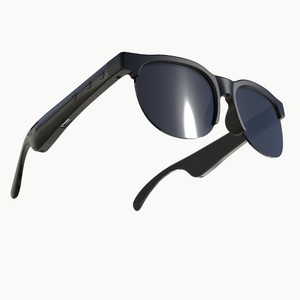
- Ergonomic Sport Frame (< 45g)
- Open-Ear Bluetooth Hands-Free Calling
- UV400 Polarized Outdoor Protection
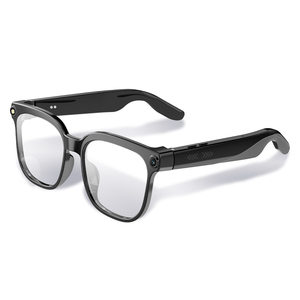
- Intelligent Object & Text Recognition
- Single-Touch Intuitive Gesture Controls
- On-Board Flash Memory & HD Recorder
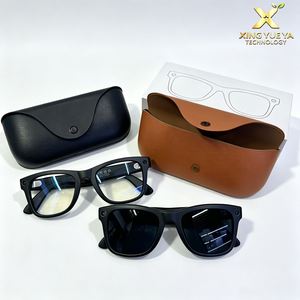
- 8MP / 1080P Sub-Second Processing
- Wi-Fi Direct Data Transmission
- All-Day Battery Life with Charging Dock
Executive Whitepaper: Sourcing Navigation Aid Hardware from Chinese OEM/ODM Manufacturers
The global market for visual assistive technology devices and electronic orientation and mobility aids (e-OMA) is undergoing a structural paradigm shift. Driven by rapid breakthroughs in micro-optics, edge computing NPUs (Neural Processing Units), low-power Bluetooth 5.3 SoC integration, and quantized Multimodal Large Language Models (MLLMs), modern smart glasses are rapidly replacing legacy single-function ultrasonic canes and bulky desktop reading systems.
For global B2B buyers, medical device importers, government accessibility procurement agencies, and assistive technology brand distributors, sourcing from China wholesale navigation aid factories and suppliers provides unmatched economies of scale, vertical integration, and rapid firmware prototyping capabilities. Chinese manufacturing clusters in Guangdong (Shenzhen, Dongguan, Guangzhou) combine precision eyewear frame fabrication with state-of-the-art Surface Mount Technology (SMT) for ultra-compact camera sensor modules and open-ear directional acoustic drivers.
This comprehensive industrial report serves as an authoritative procurement guide. It outlines critical hardware architecture standards, computer vision capabilities, regulatory compliance frameworks, manufacturing quality control metrics, and strategic future trends for importing visual navigation aids built for blind and low-vision end-users.
Technical Deep-Dive: Core Architecture of Modern AI Vision Aids
To successfully market visual assistive technology devices, wholesale buyers must understand the engineering stack that differentiates consumer smart sunglasses from true orientation and mobility navigation aids. Modern visual impairment glasses operate on a four-tier processing pipeline designed to convert ambient photon inputs into contextual natural speech in sub-second intervals.
1. Optical Sensing & Image Capture
Utilizes ultra-wide Field of View (FOV) low-distortion CMOS camera sensors (8MP to 4K resolution) equipped with Hardware High Dynamic Range (HDR) and low-light exposure algorithms to capture crisp frames in pitch-black corridors or glaring sunlight.
2. On-Device Edge-AI Inference
Local NPU microchips execute quantized object detection models (YOLOv8 nano targets), Optical Character Recognition (OCR), depth estimation, and kerb/doorway segmentation without requiring persistent cellular data connections.
3. Directional Acoustic Delivery
Dual open-ear directional micro-speakers transmit synthesized speech directly toward the wearer's ear canal via acoustic beamforming, preserving natural ambient hearing critical for spatial awareness and road safety.
Technology Benchmarking: Navigation Aid Sensing Modalities
When selecting supplier product lines, procurement teams must evaluate sensor trade-offs between cost, weight, battery drain, and situational utility. The table below compares the four primary navigation aid hardware architectures produced by Chinese factories:
| Navigation Modality | Primary Detection Scope | Latency / Processing Speed | Power Consumption | Optimal B2B Use Case |
|---|---|---|---|---|
| Computer Vision + Edge NPU | Scene description, reading printed text, facial recognition, signage | < 0.8 seconds (Sub-second) | Moderate (280–350 mAh/hr) | Comprehensive assistive smart spectacles & daily independent living |
| Ultrasonic Distance Sensors | Head-height obstacle proximity alerts, door frames, overhanging branches | < 0.05 seconds (Instant) | Ultra-Low (50–90 mAh/hr) | Low-cost white cane attachments & basic proximity safety clips |
| Miniature Solid-State LiDAR | 3D depth mapping, exact stair/kerb distance measurement, terrain profiling | < 0.2 seconds (High speed) | High (450–600 mAh/hr) | Advanced professional orientation & clinical rehabilitation systems |
| Multimodal Sensor Fusion (Vision + TOF) | Full 3D spatial awareness, object identification, multi-language speech output | < 0.6 seconds (Optimized) | Balanced Duty-Cycled Architecture | Flagship OEM smart eyewear lines for government accessibility projects |
Market & Technology Development Trends in Navigation Aids
Understanding future technological trajectories enables distributors to avoid stocking inventory facing rapid obsolescence. Key industry vectors shaping the 2025–2030 supply landscape include:
1. Shift from Remote Cloud Server Processing to Zero-Latency Edge Computing
Early iterations of smart vision glasses relied heavily on LTE/5G cloud servers to process video streams. This introduced bandwidth latencies of 2.5–4.0 seconds and created severe privacy concerns. Next-generation Chinese manufacturing facilities are embedding high-efficiency 4-bit and 8-bit specialized NPUs directly onto the spectacle temples. Core functions—including offline text-to-speech OCR, currency identification, and emergency hazard detection—now execute locally without internet connectivity, ensuring reliability in lifts, basements, and remote areas.
2. Ergonomic Weight Reduction Under 50 Grams
Historically, assistive vision devices weighed between 80g and 150g, causing nose-bridge fatigue and thermal discomfort. Advanced injection-molding techniques using TR90 memory resin, ultra-light magnesium-titanium alloys, and split-temple battery distribution (balancing power cells behind both ears) have allowed factories to achieve frame weights under 50 grams. This permits true all-day wearing comfort comparable to standard prescription spectacles.
3. Integration of Multimodal Large Language Models (MLLMs)
Rather than outputting rigid robotic alerts ("Obstacle 1 meter ahead"), 2026-generation glasses utilize onboard quantized MLLMs. Wearers can engage in natural voice dialogues: "Where is the organic milk on this shelf?" or "Read the dosage instructions on this pill bottle." The AI prioritizes critical spatial hazard warnings (e.g., descending stairs) over secondary visual descriptions, preventing cognitive audio overload for visually impaired users.
4. Prescription Lens Compatibility & Modular Clip-On Optics
Over 75% of visually impaired individuals suffer from secondary refractive errors, macular degeneration, or extreme photophobia. Chinese suppliers are pioneering universal magnetic clip-on optical interfaces and customizable prescription frame inserts. OEM orders now routinely request photochromic (light-adaptive) lenses paired with anti-blue ray coatings, allowing seamless transition from indoor office lighting to bright outdoor environments.
Future B2B Procurement Trends for International Wholesale Buyers
Global procurement strategies are evolving past simple hardware unit purchases. International distributors and healthcare buyers must align with structural supply chain shifts:
Customized Firmware & White-Label OS Packaging
Buyers increasingly demand custom boot sounds, brand-specific voice engine defaults, and customized mobile companion apps. Leading Chinese suppliers provide full SDK and API access for localized integration.
Medical Device Regulation (MDR) & CE/FDA Alignment
Global markets require compliance with EU MDR 2017/745 Class I non-invasive medical standards and US FDA registration. Factories with ISO 13485 quality systems are capturing 80% of institutional tenders.
Multi-Language Speech Model Pre-Loading
Distributors serving multi-lingual regions (Europe, Middle East, Southeast Asia) source devices with 100+ offline voice packs pre-stored on onboard high-speed flash storage for instant offline switching.
Factory Infrastructure & Supply Chain Advantage
Sourcing directly from optimized Chinese production hubs provides distinct structural advantages over regional assemblers. Our partner facilities incorporate end-to-end quality assurance frameworks tailored specifically for precision optical and electro-acoustic wearables.
Dust-Free Optical Cleanroom SMT Lines
Camera lens calibration and sensor mounting take place in Class 10,000 cleanrooms to eliminate micro-dust artifacts on CMOS sensors, guaranteeing flawless image input for computer vision models.
Rigorous Environmental Stress Testing
Units undergo 1,000-cycle temple flexure tests, IPX5/IPX7 water spray ingress trials, high-humidity thermal aging (-20°C to +60°C), and 1.5-meter drop shock evaluations prior to batch authorization.
Vertical Supply Chain Compression
By housing optical tooling, injection molding, SMT assembly, electro-acoustic tuning, and automated QA under one roof, turnaround lead times for custom OEM orders drop from 16 weeks to 4 weeks.
Frequently Asked Questions for B2B Procurement Managers
Essential technical, commercial, and logistical guidance for sourcing navigation aid smart glasses from China.
Standard off-the-shelf wholesale orders start at an MOQ of 20 to 50 units per batch. For OEM orders involving custom frame logos, customized gift box packaging, and pre-installed brand firmware, the typical MOQ is 500 units. Full ODM development (custom frame molds and specialized PCB layout) starts at 2,000 units.
Core safety and mobility features—including high-speed OCR text reading, real-time head-height obstacle alerts, banknote recognition, and basic spatial depth estimation—run locally on the spectacle frame’s internal edge processor chip. Cloud connectivity is only accessed when the user requests detailed conversational scene summaries via cloud MLLMs.
Yes. Factories provide localized Text-to-Speech (TTS) engine integration supporting over 164 languages and regional dialects. Software packs are configurable via firmware updates or mobile app synchronization prior to export shipment.
Tier-1 factories supply full export compliance documentation including CE-RED (Radio Equipment Directive), FCC ID for wireless transmission, RoHS 2.0 material safety compliance, UN38.3 lithium battery transport certification, IPX5/IPX7 ingress test certificates, and ISO 13485 medical device quality management accreditation.
Absolutely. Most frame designs feature detachable optical inner rims compatible with standard optical lens edging machinery. Distributors can fit custom single-vision, progressive, or tinted lenses locally, or order pre-assembled photochromic UV400 lenses directly from the factory.
Factories standardly provide a 12 to 24-month manufacturer warranty covering mainboards, optical camera sensors, and electro-acoustic micro-drivers. For international distributors, factories typically include 1% to 2% spare unit buffers or mainboard replacement modules with bulk shipments for rapid local RMA servicing.
No. Electronic orientation and mobility aids are designed to complement—never replace—established mobility tools such as long canes or guide dogs. Smart glasses provide critical head-height hazard warnings, spatial context, and text reading capabilities that physical canes cannot detect.
Sample units for product testing, clinical trial evaluation, or procurement review are available for immediate air express dispatch (DHL/FedEx/UPS) within 3 to 5 business days, pre-loaded with comprehensive developer SDK documentation and sample demo software.
Partner with China’s Leading Navigation Aid Manufacturers
Accelerate your assistive hardware offerings with world-class OEM/ODM production, edge-AI computer vision integration, and competitive direct factory pricing. Request detailed technical specifications, sample kits, and tier-volume quotation sheets today.