
Wholesale Smart Optics Catalog & Factory Products
Direct supplier pricing, customizable hardware architecture, and global compliance for high-volume OEM/ODM buyers.
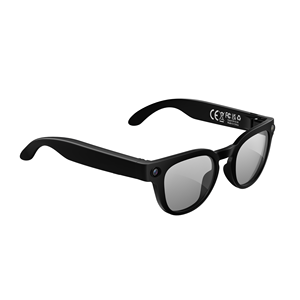
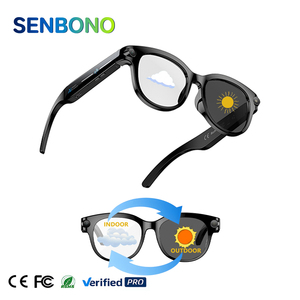

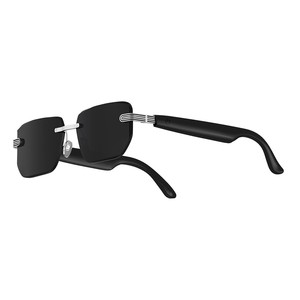
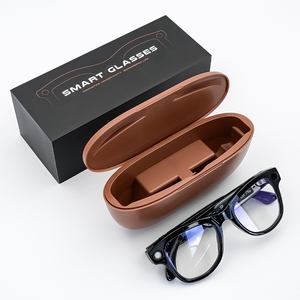
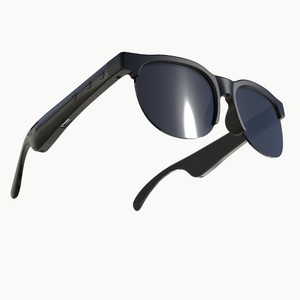
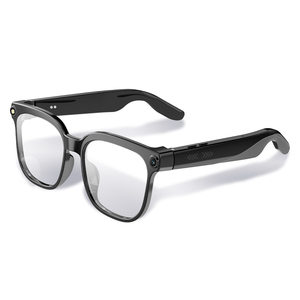
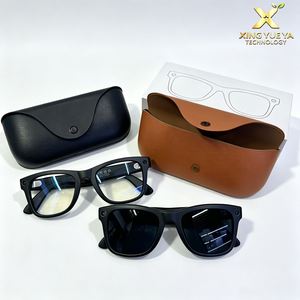
Industry Whitepaper: The Evolution of China’s Smart Optics Manufacturing Ecosystem
The global smart eyewear market is undergoing a fundamental structural transformation. What began as basic Bluetooth-enabled audio frames has matured into highly sophisticated multimodal AI smart optics systems capable of spatial computing, real-time contextual translation, visual scene interpretation, and head-height obstacle detection. As international brands, enterprise healthcare providers, cross-border distributors, and consumer electronics leaders seek to capitalize on this boom, China’s industrial manufacturing hardware hub in Guangdong (Shenzhen, Dongguan, and Huizhou) has established itself as the world's premier production center for wholesale smart optics.
Navigating the vendor landscape requires understanding the technical divergence between consumer-grade audio/video glasses and medical-grade or enterprise-level assistive smart eyewear. Chinese smart optics factories are no longer merely assembling imported components; they now command integrated vertical supply chains. From custom micro-injection molding for ergonomic TR90 frames to high-precision SMT (Surface Mount Technology) placement for sub-millimeter PCBAs, precision optical waveguide alignment, and custom firmware integration, top-tier Chinese original equipment manufacturers (OEMs) and original design manufacturers (ODMs) offer unmatched speed-to-market, yield optimization, and cost efficiencies.
Core Hardware Architecture & Key Technological Innovations
To achieve long wearability (under 50 grams) alongside robust battery endurance and intensive edge computing, OEM manufacturers must innovate across several critical engineering disciplines:
Micro-Optics & Display Engine
Integration of Micro-OLED panels with surface relief diffractive waveguides (SRG) delivering up to 3000 nits peak brightness for outdoor visibility with minimal optical distortion.
Edge AI & Sensor Fusion
Ultra-low power Neural Processing Units (NPUs) combined with 8MP CMOS image sensors, allowing local running of scene recognition, OCR, and obstacle detection algorithms.
Directional Open-Ear Audio
Dual acoustic beamforming speakers and bone-conduction drivers engineered to minimize sound leakage while keeping the wearer’s ear canal fully open for situational safety.
Dual-Temple Power Topology
Split-cell high-density lithium polymer batteries embedded balanced inside both temple arms, delivering 6+ hours of active continuous usage alongside fast-charging portable cases.
Wireless Connectivity
Bluetooth 5.3/5.4 Dual-Mode and Wi-Fi 6 modules optimized for ultra-low power consumption and real-time audio-video streaming with minimal latency.
Ergonomics & Ingress Protection
IPX5 to IP67 water/sweat resistant frames constructed from ultralight hypoallergenic TR90 and titanium memory wire, supporting quick-swap prescription lens clips.
For specialized OEM applications, such as assistive devices for the visually impaired, factories integrate specialized camera modules with ultra-wide angle fields of view (FOV) and high dynamic range (HDR) sensors. These sensors feed frames directly into multimodal Large Language Models (LLMs) and local vision engines, enabling sub-second text-to-speech narration, product identification, and head-height hazard warning systems.
Future Sourcing & Procurement Trends (2026–2030)
Enterprise buyers and global distributors evaluating China smart optics factories must align their procurement strategies with four emerging market shifts over the coming five-year horizon:
1. The Shift from Standalone Audio to Multimodal Visual AI
Basic Bluetooth music glasses are fast becoming low-margin commodities. Procurement focus is shifting rapidly toward camera-enabled smart optics integrated with AI agent frameworks (ChatGPT, Claude, Gemini, and proprietary local SLMs). Factories offering turnkey SDKs, open API endpoints, and customizable mobile companion apps are dominating wholesale orders.
2. Optical Waveguide Democratization
While historical AR glasses suffered from prohibitive optical engine costs and heavy frames, Chinese optics suppliers have successfully scaled production of optical waveguides. Micro-OLED + Waveguide module costs are projected to decrease by 35% over the next 24 months, enabling wholesale suppliers to offer true heads-up display (HUD) smart glasses at accessible B2B price points.
3. Modular White-Labeling & Rapid Customization
Global brand owners demand modular hardware designs. Leading suppliers now provide standardized motherboard platforms (Main PCBA) that allow buyers to mix and match frame silhouettes, lens types (photochromic, anti-blue light, polarized, or prescription), battery capacities, and camera sensor specs without incurring upfront tooling costs ($50,000+) or long NPI (New Product Introduction) cycles.
4. Rigorous Healthcare & Accessibility Compliance
As visual assistive smart glasses enter clinical rehabilitation, veterans' affairs programs, and government accessibility funds, buyers require suppliers to hold medical-device quality management certifications (such as ISO13485) alongside standard CE, FCC, RoHS, and FDA registrations.
B2B Wholesale Hardware Specification & Platform Comparison
The following matrix outlines standard supplier platform tiers available for OEM/ODM mass production across leading Chinese factories:
| Specification Metric | Consumer Audio & BT Series | AI Vision & Camera Series | Enterprise Assistive & HUD Series |
|---|---|---|---|
| Primary Target Application | Sports, Hands-Free Calling, Music | Real-Time Translation, Vlogging, AI Search | Visual Assistive Technology, HUD Navigation |
| Camera Resolution | N/A | 2MP HD to 8MP 4K Ultra-Clear | 8MP HDR with Wide Field-of-View |
| Audio System | Dual Open-Ear Micro Speakers | Noise-Canceling Beamforming Dual Mics | Directional Acoustic / Bone Conduction Hybrids |
| Main Processing Engine | Low-Power BLE 5.3 SoC | Dual-Core RISC-V + NPU Edge Platform | High-Performance AI Processor (Cloud + Edge) |
| Weight Range | 32g - 42g | 45g - 55g | 48g - 58g |
| Translation Capabilities | App-based basic audio transmission | 145+ to 164+ Languages Real-Time | Offline OCR + Conversational AI Scene Description |
| Typical Factory MOQ | 500 Units | 1000 Units | 2000 Units (Full Customization) |
| Ingress Protection | IPX4 Waterproof | IPX5 Sweat/Rain Resistant | IP65 / IP67 Ruggedized Options |
Enterprise Advantages: Why Partner with Top-Tier China Suppliers
Choosing the right wholesale partner requires evaluating more than unit pricing. Established suppliers differentiate themselves through robust engineering capabilities, stringent quality assurance, and end-to-end supply chain transparency:
In-House Tooling & Injection
Complete control over frame mold creation, high-precision CNC machining, optical lens coating, and surface finishing to guarantee micro-level structural tolerance.
Optical & Acoustic Laboratories
State-of-the-art testing facilities featuring anechoic chambers for speaker calibration, integrating sphere optical power meters, and automated laser lens alignment tools.
Comprehensive Software SDKs
Full software support including Bluetooth protocols, camera streaming APIs, Android/iOS SDKs, and firmware OTA update server infrastructure for seamless brand integration.
Strict Quality Assurance Protocol (QA/QC)
Reliability is paramount in smart wearables. Leading Chinese manufacturing plants enforce rigorous multi-stage testing prior to shipment:
- Hinge Durability Test: Automated mechanical flex testing exceeding 20,000 continuous opening/closing cycles under pressure.
- Environmental Aging Test: Thermal shock chambers testing operation from -20°C to +65°C, along with 95% relative humidity testing.
- Drop & Impact Resistance: 1.5-meter free-fall impact tests on concrete surfaces to verify PCB structural integrity and optical glass safety.
- Water Ingress Verification: Controlled pressure chambers validating IPX5 and IPX7 ingress protection seals.
- Optical Yield Testing: 100% automated optical inspection (AOI) for camera module focus, chromatic aberration, and sensor pixel calibration.
Comprehensive B2B Sourcing & Procurement FAQ
Answers to common questions from international buyers, procurement officers, and brand managers sourcing smart optics from China factories.
Partner with China's Premier Smart Optics Manufacturer
Accelerate your product launch with direct factory pricing, turnkey OEM/ODM engineering support, and ISO-certified manufacturing excellence. Contact our B2B export division today to request sample units, engineering documentation, or detailed wholesale price quotes.