
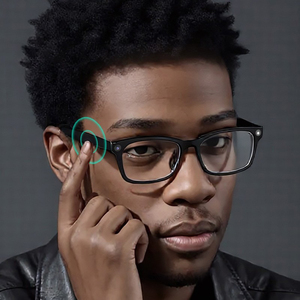
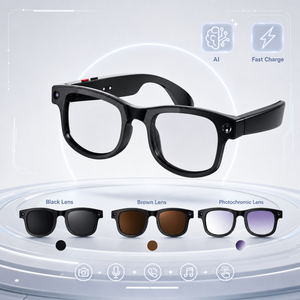
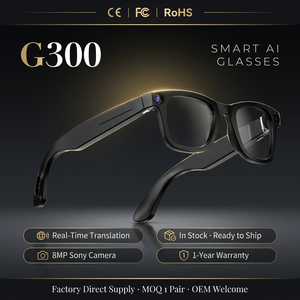
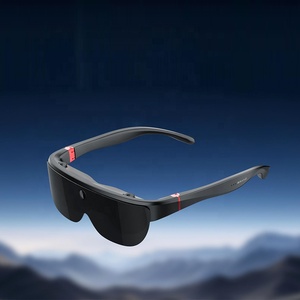
Featured OEM/ODM Assistive Eyewear Portfolio
Explore our customizable hardware platforms engineered for visual assistance, low-vision augmentation, real-time spatial AI, and accessible smart wearables.

Global Assistive Technology Hardware Sourcing Whitepaper
Understanding the technological paradigm shift from basic optical magnification to edge-computing spatial AI for blind and low-vision individuals.
1. Executive Sourcing Insight: The Evolution of Assistive Eyewear
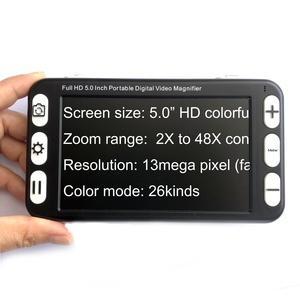
The global market for visual impairment aids is undergoing a structural transformation. For decades, assistive solutions relied on passive optical devices—such as handheld magnifying lenses, fixed closed-circuit television (CCTV) readers, or static presbyopic prescription glasses. However, driven by rapid advancements in Edge Computer Vision, Miniature Time-of-Flight (ToF) Sensors, Micro-LED Waveguides, and Multimodal Artificial Intelligence, the industry is accelerating toward wearable, hands-free intelligent vision systems.
As a specialized original equipment manufacturer (OEM) and original design manufacturer (ODM), we bridge the gap between high-level AI algorithm development and scalable, production-grade optoelectronic hardware. Our contract manufacturing facilities provide international brand owners, healthcare technology distributors, government accessibility programs, and non-profit organizations with fully customizable hardware frameworks engineered to address complex mobility and daily living challenges faced by visually impaired individuals.
2. Technical Core: Multimodal Sensing & Edge Processing Architecture
Modern assistive smart eyewear requires a delicate balance between computational power, optical fidelity, thermal dissipation, and ergonomic comfort. When engineering custom OEM assistive glasses, our engineering teams focus on four foundational pillars:
| Hardware/Software Module | Standard Consumer Smart Glasses | OEM Medical-Grade AI Assistive Eyewear |
|---|---|---|
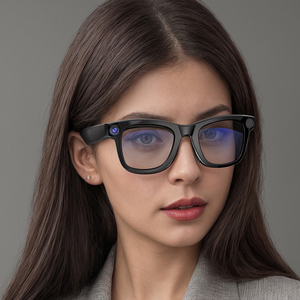
| Optical Sensing | Single RGB Camera (1080p, fixed focus) | Ultra-Wide RGB + ToF Depth Sensor + Anti-Shake Image Stabilization |
| AI Processing Engine | Cloud-dependent smartphone companion chip | On-device Edge NPU/TPU for local offline scene & text processing |
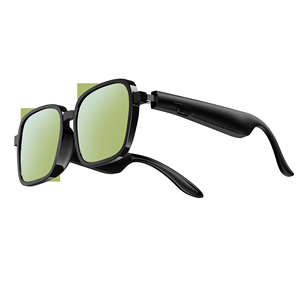
| Audio Feedback System | Standard micro-speakers (prone to sound leakage) | Open-ear directional sound or bone conduction preserving ambient situational awareness |
| Latency & Safety | 1.5s - 3.0s cloud delay (non-critical) | Sub-200ms real-time obstacle & hazard warning engine |
| Form Factor & Ergonomics | Fashion-first, rigid structural acetate frames | Flexible TR90/Titanium memory alloy, anti-allergenic touchpoints (<50g) |
By embedding custom-trained quantized computer vision models directly onto local neural processing units (NPUs), our assistive glasses execute optical character recognition (OCR), currency detection, face identification, and object classification locally without requiring an active cellular connection. This ensures complete user data privacy, zero subscription lock-ins, and consistent performance in remote areas, underground transit networks, or shielded indoor environments.
Our Custom OEM/ODM Enterprise Advantages
Why international healthcare brands, accessibility organizations, and optical distributors choose us as their turnkey manufacturing partner.
Full-Stack OEM/ODM Engineering
From initial industrial design (ID) and structural layout to custom PCB SMT assembly, optical lens tuning, and low-power firmware development, we handle 100% of the manufacturing value chain under one roof.
ISO 13485 & Regulatory Quality
Our cleanroom assembly lines operate under strict ISO 13485 medical device management protocols, ensuring that custom hardware meets CE-MDR, FCC, RoHS, and FDA registration requirements for medical-grade distribution.
Localized Software SDKs & Voice Packs
We provide turnkey white-label Android/iOS companion apps, custom API access, and multilingual Text-To-Speech (TTS) engine integration covering over 20 global languages with localized dialect adjustments.
Ergonomic & Low-Vision Centric ID
Designed specifically for individuals with Macular Degeneration, Glaucoma, Diabetic Retinopathy, and Retinitis Pigmentosa. Features high-tactile physical buttons, voice command overrides, and clip-on prescription frame compatibility.
Flexible Supply Chain & Low MOQ Options
Whether you need small pilot batches for clinical trial validation or full-scale automated mass production runs exceeding 50,000 units/month, our agile manufacturing line guarantees competitive unit economics.
Intellectual Property (IP) Protection
We strictly respect client IP. Customized algorithm weight files, proprietary ID housing molds, and brand-specific firmware images are safeguarded under legally binding non-disclosure agreements (NDAs) and isolated factory programming servers.
Future Development & Sourcing Trends in Assistive Wearables
Key technological shifts that global procurement managers must evaluate when commissioning custom OEM assistive glasses projects over the next five years.
Trend 1: On-Device Generative Scene Narration via Vision-Language Models (VLMs)
Traditional visual assistance devices were restricted to basic template-matching commands (e.g., "Text reads: Stop", "Obstacle ahead"). The integration of optimized, quantized Vision-Language Models (VLMs) running locally on edge silicon enables natural, conversational feedback. Wearers can ask open-ended questions like, "Is there an open chair near the window?" or "Summarize the ingredients on this food box, ignoring the brand name." Sourcing partners should prioritize hardware equipped with NPUs capable of at least 10 TOPS (Trillion Operations Per Second) power efficiency.
Trend 2: Micro-LED Optical Waveguides for Contrast-Enhanced Low Vision
For individuals with residual vision (such as central scotomas from AMD or peripheral field loss from Glaucoma), full audio description is secondary to high-contrast visual re-mapping. Future OEM hardware platforms incorporate high-brightness Micro-LED optical waveguides that project real-time edge-detected contours, zoom-magnified visual windows, or color-inverted text fields directly onto the user's retina, dramatically improving functional visual acuity without causing eye fatigue.
Trend 3: Hybrid Spatial Mapping with ToF LiDAR & Ultrasonic Fusion
While RGB cameras excel at reading text and identifying object categories, they struggle in complete darkness, severe glare, or transparent glass environments. Next-generation custom assistive glasses integrate hybrid sensor arrays combining low-power Time-of-Flight (ToF) laser distance modules and high-frequency ultrasonic transceivers. This hybrid approach guarantees precise 3D spatial mapping and head-height obstacle detection regardless of ambient lighting conditions.
Trend 4: Government Mandates & Medical Insurance Reimbursement Pathways
Around the globe, accessibility legislation such as the European Accessibility Act (EAA) and updated US Section 508 compliance rules are compelling educational institutions, transportation hubs, and corporate employers to equip visually impaired stakeholders with certified assistive wearables. Concurrently, medical insurance bodies are establishing standardized HCPCS/CPT reimbursement codes for electronic orientation and mobility aids. Contracting an ISO 13485-compliant OEM manufacturer ensures your hardware qualifies for international medical reimbursement channels.
OEM/ODM Sourcing Checklist for Procurement Directors
A systematic framework for evaluating assistive glasses suppliers during the RFP and technical specification phase.
Step 1: Ergonomic & Weight Budgeting
In wearable assistive technology, weight is the single largest determinant of daily user compliance. Total frame weight must remain under 50 grams for prolonged nose-bridge comfort. Battery distribution must be counterbalanced across both temple arms rather than concentrated at the front rim.
Step 2: Audio Architecture Selection
Avoid traditional in-ear canal earbuds, as blocking the ear canal deprives blind users of vital environmental acoustic cues (such as oncoming traffic sounds or echo reflections). Specify open-ear directional sound chambers or bone-conduction transducers.
Step 3: Thermal Management Optimization
Continuous AI video processing generates heat on board the NPU. OEM designs must incorporate high-conductivity graphite thermal sheets and aluminum alloy internal chassis frames to channel operational heat away from the user's skin and temples.
Step 4: Lens & Prescription Adaptability
Ensure the OEM frame geometry accommodates magnetic magnetic prescription lens inserts, contrast filters (yellow/amber for contrast enhancement), or shaded protective covers to cater to photophobic users.
B2B Sourcing & Technical FAQ
Direct answers to common technical, logistics, and manufacturing questions from enterprise purchasers and OEM brand managers.
Partner with a World-Class Assistive Technology OEM Manufacturer
Transform your visual accessibility concept into a production-ready, medical-grade smart wearable product. Request custom engineering specifications, pricing quotes, and prototype evaluation units today.
Inquire Now