
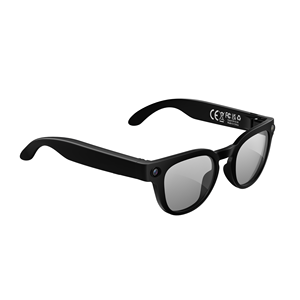
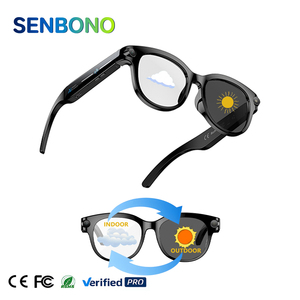
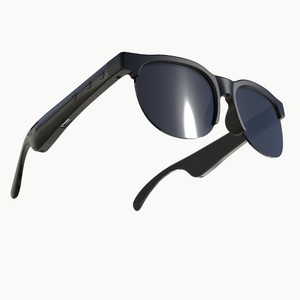
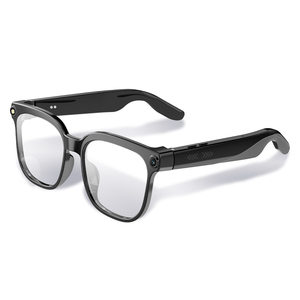
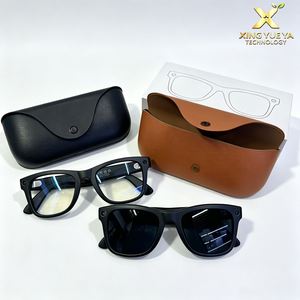
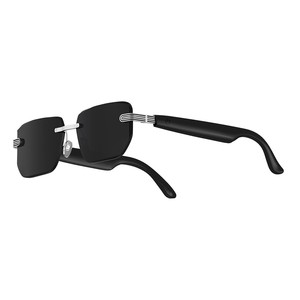
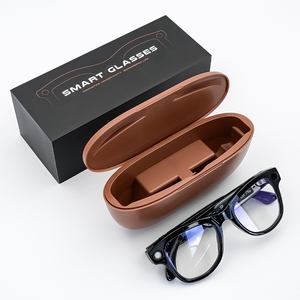
High-Performance OEM Smart Glasses Portfolio
Explore our export-ready smart eyewear lineup, engineered with advanced AI audio, real-time translation, high-definition optical capture, and ergonomic lightweight frames for global commercial markets.

Enterprise OEM/ODM Manufacturing Capabilities
As a leading premier Custom OEM Smart Glasses Exporter, we bridge the gap between complex hardware miniaturization, optical precision engineering, and edge AI integration for global enterprise clients.
Full-Stack Hardware Design
Complete custom PCB layout, micro-optical engine integration, ultra-lightweight frame architecture (under 50g), and thermal dissipation management for all-day wearing comfort.
Multimodal AI & Algorithm Integration
Proprietary edge-AI vision engines, offline machine translation, natural speech synthesis, and custom LLM API firmware customization tailored for business and consumer applications.
Optical & Lens Customization
Support for photochromic, anti-blue light, prescription lenses, polarized UV400 protection, and surface-relief diffractive waveguides built in cleanroom environments.
Global Quality & Compliance
Products strictly adhere to FCC, CE, RoHS, Telec, and FDA accessibility device standards. Rigorous IPX5/IPX7 waterproofing, drop-testing, and acoustic calibration.
White-Label & SDK Licensing
Custom Android/iOS app SDKs, custom voice activation triggers, custom firmware flashing, branded packaging, and laser-etched OEM logo solutions for market speed.
Agile Supply Chain Security
Scalable ISO-certified production facilities ensuring high yield rates, consistent component sourcing, competitive BOM pricing, and reliable global freight logistics.
The Architecture & Future Trends of OEM Smart Eyewear
A comprehensive analysis of technological convergences, optical engineering breakthroughs, and consumer adoption drivers shaping the smart glasses landscape.
The global wearable technology ecosystem is undergoing a seismic paradigm shift. Smart glasses are rapidly evolving from mere audio-assisted fashion peripherals into powerful, context-aware spatial computing platforms. As a specialized custom OEM smart glasses exporter, we observe three technical convergence pillars driving international market growth: micro-miniaturization of optical display engines, edge-based multimodal AI processing, and specialized ergonomic battery designs.
1. Optical Display Evolution: From MicroOLED to Diffractive Waveguides
The visual engine represents the primary technical bottleneck and differentiation factor in next-generation smart spectacles. Historical Birdbath optics, while cost-effective, suffered from bulky form factors and high light leakage. Current B2B procurement is rapidly transitioning toward Surface Relief Waveguide (SRW) and Volumetric Holographic Optical Elements (VHOE) paired with MicroLED projectors.
- MicroLED Integration: MicroLED offers ultra-high luminance (>100,000 nits at the display chip), enabling full outdoor readability through photochromic and polarized lenses while consuming 40% less power than legacy MicroOLED arrays.
- Diffractive Waveguides: Optical waveguides reduce lens thickness to under 2.5mm, allowing smart frames to mimic traditional prescription eyewear while delivering clear monocular or binocular Heads-Up Display (HUD) overlays.
- Transmissivity Optimization: Modern ambient-adaptive lenses maintain over 85% visual transparency indoors, dynamically darkening under direct UV exposure to ensure maximum display contrast and visual ergonomics.
2. On-Device Multimodal AI & Semantic Processing
Modern consumers and enterprise enterprise buyers require intelligent voice assistants that do not rely solely on continuous cloud connectivity. The integration of high-efficiency Neural Processing Units (NPUs) within ultra-low-power Bluetooth SoCs (System-on-Chip) enables sub-second localized processing.
Through embedded Whisper-based speech recognition and lightweight localized computer vision models, smart frames can execute real-time language translation, object recognition, document optical character recognition (OCR), and directional audio beamforming without introducing severe latency or privacy risks. Edge processing ensures that sensitive audio and visual data remain encrypted locally on the device memory.
3. Acoustic Engineering: Directional Open-Ear Audio
Acoustic privacy and environmental spatial awareness are critical considerations for daily wearability. Advanced OEM audio smart glasses utilize dual directional speaker arrays housed within the temples. By leveraging phase-cancellation sound wave steering, audio leakage is minimized—allowing wearers to take confidential phone calls and hear navigation cues without isolating themselves from ambient environmental sounds, a vital safety feature for outdoor sports and municipal workers.
Standard OEM Customization Matrix
Comparative technical specifications available across our customizable exporter hardware platforms.
| Hardware Parameter | Standard OEM Configuration | High-End Enterprise ODM Custom Option |
|---|---|---|
| Optical Architecture | Open-Ear Audio / Photochromic Lenses | Monocular / Binocular MicroLED Optical Waveguide HUD |
| Camera System | 2MP to 8MP Ultra-Wide HD Capture | 4K 60FPS EIS Stabilized Camera with AI Scene Recognition |
| Main SoC Processor | Dual-Core Low-Power Bluetooth 5.3 SoC | High-Performance AI Processor with Integrated NPU |
| Translation Capabilities | 145+ Languages via Paired Cloud App | Offline Engine (16+ Core Languages) + Cloud Engine (164+ Languages) |
| Battery Capacity & Life | 220mAh - 290mAh Dual Temple Battery (6-8 Hrs) | High-Density Quick-Charge Cells with Modular Case (Up to 36 Hrs) |
| Frame Materials | TR90 Memory Resin / Anti-Allergic Acetate | Aerospace Titanium Alloy / Lightweight Carbon Fiber Blend |
| Waterproofing Rating | IPX4 - IPX5 Sweat & Rain Resistance | IPX7 Precision Sealed Internal Circuitry |
Future B2B Sourcing & Procurement Trends
Strategic analysis for brand managers, distributors, and global importers navigating the evolving smart eyewear supply chain.
As smart glasses transition into mainstream retail channels and enterprise deployment, procurement strategies must evolve beyond simple off-the-shelf unit sourcing. Global buyers must evaluate long-term software support, component modularity, and environmental compliance.
1. Demand for Modular White-Label Software Development Kits (SDKs)
Hardware alone is no longer a sustainable competitive moat. Modern B2B buyers require complete control over the end-user software ecosystem. Importers are increasingly prioritizing OEM exporters who provide open API frameworks, customizable Android/iOS SDKs, and custom BLE protocol documentation. This allows distributors to embed smart frame hardware directly into proprietary healthcare applications, enterprise logistics management platforms, or branded consumer companion apps.
2. Supply Chain Traceability & ESG Compliance
International regulatory authorities—including the European Union (CE-RED, WEEE) and North American agencies (FCC, FDA)—are imposing stricter compliance mandates on wearable technology. Global importers are shifting order volumes toward manufacturing partners who demonstrate full material traceability, use non-toxic hypo-allergenic frame materials, incorporate recycled plastics, and utilize lead-free ISO-certified cleanroom manufacturing processes.
3. Specialized Niche Differentiation: Medical Accessibility & Industrial Safety
The market is bifurcating into general consumer audio-video sunglasses and specialized high-margin vertical market devices. Sourcing trends highlight rapid volume growth in two primary niches:
- Assistive Vision Eyewear: AI-powered spectacles equipped with camera-based object identification, text-to-speech reading, and obstacle detection for the visually impaired.
- Industrial Hands-Free Workwear: Ruggedized smart glasses designed for warehouse inventory scanning, field service remote support, and real-time head-up step-by-step workflow instructions.
Frequently Asked Questions for Global OEM Importers
Addressing essential technical, commercial, regulatory, and logistics questions for prospective smart glasses buyers.
What is the typical Minimum Order Quantity (MOQ) for custom OEM smart glasses projects?
Our standard MOQ for ready-to-ship neutral logo smart glasses is 50 to 100 units. For custom laser-etched logos, branded packaging, and custom Bluetooth pairing names, MOQ typically starts at 500 units. Deep OEM customization involving custom mold tooling, bespoke PCB design, or unique colorways ranges from 1,000 to 3,000 units depending on technical complexity.
Can you integrate custom AI software APIs or proprietary LLMs into the firmware?
Yes. As an end-to-end custom OEM smart glasses exporter, we provide comprehensive software customization services. We can configure device firmware to route voice queries directly to your private server endpoints, custom ChatGPT/Claude instances, or specialized localized translation databases. Custom SDKs are provided for both iOS and Android platform development.
How do you handle optical lens customization for prescription and UV safety requirements?
Our smart frame structures feature modular rim designs compatible with standard optical edging machinery. We supply clear anti-blue light demonstration lenses, TAC polarized UV400 sunglass lenses, or high-grade photochromic (transition) lenses out-of-the-box. Optical partners can easily swap stock lenses with custom prescription optics (SDR/CYL) without damaging internal electronic components.
What global export certifications do your smart glasses hold?
All our export-grade smart glasses models are pre-certified for major international consumer market entry. Certification documentation includes CE-RED (Europe), FCC ID (United States), RoHS 2.0 compliance, TELEC (Japan), and UN38.3/MSDS safety test reports for lithium-polymer battery air/sea transit.
What is your typical production lead time for sample development and bulk export orders?
Standard off-the-shelf evaluation samples ship within 2 to 4 business days. Custom logo and firmware sample verification takes approximately 10 to 14 business days. Bulk production lead time for standard OEM orders ranges from 25 to 35 calendar days following golden sample sign-off and deposit confirmation.
How do you guarantee acoustic audio privacy and minimize sound leakage?
We utilize precision-engineered cavity structures combined with reverse-phase acoustic cancellation algorithms. Dual micro-speakers are angled specifically toward the wearer's ear canal, reducing sound radiation to surrounding environments by up to 85% at normal listening volumes.
What quality assurance (QA) protocols are conducted before international shipping?
Every manufactured unit undergoes 100% automated optical and acoustic inspection. Testing protocols include 48-hour continuous battery aging cycles, high/low-temperature thermal shock exposure, IPX waterproof chamber testing, button click-life stress testing, and Bluetooth signal stability verification inside anechoic chambers.
Do you offer warranty coverage and spare parts support for international distributors?
Yes, we provide a standard 12-month manufacturer warranty on all smart glasses hardware. For large bulk importers, we offer a dedicated percentage of spare components (such as temples, charging cables, charging cases, and optical frame fronts) or replacement units to ensure seamless local after-sales support.
Ready to Expand Your Smart Eyewear Portfolio?
Partner with an experienced Custom OEM Smart Glasses Exporter. Contact our engineering and commercial export team today for technical datasheets, sample evaluations, and factory-direct B2B pricing.