
Sprhava AI-Powered Vision
High-performance wearable hardware engineered for international brand owners, accessibility distributors, tech enterprise buyers, and medical assistive technology importers.

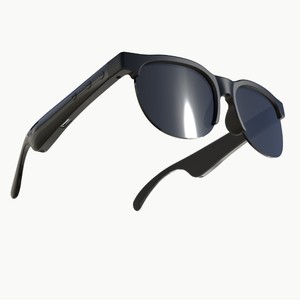
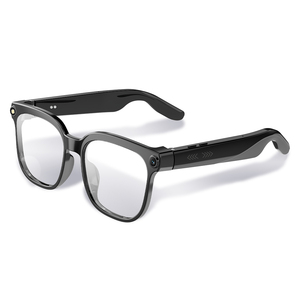
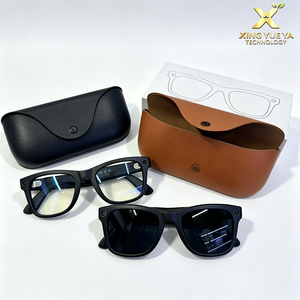
An engineering-level examination of multimodal artificial intelligence, edge computing, optical waveguide systems, and global export logistics within the wearable accessibility and smart eyewear sector.
Historical visual assistive technology relied heavily on continuous cloud streaming, introducing significant network latency, privacy vulnerabilities, and operational failure in remote or shielded urban environments. The modern OEM Vision Reader architecture transitions foundational workloads—such as Optical Character Recognition (OCR), preliminary depth estimation, and instant obstacle categorization—directly onto ultra-low-power Edge Neural Processing Units (NPUs) integrated within the spectacle temples.
By keeping critical vision tasks localized on-chip, processing response times are reduced from seconds to under 800 milliseconds. Secure cloud calls are reserved exclusively for complex conversational scene narrations, multi-page document parsing, or multi-dialect translations over 160+ languages.
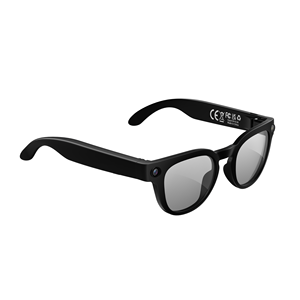
Designing visual accessibility and translation smart glasses requires a delicate balance between optical capture fidelity and ergonomic weight distribution. High-grade OEM exporters now deploy sub-miniature 8MP and 4K CMOS sensor modules embedded stealthily into lightweight TR90 or titanium-alloy spectacle frames, weighing under 50 grams total.
Complementing visual input are directional open-ear acoustic transducers. Unlike conventional headphones that obstruct ambient noise—creating safety risks for blind or visually impaired navigators—open-ear acoustic waveguides project localized audio directly toward the ear canal. This preserves complete spatial awareness while delivering crisp speech synthesis.
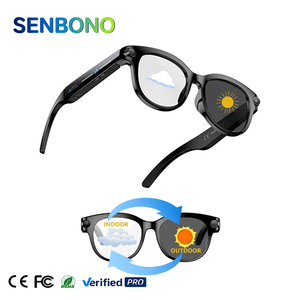
Strategic OEM Technical Insight: The integration of adaptive photochromic and anti-blue light prescription-ready lenses ensures that OEM smart vision readers function seamlessly across diverse environmental lighting conditions—transitioning from glare-heavy outdoor environments to indoor low-light clinical settings without compromising camera exposure or user vision comfort.
Key strategic shifts reshaping bulk purchasing, custom hardware customization, regulatory compliance, and distribution across North America, Europe, and the Asia-Pacific region.
B2B enterprise buyers are moving away from off-the-shelf consumer gadgets in favor of customized OEM platforms. Exporters must provide tailored Android/Linux Firmware SDKs, custom button-mapping scripts, specialized voice prompt packs, and branded mobile application integration to serve specific national healthcare programs or corporate deployments.
Global distribution mandates stringent adherence to international electrical and medical device standards. Leading OEM vision reader exporters now manufacture strictly under ISO 13485 and ISO 9001 guidelines, maintaining CE (RED), FCC ID, RoHS 2.0, IPX5/IPX7 waterproof ratings, and FDA Class I visual assistive device registrations.
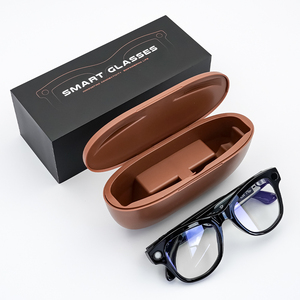
Operational longevity remains a top user requirement. Next-generation procurement specs emphasize split-battery frame architectures (distributing micro-cells evenly across both temples) paired with intelligent magnetic charging cases (1000mAh+) that allow fast top-ups for full-day field mobility.
| OEM Specification Parameter | Standard Consumer Audio Eyewear | Enterprise AI Translation Glasses | Sprhava Custom OEM Vision Reader (Medical/Assistive Grade) |
|---|---|---|---|
| Camera Architecture | None / Basic 2MP Video Only | 5MP - 8MP Wide Angle Capture | 8MP - 4K HD Low-Distortion Sensor w/ Adaptive Exposure & Macro Focus |
| On-Device AI Engine | Basic Voice Assistant Relay | Cloud-Dependent Translation Engine | Dual-Core Edge NPU (Sub-second Offline OCR, Object & Obstacle Tagging) |
| Audio Delivery | Standard Stereo Bluetooth | Directional Open-Ear Drivers | Bone-Conduction / Open-Ear Spatial Audio w/ Dual Beamforming Mics |
| Frame Weight & Ergonomics | 45g - 65g Plastics | 50g - 70g Standard Acetate | < 49g Ultra-Balanced Molded TR90 Memory Alloy |
| Compliance & Certification | CE, FCC | CE, FCC, RoHS | CE Medical, FDA Class I Assistive, FCC ID, RoHS 2.0, IPX5 Waterproof |
| OEM Customization Scope | Logo Printing Only | Color & Packaging Customization | Full Hardware SMT, Custom Optical Lenses, Firmware SDK, Private Cloud Pipeline |
Leveraging end-to-end precision manufacturing, in-house optical software engineering, and robust global trade logistics.
From industrial CAD frame design and rapid 3D prototyping to custom micro-injection molding and SMT PCB assembly, we offer complete turn-key manufacturing tailored to your exact brand aesthetics.
Our software engineering division maintains proprietary datasets for instant multi-language document scanning, structural scene parsing, facial recognition, and low-vision guidance algorithms.
We provide end-to-end export administration, customs clearance documentation, UN38.3 lithium battery flight certifications, and international DDP/DAP freight coordination across 160+ countries.
Every OEM unit undergoes rigorous automated optical testing, thermal stress simulation, drop/vibration resilience tests, and 100% audio frequency microphone calibration before export shipping.
Direct answers for corporate buyers, brand managers, medical supply importers, and government procurement officers.
Elevate your product portfolio with industry-leading wearable AI vision readers, translation spectacles, and assistive computer vision technologies. Contact our enterprise engineering and export division today.