
Sprhava AI-Powered Vision
Turnkey OEM/ODM Solutions for Smart Eyewear Brands, Telecom Operators & Assistive Tech Vendors
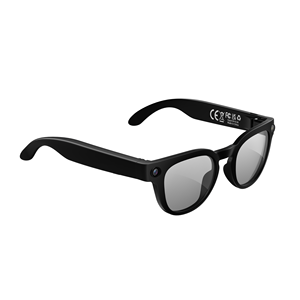
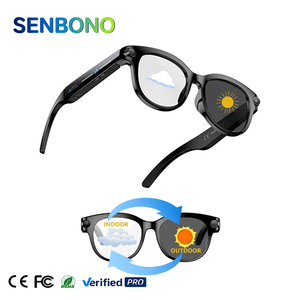

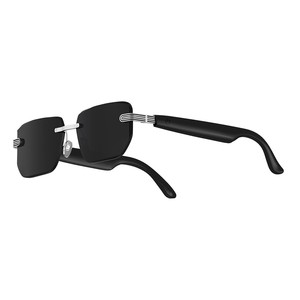
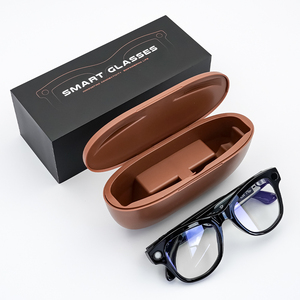
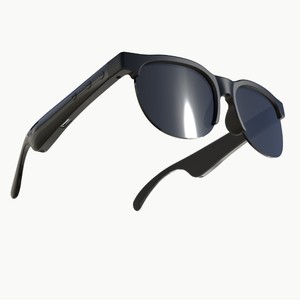
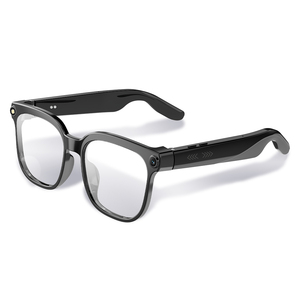
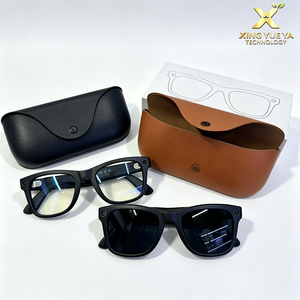
The global eyewear landscape is undergoing a structural paradigm shift. Traditional static correction and solar tint lenses are rapidly evolving into adaptive optical platforms integrated with multi-modal Artificial Intelligence, spatial micro-acoustics, electrochromic light modulation, and edge-computed vision recognition. For international brands, consumer electronics distributors, and enterprise vision care procurement officers, establishing a resilient, technologically capable OEM/ODM manufacturing partnership is no longer just about frame tooling—it requires full-stack hardware, firmware, and optical engineering mastery.
As a specialized OEM/ODM Adaptive Eyewear Factory & Supplier, our manufacturing ecosystems unify optical lens physics, sub-millimeter micro-SMC assembly, high-speed Bluetooth 5.4/Wi-Fi 6 wireless protocol stacks, and neural network inference engines. From lightweight audio-only smart frames weighing under 42 grams to advanced dual-camera AI assistive vision eyewear equipped with real-time translation and object recognition, our production lines deliver scalable quality under ISO 9001, ISO 13485, CE, FCC, and FDA compliance protocols.
Vertical Integration from Industrial Design to Cleanroom Optical Assembly
Our in-house R&D facilities encompass mechanical structural design, RF antenna simulation (LDS/FPC integration), PCB layout optimization, and custom firmware/SDK development for iOS and Android environments.
Optical lens bonding, micro-display calibration, and camera module mounting are executed within Class 10,000 (ISO 7) cleanrooms to eliminate particle contamination and ensure optical clarity.
All manufactured eyewear series strictly comply with international standards including FDA Class I medical/device registration, CE RED, FCC ID, RoHS, REACH, and UN38.3 battery safety certifications.
Native integration with multi-modal LLM cloud backends (GPT-4o, Claude 3.5, Google Gemini) enabling ultra-low latency sub-second translation across 164 languages with customized brand voice models.
In-Depth OEM System Architectures for Enterprise Procurement Evaluation
| Architecture Component | Standard Audio Smart Eyewear | Advanced AI Camera & Video Eyewear | Assistive Vision & Neural Eyewear |
|---|---|---|---|
| Primary SoC / Processor | Dual-Core BLE 5.4 Audio SoC (BES2600 Series) | Octa-Core Edge AI SoC + NPU 2.0 TOPS | Ultra-Low Power Dual-Chip (Edge Vision + BLE) |
| Camera & Optics Engine | N/A (Optical Lens Only) | 8MP UHD 4K @30fps / 1080P Ultra-Wide FOV | Dual 2MP/5MP Wide-Angle + Infrared Depth Sensor |
| Acoustic Subsystem | Dual Open-Ear Directional Micro-Speakers | Dual Beamforming Mems Mics + Spatial Audio Driver | Bone Conduction / Directional Speaker Hybrid |
| Adaptive Lens Options | Photochromic / Tac Polarized / Blue-Cut | Electrochromic Fast-Switch Tinting / Photochromic | Medical-Grade Prescription Ready / Filter Lenses |
| Battery & Charging | 110mAh–220mAh (5–8 Hrs Continuous Audio) | 290mAh–450mAh + Portable Charging Case | Dual-Temple Balanced Battery (All-Day Duty) |
| Waterproof Rating | IPX4 / IPX5 Sweatproof | IPX5 Life Waterproof Structure | IPX6 Sealed Structural Framework |
R&D Insights Shaping the 2025–2030 Smart Optical Industry
While traditional photochromic lenses rely on UV intensity and require 30 to 90 seconds to transition, next-generation adaptive eyewear utilizes electrochromic film technology. Powered by micro-volt pulses, EC lenses change light transmittance from 85% clear to 15% dark in under 1.5 seconds via manual touch, ambient light sensors, or voice commands.
To mitigate network latency and privacy concerns, smart eyewear architecture is transitioning toward edge AI processing. Core computer vision tasks—such as obstacle detection, text recognition (OCR), and trigger word processing—run locally on low-power NPUs, while complex conversational queries seamlessly route to encrypted cloud LLMs.
The boundary between traditional prescription frames and smart wearables is dissolving. Modern OEM designs focus on high-strength bio-based acetate, TR90 memory polymers, and titanium temple hinges, maintaining complete electronic component payloads within a total frame weight of 38 to 49 grams for comfortable all-day wear.
For brand owners, cross-border e-commerce importers, and corporate procurement directors, sourcing smart adaptive eyewear requires evaluating critical supply chain factors beyond simple unit pricing. Based on global market dynamics, buyers should prioritize the following key procurement criteria:
Everything International Buyers Need to Know About OEM/ODM Manufacturing
Partner with an industry-leading OEM/ODM adaptive eyewear factory. Contact our engineering team today to request product catalogs, wholesale pricing matrices, and custom prototype evaluations.