
Featured OEM/ODM AI Smart Glasses Showcase
Direct factory supply of next-generation multimodal translation, vlogging, audio assist, and spatial visual AI eyewear built for global brand customization.

Professional AI Smart Translation Glasses 164+ Languages Real-Time Open-Ear Audio Anti-Blue Light
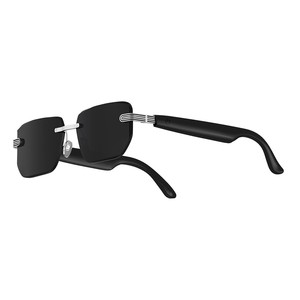
AI Smart Glasses Real-time Translation 145 Languages Photochromic Lenses Audio Video Calls Voice Assistant
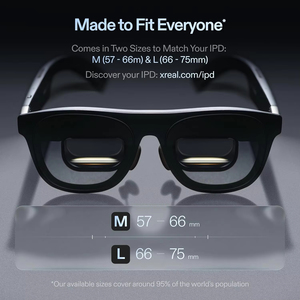
Factory Wholesale Xreal One Pro AR Glasses 3DoF Smart Glasses X1 Chip Dual Camera 171" Screen
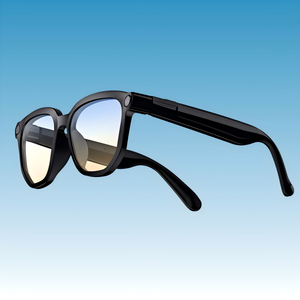
AI Smart Glasses with Camera AI Realtime Translation Wearable Voice Assistant Anti-Shake Capture
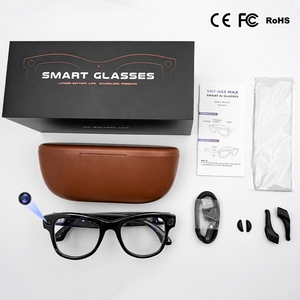
SANVNET 2026 GS5 Max ChatGPT AI Translation Sunglasses Charging Case 8MP Camera Vlogging Spectacles
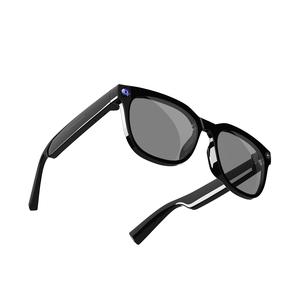
ChatGPT Glasses 8MP Camera Video Voice Call AI Translation Memory 2GB 270mAh ENC Noise Cancelling
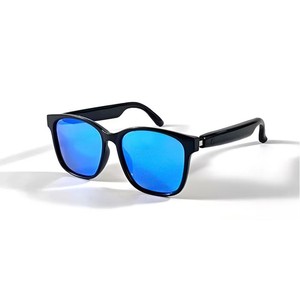
AI Smart Audio Glasses Voice Assistant Navigation HD Music Call Polarized Anti-Blue Light Touch IPX-5
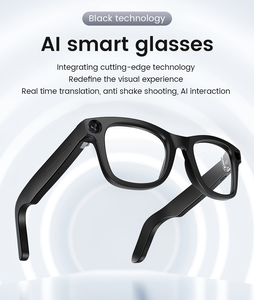
Smart AI Glasses 800MP Image-Stabilized Dual Camera 3.2K Photo Capture Open-Ear Audio Type-C
The Global B2B Sourcing Landscape for AI Spectacles & Smart Eyewear
White-Paper Industry Analysis: Navigating Hardware-Software Integration, Supply Chain Engineering, and Multimodal Artificial Intelligence in Next-Gen Wearables.
Multimodal Edge AI Engine
The transition from audio-only smart frames to multimodal computer vision AI spectacles represents a paradigm shift. Modern OEM/ODM solutions integrate low-power edge NPUs capable of parsing contextual real-world data, enabling instant visual question answering (VQA), image recognition, and sub-second translation processing.
Acoustic & Optoelectronic Tooling
Tier-1 manufacturing demands custom tooling for dual micro-speakers with directional beamforming audio, reverse sound-wave cancellation to prevent acoustic leakage, and precision lens grooves accepting prescription (Rx), anti-blue light, photochromic, or polarized sunglass filters.
Private-Label Software & API SDKs
Enterprise buyers require more than standard hardware. Strategic ODM partners supply full-stack customization, including white-label iOS/Android apps, customized BLE/Wi-Fi communication protocols, and seamless API bridging into OpenAI ChatGPT-4o, Claude 3.5, Google Gemini, and custom enterprise LLMs.
OEM/ODM Technical Engineering Specifications Matrix
Benchmark comparison across product tiers for enterprise buyers, brand owners, and telecommunication channel partners.
| Specification Parameter | Audio-Only AI Smart Glasses | Vlogging & Photo Capture AI Frames | Spatial AR & Visual AI Spectacles |
|---|---|---|---|
| Core Chipset / Processor | Low-power Dual-Core BLE 5.3 SoC | Qualcomm Snapdragon AR1 / RISC-V ISP | X1 Spatial Chipset + Dual Camera NPU |
| Optics & Display Engine | N/A (Standard Lenses / Anti-Blue Light) | Photochromic / Polarized UV400 Protection | Micro-LED Waveguide / 3DoF Virtual Display |
| Camera Resolution | None | 8MP / 13MP Ultra-Wide Angle with EIS | Dual 800MP / 4K Sensor Array + Depth Sensor |
| Battery System | 110mAh - 180mAh Dual Temples (8-12 Hours) | 270mAh + 1200mAh Charging Case Ecosystem | Magnetic Type-C Fast Charge + Extended Case |
| AI Logic & Translation | Real-Time Audio Voice Assistant & Translation | ChatGPT-4o Multimodal Vision + VQA | Real-Time Contextual HUD + Translation Overlay |
| Certification Compliance | CE, FCC, RoHS, REACH, BQB, IPX5 | CE, FCC, RoHS, UN38.3, MSDS, IPX5 | CE, FCC, FDA, ISO9001, IPX7 |
Key B2B Procurement Trends Shaping the AI Eyewear Industry
In-depth analysis of consumer demand shifts, regulatory standards, and technology convergence over the 2024-2030 cycle.
1. Convergence of Large Language Models (LLMs) & Visual Wearables
The global market for smart spectacles has evolved beyond simple hands-free Bluetooth phone calls. Procurement buyers are increasingly prioritizing multimodal AI pipeline integrations. Current enterprise demand centers on glasses that combine camera snapshot capabilities with immediate LLM processing—enabling real-time foreign text translation, document scanning, object identification, and accessibility support for the visually impaired.
2. Ergonomic Lightweight Design (<50 Gram Threshold)
Historical smart glasses struggled with consumer adoption due to excessive frame weight and front-heavy balance. Modern OEM/ODM manufacturing leverages ultralight TR90 memory polymers, titanium alloys, and split-temple battery distribution. Achieving a total frame weight of under 50 grams while housing micro-cameras, dual microphones, and battery cells is now the gold standard for high-volume sourcing.
3. Battery Architecture & Portable Charging Cases
Continuous camera streaming and local NPU computation place high demands on power reserves. Sourcing trends show a 240% increase in requests for smart glasses bundled with custom-molded magnetic charging cases. These cases provide 4x to 6x full extra recharges, extending total field operational time to over 36 hours for business travelers, vloggers, and industrial field workers.
4. Open-Ear Directional Acoustics & Environmental Safety
Unlike traditional in-ear earbuds, open-ear audio technology uses directional acoustic tubes or bone-conduction drivers to transmit crystal-clear sound straight into the wearer's ear canal while preserving natural situational awareness. OEM buyers place heavy emphasis on Dual-Mic Environmental Noise Cancellation (ENC) to filter out ambient wind and street noise during real-time voice translation calls.
5. Prescription (Rx) Lens Compatibility & Optical Versatility
Over 50% of global adult consumers require vision correction. Sourcing partners require smart frame structures engineered with standardized rim dimensions. This allows local opticians or regional distributors to swap factory demo lenses with prescription single-vision, progressive, photochromic (transition), or specialized high-contrast low-vision lenses effortlessly.
6. Data Privacy, Encryption & Global Regulatory Compliance
Because camera-enabled AI spectacles operate in public spaces, enterprise procurement must navigate strict data handling regulations (GDPR, CCPA, HIPAA). Leading ODM suppliers build hardware-level LED privacy indicator lights that illuminate whenever the camera is recording, alongside encrypted local flash storage and secure TLS 1.3 API cloud transit protocols.
Why Partner with Our Factory for OEM/ODM AI Spectacles?
Comprehensive manufacturing infrastructure designed to bring your proprietary AI eyewear concepts from rapid prototyping to full-scale automated mass production.
Industrial Design & Rapid Prototyping
Complete 3D CAD framing, optical ray-tracing analysis, and 5-day rapid SLA prototyping capabilities tailored to your exact brand aesthetics.
Custom Firmware & App SDKs
Full access to software development kits (SDKs), customizable BLE/Wi-Fi pairing screens, voice trigger phrase modification, and brand logo boot animations.
Strict Quality Assurance & Testing
Every batch undergoes rigorous environmental testing: 1.5m drop tests, IPX5/IPX7 water ingress testing, 10,000-cycle temple hinge stress tests, and thermal dissipation profiling.
Global Supply Chain Resilience
Long-term strategic component partnerships with key chipmaker supply chains (Qualcomm, Nordic, Sony CMOS sensors) ensuring stable component supply and competitive pricing.
End-to-End Compliance Certifications
Direct support for global market clearance including CE, FCC, RoHS, REACH, BQB, UN38.3 battery shipping approvals, and FDA medical registration for assistive frames.
Flexible MOQ & Agile Production
Tailored manufacturing programs catering to tech startups, international distributors, vision care clinics, and global consumer electronics brands alike.
Frequently Asked Procurement & Manufacturing Questions (FAQ)
Direct technical and operational answers to support your engineering, sourcing, and vendor qualification processes.
What is the minimum order quantity (MOQ) for custom OEM/ODM orders?
For standard factory white-label models with custom brand laser engraving and packaging, MOQs start as low as 200–500 units. For full ODM projects involving custom plastic injection tooling, unique PCB layouts, or custom optical engines, the standard base MOQ is typically 1,000 to 3,000 units depending on customization depth.
Can we integrate our proprietary AI models or third-party translation APIs?
Yes. Our engineering team provides structured Android and iOS SDKs along with RESTful API / WebSocket protocols. You can map the hardware action buttons or voice wake-up commands directly to your private enterprise AI server, custom translation engine, or dedicated cloud database.
How do you handle acoustic privacy and sound leakage prevention?
Our smart audio frames employ micro-directional acoustic speaker cavities combined with reverse phase sound cancellation technology. Sound waves are directed specifically toward the wearer's ear pinna, reducing external audio leakage by over 85% even at 70% volume levels in quiet office settings.
Are the smart frames suitable for prescription lens fitting?
Absolutly. The frame structure is constructed using high-durability TR90 and acetate materials. Optical labs can heat the lens rims and insert custom prescription lenses (single vision, bifocal, progressive, or high-index lenses) without risking damage to the embedded electronics or wiring harness.
What is the typical production lead time from design to mass delivery?
Off-the-shelf OEM branding modifications require approximately 15 to 20 business days. Deep ODM projects—including industrial design, ID/MD engineering, tool mold creation, SMT sample verification, and mass assembly—typically take 60 to 90 days from signed technical freezing to first mass shipment.
How do your AI spectacles handle camera image stabilization for vlogging?
Our camera-equipped models utilize built-in 6-axis Gyroscope hardware tracking coupled with Electronic Image Stabilization (EIS) algorithms. This offsets natural head tilt and walking movement, delivering steady, clear 1080p/4K video recording and sharp snapshot feeds for AI visual parsing.