
Enterprise OEM/ODM Smart Audio & AI Eyewear Catalog
Explore our flagship hardware platforms available for custom enterprise branding, white-label distribution, optical fitting, and tailored firmware adaptation.
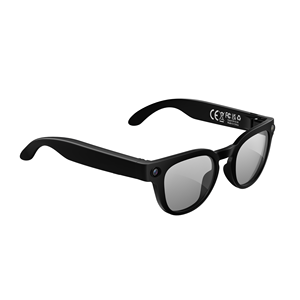
New Vision MT3 Smart AI Glasses With 8MP Camera HD Touch Button AI Translation Voice Assistant Fast Charging Sport BT Sunglasses
Ultra-fast charging, 8MP real-time optical capture, integrated AI voice prompt control for sports.
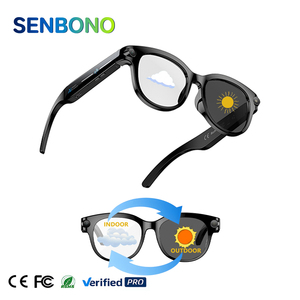
SENBONO M89 Smart Polarized Glasses Dual Camera 2MP IPX5 Waterproof Photochromic Lenses HD Video Recording 290mAh Battery AI
Dual-camera array, IPX5 weatherproofing, long-life 290mAh battery for all-day recording.

Professional AI Smart Translation Glasses 164+ Languages Real-Time Open-Ear Audio Anti-Blue Light Half-Rim Business Glasses
Real-time 164+ dialect translation engine, directional acoustic open-ear business rim.
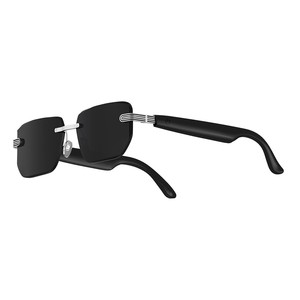
AI Smart Glasses Real-time Translation 145 Languages Photochromic Lenses Audio Video Calls Meeting Recording Voice Assistant
Adaptive photochromic tint, low-latency call processing, executive meeting voice transcription.
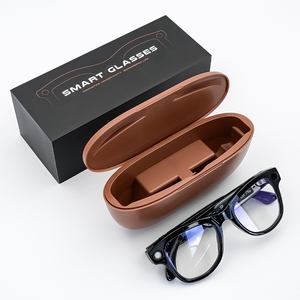
Newest SANVNET GS5 MAX 2026 AI Smart Glasses with Charging Case 8MP 4K Camera WIFI Smart Video Sunglasses Glasses Translation
Ultra-HD 4K sensor, high-speed Wi-Fi transmission hub, mobile power dock storage case.
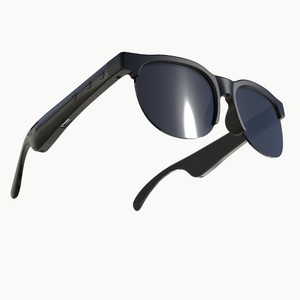
New Smart Glasses: Bluetooth Glasses with Open-Ear Bluetooth Calling for Outdoor Sports Cross-Border New Arrival
Ergonomic lightweight sports frame, dual micro-speakers, crystal-clear voice pick-up.
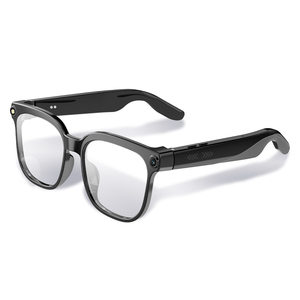
AI Smart Glasses with HD Camera Real-Time Translation Touch Operation Intelligent Recognition 16MB Camera Video Recording
Touch-capacitive temple control, edge object recognition algorithm, HD optical logging.
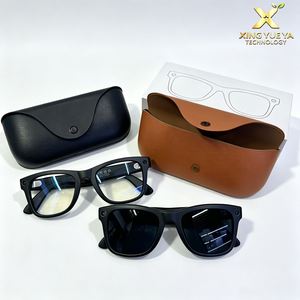
MT5-Ultra AI Smart Glasses Real-Time Trans 8MP Camera 1080P AI Translation Music Wi-Fi transmission with Charging case
Flagship 1080P video streaming codec, active noise-canceling beamforming mic array.
The Shift to Intelligent Wearable Eyewear Infrastructure
As the global smart audio glasses market transitions from basic Bluetooth audio accessories to multi-modal generative AI vision platforms, corporate buyers require OEM/ODM manufacturing partners equipped with deep hardware engineering, rapid SMT capability, and certified optical assembly.
Our Precision Manufacturing & R&D Engineering Stack
Integrating computer vision, miniaturized spatial audio drivers, and power-optimized silicon inside classic optical form factors requires exceptional manufacturing precision. Our facility brings together decades of optoelectronic mastery with next-generation edge AI firmware development.
Directional Acoustic Waveguides
Our custom open-ear audio architecture utilizes inverse phase cancellation drivers. This eliminates sound leakage to adjacent bystanders while maintaining crisp vocal fidelity, extended low-end response, and total situational awareness for outdoor environments.
Edge AI & Vision Engine Integration
We deploy ultra-low-power NPU micro-controllers capable of local scene processing, fast OCR text-to-speech reading, object indexing, and real-time offline neural inference without requiring constant mobile cellular cloud connectivity.
Ergonomic Micro-Assembly (<50g)
By engineering split dual-battery configurations housed symmetrically inside both temples, we achieve weight balance mirroring traditional luxury eyewear. Lightweight TR90, titanium alloys, and bio-acetate ensure all-day wearability.
Prescription & Solar Optical Fitting
Our frame geometry supports standard RX prescription lens cutting, photochromic transitions, anti-blue light coatings, and polarized UV400 filters. Quick-release magnetic lens clips allow rapid switching for indoor and outdoor use cases.
Hardware-Level Data Privacy
Designed for compliance with strict global privacy standards. On-frame optical sensors process image data transiently within volatile memory. Local encryption guarantees face identification data and visual feeds remain secure on-device.
White-Label Firmware & Multi-Lang SDK
We provide enterprise clients with complete white-label firmware, customizable companion mobile applications (iOS/Android), API hooks for proprietary LLM integration, and pre-loaded multi-language speech libraries supporting over 160 languages.
Industry Development Trends in Audio & AI Eyewear (2026–2030)
The consumer electronics and optical industries are experiencing a converging paradigm shift. Traditional eyewear manufacturers are seeking digital augmentation, while technology conglomerates are seeking non-intrusive form factors to deploy spatial audio and contextual Artificial Intelligence. The trajectory of the audio smart glasses sector is defined by five major technological evolutions:
Key Strategic Takeaway for Brands: Standalone audio glasses without voice-assistant or AI-processing capabilities are rapidly commoditizing. High-margin growth lies in Multi-Modal AI Vision Glasses that merge directional micro-acoustics with lightweight optical capture and edge computing.
1. Transition from Bluetooth Audio to Multi-Modal AI Agents
First-generation smart glasses functioned primarily as open-ear Bluetooth headphones. Modern procurement requirements mandate integration with Large Language Models (LLMs) and Multimodal AI (vLLMs). Users now expect glasses to "see" their environment via high-definition micro-cameras (8MP to 4K resolution), analyze surrounding text, translate languages instantly, and summarize complex meeting discussions through open-ear conversational responses.
2. Advanced Dipole Acoustic Engineering & Noise Cancellation
Sound leakage has historically been a major point of friction for commercial audio glasses adoption. Next-generation ODM designs utilize dual-driver directional acoustics operating on dipole phase-reversal principles. By directing focused acoustic soundwaves directly into the user's ear canal while creating destructive interference zones outward, audio privacy is preserved even in quiet office settings.
3. Miniaturized On-Device Edge NPU Silicon
To reduce latency and preserve battery runtime, hardware design is moving away from heavy cloud reliance. Edge Processing Units (NPUs) integrated directly within the eyewear temple process core computer vision tasks—such as obstacle detection, bar code scanning, facial identification, and optical character recognition (OCR)—locally in sub-second timelines without cellular data reliance.
4. Medical-Grade Assistive & Low-Vision Applications
A rapidly expanding segment of the OEM/ODM market targets visual assistive technology. Audio smart spectacles configured with scene-narration software assist blind and low-vision individuals by verbally describing room layouts, reading printed mail, identifying consumer packaging, and flagging head-height mobility hazards in real time, bridging low-vision care with consumer electronics.
Future Procurement Trends & Supply Chain Strategies
For brand managers, optical chains, telecommunication carriers, and assistive device distributors, sourcing smart audio glasses requires navigating complex trade-offs between thermal dissipation, frame weight, battery longevity, regulatory compliance, and tooling costs. Enterprise buyers are adjusting their procurement criteria based on the following global shifts:
Modular Chassis & Tooling Flexibility
Brands are demanding modular electronic inner-chassis systems (SKD/CKD) that fit into varied front-frame aesthetic styles (Wayfarer, Round, Aviator, Executive Business). This modularity allows buyers to launch multi-style product lines without paying setup fees for distinct electronic tooling for every frame shape.
Dual Battery & Magnetic Docks
Procurement specifications now favor continuous battery designs split balanced across left and right temples (typically 200mAh to 290mAh combined capacity), paired with smart protective charging cases capable of recharging the glasses 3 to 5 times over USB-C fast charging.
Global Regulatory Pre-Certification
Top-tier suppliers must provide turnkey compliance documentation including FCC Part 15, CE RED directives, RoHS 2.0, REACH, UN38.3 battery shipping safety clearance, IPX5/IPX7 waterproofing reports, and FDA medical device registration for visual assistive technology units.
OEM/ODM Platform Comparison Matrix
Evaluate key performance parameters across our specialized audio and AI camera smart glasses platforms to match your target market requirements.
| Architecture Category | Standard Audio Glasses | AI Translation Glasses | AI Vision & Camera Glasses | Assistive AI Spectacles |
|---|---|---|---|---|
| Primary Target Market | Lifestyle, Sports, Call Usage | Business, Travel, Conferences | Content Creators, Technophiles | Low-Vision & Accessibility |
| Acoustic System | Open-Ear Micro Dual Drivers | Directional Dipole Speakers | Dual Beamforming Mic + Speaker | Bone Conduction / Directional |
| Optical Capture | N/A (Audio Only) | N/A or Low-Res OCR Lens | 8MP to 4K Ultra-HD Camera | Wide-Angle Low-Light Sensor |
| AI Language Support | Basic Phone Voice Assistant | 164+ Languages Real-time | 145+ Languages + Video Logs | Natural Voice Scene Narration |
| Frame Weight Range | 36g – 42g | 40g – 48g | 48g – 58g | 45g – 49g (Balanced) |
| Waterproof Rating | IPX4 / IPX5 | IPX4 | IPX5 | IPX5 Industrial Coating |
| Typical OEM MOQ | 500 Units | 500 Units | 1,000 Units | 200 Units (Clinical/B2B) |
Turnkey OEM/ODM Manufacturing Workflow
From concept industrial design to final boxed distribution, our ISO-certified manufacturing infrastructure ensures tight quality control, full traceability, and fast time-to-market.
Industrial Design & CAD
Creation of custom frame aesthetics, temple weight distribution simulation, thermal dynamics analysis for micro-processors, and optical alignment modeling.
PCB Micro SMT Tooling
High-density Surface Mount Technology (SMT) placing micro-controllers, Bluetooth 5.4/Wi-Fi chipsets, NPUs, power management ICs, and mic arrays onto flexible PCBs.
Acoustic & Optical Calibration
Precision tuning of directional speaker cavity response, active beamforming microphone noise cancellation, and optical lens centration testing in cleanroom facilities.
Firmware & QA Testing
Flashing customized white-label firmware, pairing mobile app SDKs, running 100% automated acoustic distortion tests, IPX water chamber sealing, and battery burn-in validation.
Frequently Asked Questions for B2B Buyers & Importers
Find technical, logistical, and commercial answers regarding our custom OEM/ODM audio smart glasses production capabilities.
For standard white-label customization (custom logo printing on frames, custom packaging boxes, laser etching on temples, and default Bluetooth name modification), our standard MOQ starts at 500 units per model. For fully customized ODM projects involving new industrial frame tooling, custom PCB layouts, proprietary chip integrations, or custom optical sensor housings, our typical production MOQ is 1,000 to 3,000 units depending on tooling complexity.
Yes. We provide complete hardware-software integration support. Our engineering team supplies comprehensive BLE/Wi-Fi SDKs, Android/iOS reference code, and firmware API hooks. This allows your developer team to connect the glasses directly to your proprietary AI cloud infrastructure (such as OpenAI GPT-4o, Anthropic Claude, Google Gemini, or custom enterprise LLMs) or utilize our pre-built multi-language translation firmware out of the box.
We solve audio leakage through precise acoustic cavity design and dual micro-driver phase-inversion technology. Each frame temple features secondary acoustic sound vents positioned to broadcast anti-phase soundwaves outward. These inverse waves cancel out stray sound leakage while reinforcing directional acoustic pressure into the wearer's ear canal. This ensures private phone calls and voice assistant responses even in quiet office surroundings.
Yes. All of our smart audio and AI camera frame models feature front lens rim geometry engineered to accommodate standard prescription (RX) single-vision, progressive, anti-blue light, and photochromic optical lenses. Lenses can be easily edged and fitted by standard optical laboratories or pre-fitted in our factory during mass production.
All finished devices pass stringent global export standard testing. We supply full testing documentation for FCC (USA), CE-RED (Europe), RoHS 2.0, REACH, TELEC (Japan), and IPX5 moisture protection testing. Lithium-polymer batteries built into the temples hold full MSDS, UN38.3, and IEC62133 shipping safety clearances for air transport.
Factory stock evaluation samples (with sample branding) ship within 3 to 5 business days. Customized OEM prototype samples featuring brand packaging and custom firmware flash take approximately 10 to 15 business days. Full mass production lead time for orders between 1,000 and 10,000 units is typically 30 to 45 calendar days following final artwork approval and tooling lock.
Yes. We manufacture specialized assistive visual aid spectacles equipped with wide-angle low-light cameras, tactile single-button operation, and local offline vision firmware. These units process obstacle warnings, text reading, and scene descriptions, and are used worldwide by assistive technology distributors, low-vision clinics, and accessibility agencies.
Partner with a Leading OEM/ODM Audio Glasses Manufacturer
Accelerate your hardware roadmap with certified optoelectronic engineering, turn-key firmware solutions, and factory-direct B2B pricing. Request our complete 2026 Product Catalog and OEM Specification Datasheets today.