164+
Supported AI Languages
<49g
Ultra-Light Frame Weight
4K HD
Optical Camera Sensor
ISO 13485
Quality Manufacturing
The global wearable computing landscape is experiencing a seismic paradigm shift. Intelligent eyewear—ranging from real-time AI voice translation smart glasses to open-ear audio directional sunglasses and assistive vision technology—has moved from niche engineering experimentation to high-volume commercial production. Sourcing executives, optical brand managers, and assistive technology distributors seeking qualified contract manufacturers must evaluate suppliers beyond simple assembly capability. Modern intelligent eyewear manufacturing demands rigorous optical alignment, SMT precision micro-soldering, advanced RF design for Bluetooth 5.4/Wi-Fi 6, low-latency edge AI processing integration, and IPX5+ waterproof ergonomics.
This comprehensive industry whitepaper provides an authoritative benchmarking framework for the Top 10 Intelligent Eyewear Manufacturers and Factories worldwide. Below, we break down top-performing OEM/ODM products, examine manufacturing capability standards, evaluate emerging AI vision and translation technologies, and clarify strategic procurement vectors for global buyers.
Featured Intelligent Eyewear Showcase (OEM/ODM Ready)
Explore eight of the industry’s most advanced flagship smart eyewear platforms currently available for institutional procurement, white-label branding, and custom firmware adaptation.
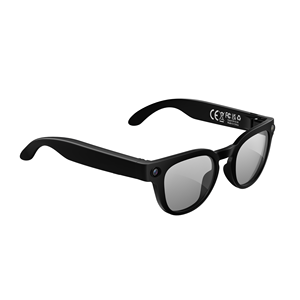
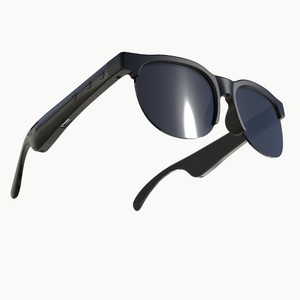
New Vision MT3 Smart AI Glasses With 8MP Camera HD Touch Button AI Translation Voice Assistant Fast Charging Sport BT Sunglasses
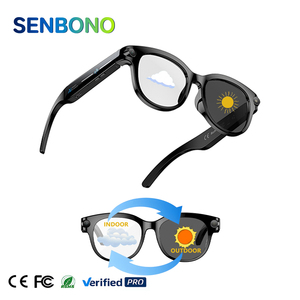
SENBONO M89 Smart Polarized Glasses Dual Camera 2MP IPX5 Waterproof Photochromic Lenses HD Video Recording 290mAh Battery AI
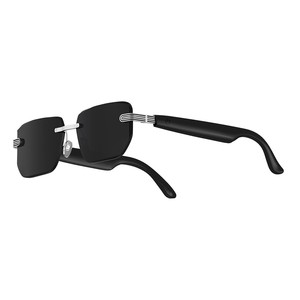
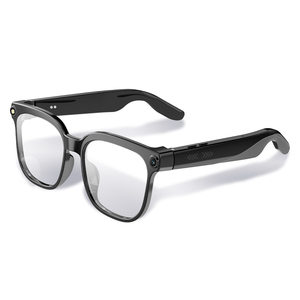
Professional AI Smart Translation Glasses 164+ Languages Real-Time Open-Ear Audio Anti-Blue Light Half-Rim Business Glasses
AI Smart Glasses Real-time Translation 145 Languages Photochromic Lenses Audio Video Calls Meeting Recording Voice Assistant
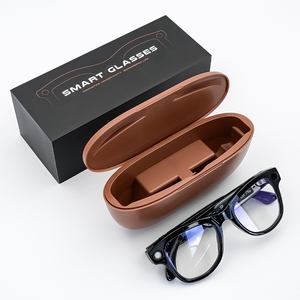
Newest SANVNET GS5 MAX 2026 AI Smart Glasses with Charging Case 8MP 4K Camera WIFI Smart Video Sunglasses Glasses Translation
New Smart Glasses: Bluetooth Glasses with Open-Ear Bluetooth Calling for Outdoor Sports Cross-Border New Arrival
AI Smart Glasses with HD Camera Real-Time Translation Touch Operation Intelligent Recognition 16MB Camera Video Recording
MT5-Ultra AI Smart Glasses Real-Time Trans 8MP Camera 1080P AI Translation Music Wi-Fi transmission with Charging case
Evaluation Framework: Top 10 Factory Benchmark Parameters
Selecting an OEM/ODM manufacturing partner in the wearable AI sector requires looking far beyond standard consumer electronics assembly capabilities. Because intelligent glasses must combine optical clear-aperture precision, extreme miniaturization, thermal management, balanced weight distribution, and high-frequency wireless performance, leading tier-1 factories operate under strict, specialized criteria.
1. Micro-SMT & Flex-PCB Integration
Tier-1 intelligent eyewear factories utilize 0201 micro-component Surface Mount Technology (SMT) with multi-layer high-density flexible PCBs (FPC) embedded inside temple arms without sacrificing structural elasticity or hinge longevity.
2. Optical Calibration & Cleanrooms
Camera modules (from 2MP visual-inertial tracking sensors to 8MP/4K ultra-wide video capture) require Class 10,000 cleanroom assembly to ensure zero dust contamination, zero optical parallax error, and precise focal calibration.
3. Directional Acoustic Isolation
Top manufacturing facilities incorporate dual open-ear directional audio speakers with acoustic phase cancellation algorithms, minimizing sound leakage in quiet business meetings while preserving natural situational awareness.
4. Ergonomic Dual-Battery Balance
Advanced factories split battery capacity evenly between left and right temple arms (e.g., dual 145mAh or 290mAh unified cells). This balances center-of-gravity near the ears, preventing frame slip during physical exercise.
5. Waterproof & Biocompatibility Testing
Every batch undergoes IPX5 rain testing, sweat corrosion resistance, anti-allergic TR90/titanium surface coating audits, and thermal dissipation modeling to ensure continuous temple temperature remains under 38°C.
6. Low-Latency AI Firmware SDKs
Leading ODM suppliers bundle robust Linux/RTOS or Android-based SDKs supporting fast-charging management, Wi-Fi 6 wireless video transmission, sub-second translation engine hooks, and cloud visual model APIs.
Technical Specifications Matrix Across Smart Eyewear Tiers
To streamline enterprise procurement inquiries and OEM product customization, the table below provides a comparative architectural matrix categorizing standard consumer audio glasses, professional AI translation specs, and advanced visual-assistive smart spectacles.
| Architecture Category |
Primary Microcontroller & Chipset |
Optical & Camera Array |
Acoustic System |
Weight & Material |
Target Application |
| Open-Ear Audio Sunglasses |
Qualcomm QCC3040 / Bestechnic BES2300 |
N/A (Audio Only) or Basic UV Sensor |
Dual Directional Micro Speakers, AAC/SBC |
38g – 44g (TR90 Frame) |
Sports, Hands-free Calling, Casual Music |
| Professional AI Translation Glasses |
Dual-Core Edge NPU + Bluetooth 5.4 Low Energy |
Optional HD Document/Signage Capture Camera |
Dual Noise-Canceling Beamforming Mics |
42g – 48g (Titanium / Acetate) |
International Business, Real-time 164+ Language Interpretation |
| 4K Video & VLM Smart Spectacles |
High-Performance Quad-Core Processor + Wi-Fi 6 |
8MP / 4K Ultra-Wide Camera + HDR Sensor |
Bone Conduction / Open-Ear Hybrid Drivers |
48g – 55g (Magnesium Alloy) |
Hands-Free Vlogging, Live Streaming, Remote Field Service |
| Visual Assistive Technology Frames |
On-Device Neural Engine (Offline Vision Models) |
Wide-Aperture Low-Light Obstacle Sensor |
Directional Voice Synthesis Engine |
45g – 49g (Ergonomic Balance) |
Assistive Vision, Text-to-Speech, Obstacle Avoidance for Low-Vision |
Future Sourcing & Procurement Trends (2025–2030)
The smart eyewear manufacturing sector is moving rapidly toward deeper artificial intelligence integration and lighter form factors. Sourcing directors and product managers evaluating 2025–2030 product roadmaps must track four major technological transformations:
1. On-Device Vision-Language Small Models (SLMs)
Historically, AI smart glasses relied completely on cloud connectivity for complex scene description or real-time language translation, exposing users to high latency and dead-zone connectivity drops. Future production models integrate energy-efficient hardware NPUs capable of running quantized 1B–3B parameter multimodal AI models directly on the frame. Core functions like immediate text-to-speech reading, sign detection, and obstacle recognition execute offline in under 200ms.
2. Hybrid Prescription Lens Integration Architecture
A major historical barrier to consumer adoption was the difficulty of pairing electronics with custom optical vision correction. Next-generation ODM factories have developed standardized magnetic clip-on optical inserts, anti-blue light business lenses, photochromic light-adaptive coatings, and direct-mount prescription lens frames. Procurement teams can now offer a single electronic frame base compatible with thousands of optical lens variations.
3. Advanced MicroLED & Waveguide Optical Engines
While audio and camera-based glasses lead current sales volumes, heads-up display (HUD) glasses featuring diffractive optical waveguides and monochrome/full-color MicroLED projectors are reaching commercial manufacturing maturity. Factories with specialized optical bonding cleanrooms are offering sub-50g display glasses for navigation prompts, telemetry overlays, and real-time TelePrompter subtitle displays.
4. Micro-Power Management & Fast-Charging Companion Cases
Weight limits smart glasses batteries to roughly 200mAh to 300mAh. To enable all-day productivity without increasing temple thickness, factory engineering teams are bundling custom magnetic fast-charging storage cases equipped with 2000mAh–3500mAh internal power reserves. A 10-minute drop-in charge provides up to 2 hours of continuous camera or translation usage.
Frequently Asked Sourcing & Procurement Questions (FAQ)
Q1: What is the typical Minimum Order Quantity (MOQ) for OEM/ODM intelligent eyewear?
+
For standard white-label custom packaging and logo silk-screening on existing tooling platforms, MOQs typically range from 500 to 1,000 units. For complete custom industrial design (ID), custom frame molds, unique PCB layout, or proprietary app/firmware integration, standard ODM development MOQs begin at 3,000 to 5,000 units per production run.
Q2: How do factories manage heat dissipation in high-power 4K video recording models?
+
Tier-1 factories utilize ultra-thin graphite thermal spreaders and aluminum-magnesium internal sub-frames that channel heat away from human skin touchpoints toward the outer frame chassis. Advanced firmware throttling algorithms maintain stable temperature thresholds (under 38°C) without dropping video recording frames.
Q3: What global compliance certifications are required for smart glasses distribution?
+
Smart eyewear requires dual-category regulatory certifications: Consumer Electronics (CE, FCC, RoHS, REACH, TELEC, SRRC for wireless RF compliance) and Optical Safety certifications (ANSI Z80.3, EN ISO 12312-1 for lens impact resistance and UV protection). Assistive vision medical variants additionally require FDA Class I/II registration or CE MDR compliance.
Q4: Can we integrate our proprietary enterprise AI translation or LLM backend via API?
+
Yes. Our OEM firmware architecture supports customizable WebSocket and REST API endpoints. Sourcing partners can easily re-route audio speech-to-text streams or camera frame inputs to proprietary cloud models (e.g., Azure Open AI, custom LLM servers, or private institutional translation databases).
Q5: How do open-ear audio glasses perform in loud outdoor ambient environments?
+
Modern intelligent frames feature dynamic EQ algorithms that boost vocal frequencies (1kHz–4kHz) while suppressing ambient wind and traffic background noise via dual MEMS microphone beamforming, allowing crystal-clear call quality and voice assistant interactions up to 75dB ambient noise environments.
Q6: What is the standard engineering sample and production timeline?
+
Existing platform samples ship within 3–5 business days. Customized firmware or branded prototype samples require 14–21 days. Full-scale mass production lead times typically range from 35 to 45 calendar days post sample lock and component sourcing validation.
Why Partner With Our Intelligent Eyewear Manufacturing Hub
Our state-of-the-art manufacturing infrastructure seamlessly bridges deep artificial intelligence research with precision optical craftsmanship. By uniting hardware engineering, custom optics, and edge-software development under one roof, we empower global brands to deliver reliable, highly competitive wearable technology to market faster.
Full-Stack R&D Integration
Over 120+ dedicated optical engineers, RF specialists, and embedded AI developers offering end-to-end support from schematic design and ID modeling to iOS/Android app customization.
Rigorous Quality Assurance
Operating under ISO 9001 and ISO 13485 certified quality management systems. Every manufactured pair undergoes 100% automated optical inspection (AOI), acoustic response calibration, and drop-impact testing.
Flexible Modular Customization
Whether you require lightweight business prescription frames, rugged IPX7 sports sunglasses, or high-accuracy translation devices, our flexible modular platforms drastically cut NRE costs and development lead times.
Accelerate Your Smart Eyewear Sourcing Today
Request comprehensive OEM/ODM product catalogs, request prototype samples, or schedule a technical consultation with our engineering directors.
Send an Inquiry