
Next-Gen AI Sight Aid & Smart Eyewear Portfolio
Direct factory supply of vision assistance devices featuring embedded computer vision, multi-language real-time translation, open-ear audio, and lightweight frame design.
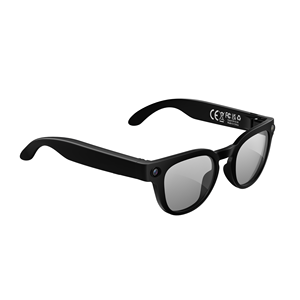
New Vision MT3 Smart AI Glasses With 8MP Camera HD Touch Button AI Translation Voice Assistant Fast Charging Sport BT Sunglasses
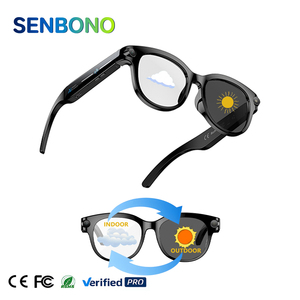
SENBONO M89 Smart Polarized Glasses Dual Camera 2MP IPX5 Waterproof Photochromic Lenses HD Video Recording 290mAh Battery AI

Professional AI Smart Translation Glasses 164+ Languages Real-Time Open-Ear Audio Anti-Blue Light Half-Rim Business Glasses
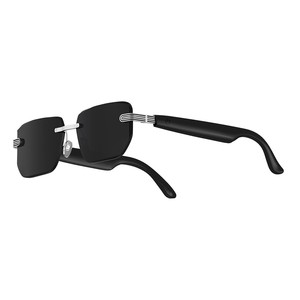
AI Smart Glasses Real-time Translation 145 Languages Photochromic Lenses Audio Video Calls Meeting Recording Voice Assistant
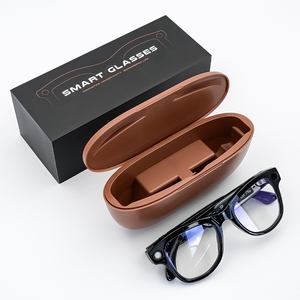
Newest SANVNET GS5 MAX 2026 AI Smart Glasses with Charging Case 8MP 4K Camera WIFI Smart Video Sunglasses Glasses Translation
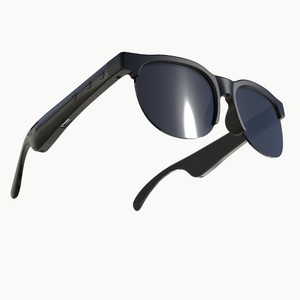
New Smart Glasses: Bluetooth Glasses with Open-Ear Bluetooth Calling for Outdoor Sports Cross-Border New Arrival
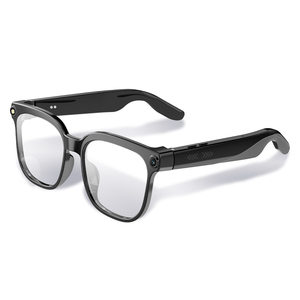
AI Smart Glasses with HD Camera Real-Time Translation Touch Operation Intelligent Recognition 16MB Camera Video Recording
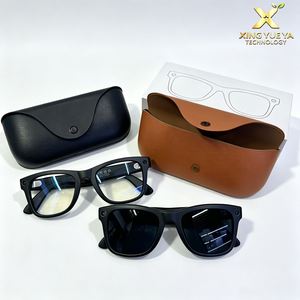
MT5-Ultra AI Smart Glasses Real-Time Trans 8MP Camera 1080P AI Translation Music Wi-Fi transmission with Charging case
Evaluating the Top 10 Sight Aid Manufacturers & Suppliers in the AI Wearable Era
The global market for visual assistive technology is experiencing a structural paradigm shift. According to recent epidemiological studies by the World Health Organization (WHO), over 2.2 billion people globally live with NEAR or DISTANCE vision impairment. For international procurement managers, medical device distributors, government rehabilitation agencies, and accessibility technology brands, sourcing high-reliability sight aid hardware is no longer just about traditional optical magnifiers or standard white canes. It is about procuring AI-powered spectacles, real-time computer vision wearables, and multimodal audio-spatial feedback systems.
Selecting the right supplier out of the Top 10 Sight Aid Manufacturer & Supplier ecosystem requires evaluating far more than unit prices. B2B buyers must evaluate firmware adaptability, edge compute performance, open-ear acoustic engineering, optical lens integration, regulatory compliance (CE MDR, FDA Class I/II, ISO 13485), and long-term SDK support. This procurement guide examines market dynamics, technological roadmaps, manufacturing criteria, and essential OEM/ODM capabilities.
1. The Evolution of Visual Assistive Technology: From Passive Optics to Generative AI
Historically, sight aids were classified into passive magnification optics, high-contrast CCTV desktop readers, and basic tactile tools. Modern visual assistive technology (VAT) leverages miniaturized edge AI chips, high-resolution CMOS camera modules, and neural-network-driven scene graph engine models. Today's top manufacturers design smart glasses that process visual fields locally in real time, translating complex sensory inputs into clear, intuitive voice descriptions.
Key technological leaps driving current procurement decisions include:
- On-Device Neural Inference: Processing optical character recognition (OCR), currency identification, facial recognition, and obstacle mapping directly on microprocessors without requiring active cellular connection.
- Open-Ear & Directional Audio Architecture: Replacing intrusive ear-buds with spatial acoustic drivers or bone-conduction transducers. This ensures the user retains vital ambient environmental cues essential for spatial orientation and mobility (O&M) safety.
- Ultra-Lightweight Thermal Management: Engineering dual-battery temple stems and magnesium-titanium alloys to keep total spectacle weight under 50 grams while passively dissipating heat during continuous video processing.
Top 10 Sight Aid Manufacturer & Supplier Evaluation Matrix
To assist global procurement teams in vendor qualification, the following matrix outlines the technical benchmarks, compliance standards, and production capacities expected from top-tier sight aid suppliers in 2026.
| Tier Rank & Category | Core OEM/ODM Strengths | Primary AI & Optical Tech | Compliance & Certs | Target Sourcing Channel |
|---|---|---|---|---|
| Tier 1: Enterprise AI Spectacles (e.g., Sprhava) | Custom SoC Integration, Edge AI Firmware, Full White-Label ODM | 8MP/4K Ultra-Low-Light CMOS, Sub-second OCR, Open-Ear Spatial Audio | ISO 13485, CE MDR, FDA Registered, RoHS, FCC | National Health Services, VA Rehab, Global Distributors |
| Tier 1: Clinical Vision Magnifiers | Autofocus Macro Optics, High-DPI Micro-OLED HUD Displays | Binocular Display Engine, Variable Contrast Filters, 24x Digital Zoom | ISO 9001, Medical Class I, CE | Low Vision Clinics, Ophthalmology Chains |
| Tier 2: Wearable Smart Sunglasses | High-Volume Mass Assembly, Mold Customization, BT Audio Focus | Bluetooth 5.3, Dual Camera Array, Real-time Translation (145+ Langs) | CE, FCC, IPX5 Waterproof | Cross-Border E-Commerce, Consumer Tech Brands |
| Tier 2: Orientation & Mobility Assist Devices | Haptic Feedback Integration, Ultrasonic & LiDAR Sensor Fusion | Head-Height Obstacle Radar, Depth Sensor Arrays, Voice Prompting | CE, UN38.3 Lithium Safety | Special Education Institutions, Accessibility NPOs |
Product Development & Technological Trends in Sight Aid Manufacturing
When committing to multi-year supply contracts, procurement directors must ensure their manufacturing partners align with key technology vectors shaping the next decade of visual aids:
A. Multimodal Vision-Language Models (VLMs) at the Edge
Future-proof sight aids no longer rely solely on simple OCR script readers. Leading manufacturers are embedding compressed Vision-Language Models directly into hardware. This allows wearers to ask open-ended questions: "Where is the nearest vacant chair?" or "What are the nutritional facts on this box?" and receive contextual answers instantly. OEMs offering modular firmware update pipelines are highly favored in B2B tender evaluations.
B. Ergonomics, Prescription Lens Compatibility, and Modular Clip-Ons
Low-vision conditions—such as Age-Related Macular Degeneration (AMD), Glaucoma, Diabetic Retinopathy, and Retinitis Pigmentosa—often require specialized optical filters, prism adjustments, or custom prescription lenses. Top manufacturers design spectacle frames featuring universal Rx magnetic inserts or clip-on camera modules, ensuring users do not have to compromise their prescribed vision correction.
C. Zero-Latency Local Privacy Computing
With privacy regulations expanding globally (GDPR, HIPAA, CCPA), transmitting continuous video streams to third-party cloud servers creates legal and operational liabilities for distributors. Sourcing sight aids with local image processing engines guarantees that captured video frames remain encrypted and are immediately deleted post-inference, fully respecting wearer and bystander privacy.
Future Procurement Trends for Sight Aid Sourcing
Key requirements driving international purchasing decisions in visual assistive technology over the next 3 to 5 years.
Localization & Multi-Language Packs
Global distributors require sight aids pre-loaded with localized text-to-speech engine packs supporting over 140 regional languages and dialects with micro-adjustable reading speeds.
Turnkey OEM / White-Labeling
Brands are demanding modular hardware platforms where outer frames, firmware splash screens, companion mobile apps, and packaging can be customized under private labels.
Clinical Evidence & Compliance
Tender boards, such as NHS or US Veterans Affairs, increasingly mandate ISO 13485 production quality controls, CE MDR certification, and user ergonomics field test documentation.
Why Partner With Us: Direct Factory & R&D Advantages
Combining deep computer vision engineering, optical precision manufacturing, and low-vision clinical insights to deliver high-performance visual assistive devices.
Proprietary Edge AI Pipeline
Our micro-vision inference engines deliver sub-second scene description, instant text-to-speech reading, and head-height obstacle awareness operating completely offline when network signals fail.
Clinical & Ergonomic Co-Design
Developed in close collaboration with low-vision rehabilitation specialists, orientation & mobility trainers, and visually impaired user focus panels to guarantee practical, real-world utility.
Full ODM Sourcing & Certification
End-to-end manufacturing flexibility—from custom mold tooling and PCB layout design to multi-language firmware flashing, CE/FDA certification support, and global logistics execution.
Sight Aid Procurement & Sourcing FAQ
Common questions answered for international healthcare buyers, tender managers, and assistive tech distributors.
Partner with a Leading Sight Aid Manufacturer Today
Request technical specifications, sample evaluation units, factory audit reports, or wholesale quotation pricing directly from our engineering team.