
Featured Visual & Audio Assistive Devices
Explore China's premier OEM smart spectacles, multi-lingual AI vision aids, and advanced computer vision hardware engineered for global B2B procurement and accessibility projects.
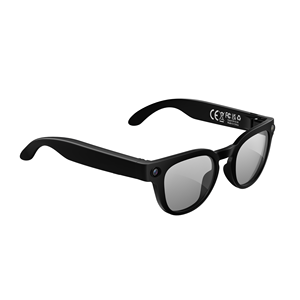
New Vision MT3 Smart AI Glasses With 8MP Camera HD Touch Button Al Translation Voice Assistant Fast Charging Sport BT Sunglasses
Get Catalog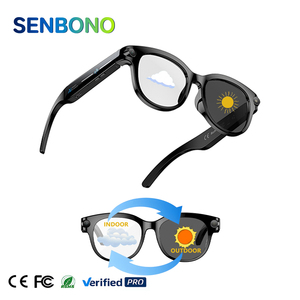
SENBONO M89 Smart Polarized Glasses Dual Camera 2MP IPX5 Waterproof Photochromic Lenses HD Video Recording 290mAh Battery AI
Get Catalog
Professional AI Smart Translation Glasses 164+ Languages Real-Time Open-Ear Audio Anti-Blue Light Half-Rim Business Glasses
Get Catalog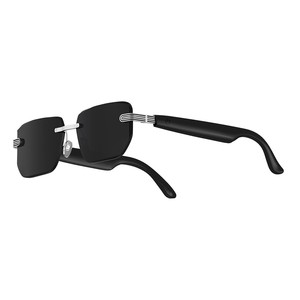
AI Smart Glasses Real-time Translation 145 Languages Photochromic Lenses Audio Video Calls Meeting Recording Voice Assistant
Get Catalog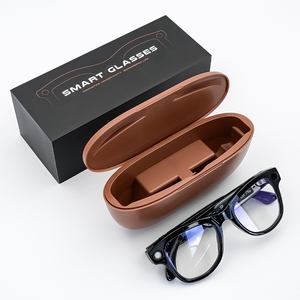
Newest SANVNET GS5 MAX 2026 AI Smart Glasses with Charging Case 8MP 4K Camera WIFI Smart Video Sunglasses Glasses Translation
Get Catalog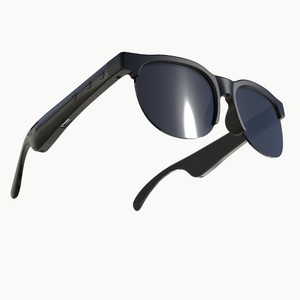
New Smart Glasses: Bluetooth Glasses with Open-Ear Bluetooth Calling for Outdoor Sports Cross-Border New Arrival
Get Catalog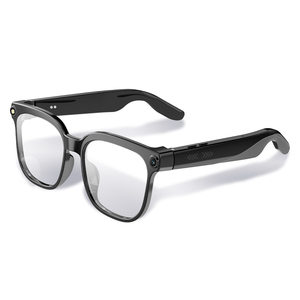
AI Smart Glasses with HD Camera Real-Time Translation Touch Operation Intelligent Recognition 16MB Camera Video Recording
Get Catalog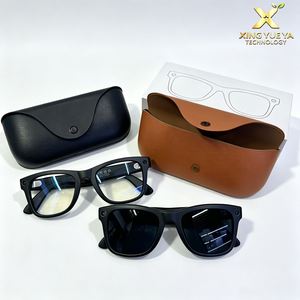
MT5-Ultra AI Smart Glasses Real-Time Trans 8MP Camera 1080P AI Translation Music Wi-Fi transmission with Charging case
Get CatalogExecutive Industry Overview: The Paradigm Shift in Assistive Hardware Sourcing
The global market for visual assistive technology and wearable artificial intelligence is undergoing a structural transformation. Driven by rapid advancements in edge-computing silicon, low-power computer vision, and specialized neural text-to-speech engine integration, traditional optometric and mobility devices are rapidly converging into intelligent wearable hardware. Institutional procurement teams, healthcare systems, and regional assistive technology distributors are increasingly prioritizing manufacturers capable of providing end-to-end OEM/ODM customization, stringent compliance with international accessibility frameworks (such as ADA Title III and the European Accessibility Act), and localized AI firmware integration.
As China solidifies its position as the premier global hub for micro-electronics fabrication, precision optics assembly, and AI-driven wearable manufacturing, international buyers face both unprecedented sourcing opportunities and complex vendor selection challenges. Sourcing high-performance assistive devices—such as AI-powered spectacles for the visually impaired, real-time audio interpretation glasses, and hands-free orientation aids—requires evaluating suppliers far beyond unit costs. Sourcing managers must conduct comprehensive audits covering optical sensor calibration, local neural model latency, thermal dynamics within lightweight frames, and cryptographic data privacy protocols.
Manufacturer Capabilities & Supply Chain Engineering Excellence
How leading Chinese manufacturers integrate hardware precision, deep-learning models, and certified medical device production standards.
Precision Hardware Engineering
State-of-the-art cleanroom assembly facilities utilizing high-definition wide-angle 8MP optical sensors, photochromic lens integration, and ultra-lightweight TR90 frame molding. Advanced surface-mount technology (SMT) guarantees high-density component packing without thermal dissipation issues.
On-Device Edge AI & NPU Integration
Integration of dedicated Neural Processing Units (NPUs) capable of executing offline MobileNet, YOLO-variant object detection models, and high-speed Optical Character Recognition (OCR). Ensures vital safety features like obstacle detection operate seamlessly without active internet connections.
Open-Ear Directional Acoustics
Implementation of custom open-ear directional audio drivers and bone-conduction transducers. Acoustic sound-chambers guide spatial audio prompts directly toward the ear canal, minimizing sound leakage while ensuring the user retains critical situational auditory awareness of their surroundings.
Rooted in years of dedicated R&D and co-design testing alongside low-vision rehabilitation specialists, leading OEM/ODM suppliers like Sprhava have established robust production pipelines. By bridging deep learning algorithms with optomechanical engineering, suppliers can deliver tailored firmware builds, multi-language voice engines, and certified prescription-compatible optical clip-ons tailored to specific institutional tender requirements.
Standardized OEM Hardware Specifications Matrix
Benchmark comparison parameters for enterprise procurement evaluation across high-grade AI smart spectacle lines.
| Architecture Component | Standard Commercial Grade | Enterprise Assistive / Medical Grade | Sourcing Impact & Benefit |
|---|---|---|---|
| Optical Camera Module | 2MP - 5MP / Fixed Focus | 8MP - 4K Wide-Angle / Low-Light Adaptive | Enables micro-text OCR on medicine bottles & low-light indoor navigation |
| Processing Unit | Single MCU / Cloud-reliant | Dual-Core RISC-V NPU / Edge AI Pipeline | Guarantees zero-latency local processing for offline obstacle warnings |
| Acoustic Transducer | Standard Bluetooth Speaker | Open-Ear Directional / Micro-Cavity Driver | Prevents acoustic leakage while leaving the user's ear canal completely open |
| Frame Weight & Materials | 65g - 85g / PC Plastics | 42g - 49g / Ultra-flexible TR90 & Titanium | Eliminates nasal bridge fatigue during extended 12-hour continuous wear |
| Localization & Firmware | Single/Dual Language TTS | 145+ to 164+ Languages & Dialect Packs | Allows global distribution across diverse municipal accessibility programs |
| Compliance & Certs | Basic CE / FCC | ISO 13485, CE-MDR, RoHS, FDA Registered | Streamlines medical device import clearance and insurance reimbursement |
Global Procurement Trends in Visual Assistive Technology (2026–2030)
As public accessibility legislation tightens across North America, Europe, and the Asia-Pacific region, enterprise buyers are adjusting their procurement criteria. Sourcing managers must evaluate strategic market vectors when selecting manufacturing partners in China:
1. Hybrid Edge-Cloud AI Architectures
Future-proof procurement strategies mandate smart glasses that utilize on-device NPUs for real-time safety functions (such as stair, curb, and collision warnings) paired with high-level cloud Large Vision Models (LVMs) for conversational scene description when connectivity is available.
2. Zero-Trust Privacy & Data Security
With visual data capture occurring continuously in public spaces, international healthcare providers demand manufacturers enforce on-device data ephemerality. Leading OEM suppliers build encrypted local storage enclaves and automatic visual frame purging mechanisms to satisfy GDPR and HIPAA requirements.
3. Modular Firmware & SDK Customization
Global distributors increasingly require white-label SDK access. This allows regional software developers, NGOs, and low-vision clinics to flash custom voice models, bespoke user interface scripts, or specialized navigation software directly onto the manufacturer's base hardware platform.
Technological Development Vectors in Smart Spectacles
Understanding the R&D trajectory of Chinese manufacturers empowers sourcing teams to negotiate longer product lifecycles and avoid inventory obsolescence. Key engineering vectors include:
- • Sub-Nanometer Processing Efficiency & Battery Thermal Control Deploying low-power AI microprocessors allows full-day battery life (via magnetic charging cases or dual-battery temple designs) while maintaining device skin temperatures below 38°C during heavy neural model execution.
- • Multi-Modal Generative Scene Description Transitioning from simple single-object tag identification to contextual narrative synthesis. Modern AI engines speak context-aware prompts—for instance, changing an alert from "Chair ahead" to "Empty dining chair 2 meters to your left near the glass exit door."
- • Ergonomic Prescription Lens Adaptability Designing universal magnetic snap-on rim systems and adjustable nose pad assemblies that allow low-vision patients suffering from macular degeneration, glaucoma, or retinitis pigmentosa to combine custom corrective optical lenses directly with visual AI modules.
Frequently Asked B2B Procurement Questions (FAQ)
Essential answers for distributors, medical buyers, and accessibility program directors evaluating Chinese OEM suppliers.
Partner with China's Leading Assistive Tech Manufacturers
Request comprehensive technical specifications, institutional wholesale pricing catalogs, and evaluation sample units tailored to your regional accessibility tenders.
Get Catalog