
Featured Digital & AI Smart Glasses Catalog
Explore top-tier manufactured digital glasses from leading Chinese OEM suppliers, featuring ultra-HD optics, directional open-ear audio, localized edge translation, and advanced photochromic lenses.
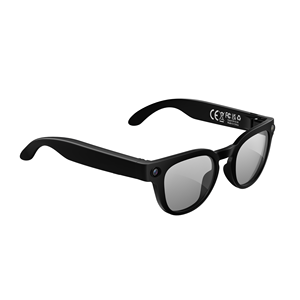
New Vision MT3 Smart AI Glasses With 8MP Camera HD Touch Button AI Translation Voice Assistant Fast Charging Sport BT Sunglasses
Get a Quote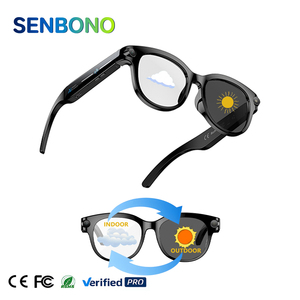
SENBONO M89 Smart Polarized Glasses Dual Camera 2MP IPX5 Waterproof Photochromic Lenses HD Video Recording 290mAh Battery AI
Get a Quote
Professional AI Smart Translation Glasses 164+ Languages Real-Time Open-Ear Audio Anti-Blue Light Half-Rim Business Glasses
Get a Quote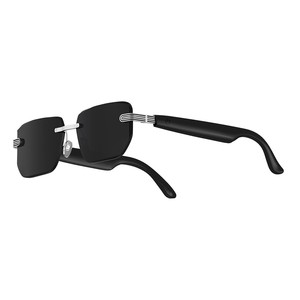
AI Smart Glasses Real-time Translation 145 Languages Photochromic Lenses Audio Video Calls Meeting Recording Voice Assistant
Get a Quote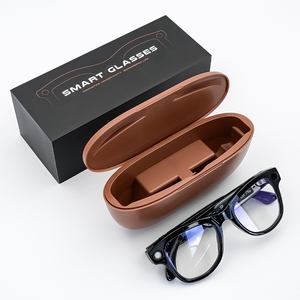
Newest SANVNET GS5 MAX 2026 AI Smart Glasses with Charging Case 8MP 4K Camera WIFI Smart Video Sunglasses Glasses Translation
Get a Quote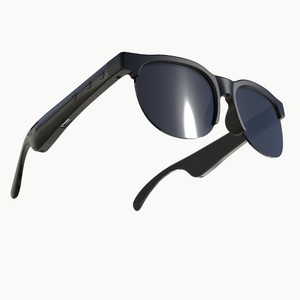
New Smart Glasses: Bluetooth Glasses with Open-Ear Bluetooth Calling for Outdoor Sports Cross-Border New Arrival
Get a Quote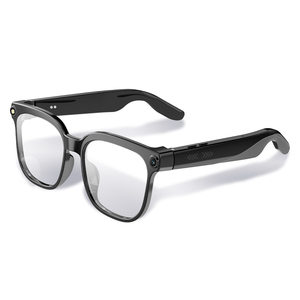
AI Smart Glasses with HD Camera Real-Time Translation Touch Operation Intelligent Recognition 16MB Camera Video Recording
Get a Quote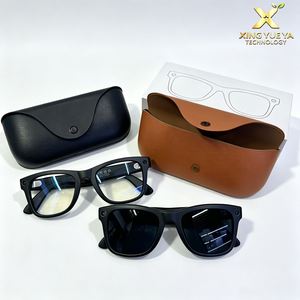
MT5-Ultra AI Smart Glasses Real-Time Trans 8MP Camera 1080P AI Translation Music Wi-Fi transmission with Charging case
Get a Quote01 Executive Analysis: The Shift in China's Digital & AI Smart Glasses Ecosystem
The global wearable technology sector is undergoing a fundamental structural transition. Traditional audio sunglasses and basic Bluetooth frames are rapidly converging with edge-calculated AI micro-optics, low-latency computer vision, and real-time Natural Language Processing (NLP). China has cemented its status as the undisputed apex hub for digital glasses manufacturing, hosting over 85% of the global manufacturing infrastructure across specialized industrial clusters in Shenzhen (electronics & chip assembly), Danyang (optical lens prescription surfacing), and Wenzhou (ergonomic frame forging).
As international enterprise buyers, brand owners, and medical assistive distributors navigate China's OEM/ODM supply base, distinguishing between tier-1 original design manufacturers (ODMs) and generic assembly houses is crucial. Modern digital glasses require tight convergence between optical engineering, RF antenna alignment, directional beamforming microphone arrays, and specialized firmware localization.
Strategic Global Procurement Trends (2026–2030)
Key shifts shaping how international procurement heads, medical rehabilitation distributors, and brand owners source digital glasses from Chinese manufacturing lines.
A Modular Chipset & Open SDK Sourcing
Procurement mandates are moving away from locked, monolithic firmware. Enterprise clients increasingly request modular chipsets (such as Qualcomm AR1 platforms or Bestechnic high-performance BLE/Wi-Fi SoCs) equipped with open API/SDK layers. This enables global importers to flashed localized AI translation engines, custom LLMs, or proprietary assistive vision algorithms without re-engineering hardware.
B Hybrid Optical Engine Customization
B2B buyers are demanding customizable optical configurations directly from China factories. This includes prescription-ready rimless magnetic clips, electrochromic dynamic tinting, TAC polarized UV400 lenses, and anti-blue light coatings tailored for corporate office environments or high-intensity outdoor sports.
C ESG Compliance & Lightweight Materials
Environmental standards and extended wearable comfort drive procurement decisions. Factory audits prioritize ISO14001 compliance, bio-based acetate frames, ultra-light TR90 memory polymers, and aerospace-grade titanium alloy hinges designed to maintain clamping force under 49g total frame weight for all-day wearability.
03 Technological Roadmap: R&D Breakthroughs in Chinese Smart Eyewear
Leading Chinese digital glasses manufacturers are focusing R&D budgets on key bottleneck technologies to bridge the gap between heavy head-mounted displays (HMDs) and everyday consumer eyewear:
1. Edge Computer Vision & Assistive AI
Integration of sub-watt neural processing units (NPUs) allows frames to execute OCR (optical character recognition), face tag identification, and spatial obstacle detection offline. This is particularly vital for visual assistive technology devices supporting blind and low-vision users.
2. Acoustic Leakage Cancellation
Open-ear audio technology has advanced beyond basic micro-speakers. Top suppliers deploy reverse-phase acoustic wave cancellation technology, restricting sound transmission to the wearer's ear canal to ensure privacy during voice calls and AI assistant narration in public settings.
3. High-Density Anode Battery Architectures
Dual-temple battery distribution utilizing silicon-anode cells offers up to 290mAh capacity without adding bulk. Fast magnetic charging docks and companion charging cases allow up to 24 hours of continuous operational duty cycle.
4. 4K Ultra-Miniature Camera Modules
Transitioning from standard 2MP sensors to stabilized 8MP and 4K micro-camera modules featuring hardware-level Electronic Image Stabilization (EIS), enable hands-free live video streaming, field service inspections, and high-fidelity photo translation.
Factory Strengths & OEM/ODM Capabilities
Leveraging deep engineering lineage, rigorous quality control systems, and flexible manufacturing models tailored for global enterprise partners.
✓ End-to-End Precision Assembly
Our partner manufacturing facilities feature ISO Class 8 cleanrooms dedicated to optical sensor mounting, lens calibration, and IPX5/IPX7 waterproof acoustic sealing. Every single unit undergoes automated optical alignment and RF frequency verification before packaging.
✓ Rapid OEM/ODM Prototyping
From initial industrial design (ID) rendering and 3D structural simulation to mold fabrication and SMT board placement, our turnkey production cycle reduces time-to-market from 12 months to under 14 weeks for custom client projects.
✓ Global Certification Assurance
All exported digital glasses carry complete testing reports and certifications required for tier-1 retail markets, including FCC, CE-RED, RoHS, REACH, UN38.3 (battery air safety compliance), and FDA registration for assistive vision frames.
Frequently Asked Sourcing & Technical Questions (FAQ)
Comprehensive operational, regulatory, and engineering clarity for international procurement directors and supply chain managers.
Partner with China's Premier Digital Glasses Manufacturer
Whether you require white-label AI translation sunglasses, custom 4K video recording frames, or specialized assistive vision hardware, our engineering team is ready to accelerate your procurement goals.