
Featured AI Vision Assistant Models & Smart Spectacles
Direct from Top-Tier Chinese Manufacturing Facilities — Precision Engineering, Open-Ear Spatial Audio, 4K/8MP Optical Sensors, and Real-Time Edge Translation Systems
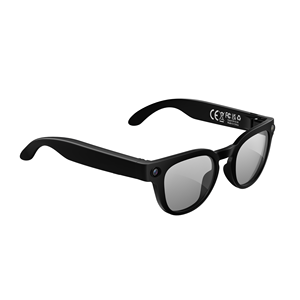
New Vision MT3 Smart AI Glasses With 8MP Camera HD Touch Button AI Translation Voice Assistant Fast Charging Sport BT Sunglasses
Contact Us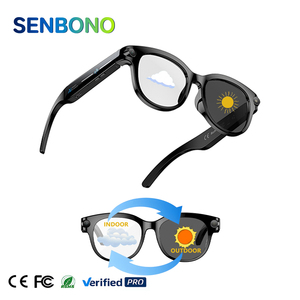
SENBONO M89 Smart Polarized Glasses Dual Camera 2MP IPX5 Waterproof Photochromic Lenses HD Video Recording 290mAh Battery AI
Contact Us
Professional AI Smart Translation Glasses 164+ Languages Real-Time Open-Ear Audio Anti-Blue Light Half-Rim Business Glasses
Contact Us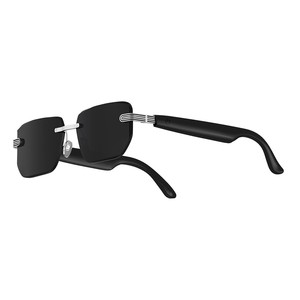
AI Smart Glasses Real-time Translation 145 Languages Photochromic Lenses Audio Video Calls Meeting Recording Voice Assistant
Contact Us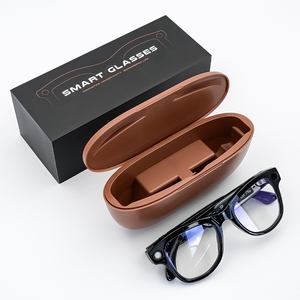
Newest SANVNET GS5 MAX 2026 AI Smart Glasses with Charging Case 8MP 4K Camera WIFI Smart Video Sunglasses Glasses Translation
Contact Us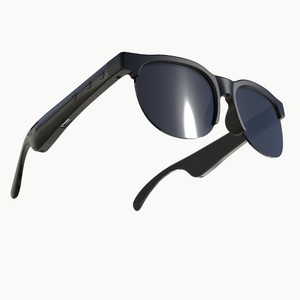
New Smart Glasses: Bluetooth Glasses with Open-Ear Bluetooth Calling for Outdoor Sports Cross-Border New Arrival
Contact Us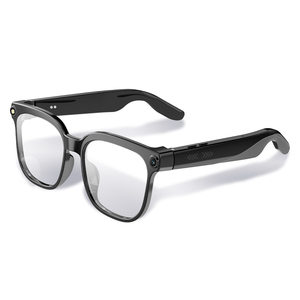
AI Smart Glasses with HD Camera Real-Time Translation Touch Operation Intelligent Recognition 16MB Camera Video Recording
Contact Us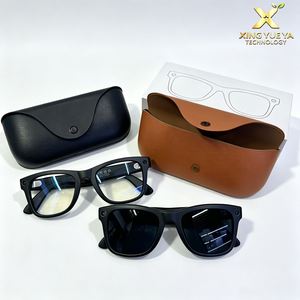
MT5-Ultra AI Smart Glasses Real-Time Trans 8MP Camera 1080P AI Translation Music Wi-Fi transmission with Charging case
Contact UsIndustry Whitepaper: The Evolution of China’s Vision Assistant Ecosystem
The global smart eyewear market is undergoing a paradigm shift. Driven by deep advancements in edge computing, micro-optics, low-power Neural Processing Units (NPUs), and generative artificial intelligence, visual assistive hardware has transformed from heavy, single-function laboratory aids into sleek, everyday wearable spectacles. China has emerged as the global epicenter for the R&D, OEM/ODM manufacturing, and export of high-performance vision assistant devices.
Leading Chinese manufacturing hubs—integrating Shenzhen’s advanced microelectronics ecosystem with Danyang’s precision optical lens manufacturing capabilities—offer unmatched structural advantages for international brands, assistive technology distributors, low-vision clinics, and healthcare organizations. As a premier original equipment manufacturer (OEM) and exporter, our engineering facilities bridge the gap between complex multimodal computer vision algorithms and consumer-grade ergonomic wearables.
Vertical Hardware-Software Integration
From custom SMT PCB layout design and dual-temple balanced battery architecture to proprietary embedded firmware, our manufacturing lines handle full-stack execution with stringent tolerance controls.
Clinical & Assistive Ergonomics
Engineering frames designed specifically for low-vision users, macular degeneration patients, and blind individuals. Focus on hands-free tactile responsiveness, weight optimization (<50 grams), and prescription lens compatibility.
Multimodal Edge AI Engines
On-device object recognition, text-to-speech (TTS) optical character recognition (OCR), dynamic obstacle depth mapping, and low-latency directional speech synthesize seamless scene narration without network dependency.
Future Sourcing & Procurement Trends in Visual Assistive Eyewear (2026–2030)
For enterprise procurement officers, brand owners, and medical device importers, understanding technological trajectories is critical to preventing inventory obsolescence and maximizing return on investment. Based on key market research and manufacturing insights, five major procurement trends define the next generation of visual assistant eyewear:
1. Transition from Cloud-Dependent NLP to Hybrid On-Device Edge AI
Early smart glasses relied heavily on persistent cloud connectivity, resulting in unacceptable speech latency and signal dropouts in underground transit or remote environments. Modern procurement specifications prioritize hybrid architectures: core safety functions—such as obstacle hazard alerts, offline OCR text reading, and visual currency detection—run locally on low-wattage edge NPUs, reserving cloud LLMs for rich conversational scene descriptions when Wi-Fi/5G is available.
2. Open-Ear Directional Acoustics vs. Bone Conduction Hybridization
Blind and low-vision users rely heavily on ambient auditory environmental cues (echolocation and oncoming traffic sounds). Sourcing trends have shifted away from total-occlusion earphones toward open-ear directional sound pipes and targeted acoustic beamforming drivers. This ensures audio privacy for the wearer while preserving total environmental acoustic awareness.
3. Convergence of Medical Device Standards and Consumer Aesthetics
The boundary between stigmatizing medical assistive hardware and high-fashion consumer eyewear has dissolved. Procurement buyers now demand lightweight TR90 or titanium-alloy frame materials, anti-blue light, photochromic (light-adaptive) polarized lenses, and magnetic quick-release clip-on frames that accommodate specialized prescription optics for glaucoma and retinitis pigmentosa sufferers.
4. Strict Data Governance & Local Privacy Compliance
With smart glasses capturing continuous video feeds and facial metrics, global compliance (GDPR in Europe, HIPAA/FDA in North America, and CCPA) has become a non-negotiable sourcing prerequisite. Leading factories now integrate on-frame LED recording indicators, hardware-level encryption keys for locally stored facial profiles, and rapid voice-command session clearing.
Technical Specification Matrix: Standard Smart Eyewear vs. Enterprise Assistive AI Spectacles
When evaluating China supplier quotes and factory engineering capabilities, B2B buyers must differentiate between commercial consumer Bluetooth glasses and specialized visual assistive devices:
| Performance Dimension | Consumer Bluetooth / Camera Sunglasses | Enterprise Assistive AI Vision Spectacles |
|---|---|---|
| Primary Target Audience | Outdoor sports, content creators, hands-free calling | Visually impaired users, low-vision rehabilitation, B2B institutional deployment |
| Optical Sensor Specifications | Basic 2MP - 5MP video recording sensors | 8MP to 4K low-distortion wide-field optics with adaptive low-light exposure |
| Computer Vision Engine | Basic photo/video capture, manual mobile app sync | Sub-second local OCR, spatial depth mapping, object segmentation, 164+ language translation |
| Audio Architecture | Standard stereo micro-speakers | Directional acoustic beamforming open-ear speakers with environmental sound passthrough |
| Frame Weight & Balance | Front-heavy camera modules (>65g) | Ultra-light balanced temple weight distribution (<50g), TR90 memory material |
| Firmware & SDK Customization | Closed fixed app ecosystem | Open API/SDK, custom multi-lingual voice packs, white-label firmware, OTA updates |
Why Partner with Our Factory: Manufacturing Competence & Quality Control
As a premier China OEM/ODM manufacturer specializing in AI-driven visual assistive devices, our manufacturing facility combines advanced production infrastructure with rigorous international quality standards. We empower global brand partners, assistive device suppliers, and government accessibility procurement programs with scalable, reliable production capacities.
1. Precision Cleanroom SMT & Optical Assembly
Our ISO 9001 and ISO 13485-certified assembly lines feature dust-free cleanrooms dedicated to micro-optical alignment, CMOS sensor calibration, and surface-mount technology (SMT). Every camera module undergoes dynamic focal alignment to guarantee crisp OCR text detection under varying light conditions.
2. Proprietary SDK & White-Label Firmware Services
We provide comprehensive OEM integration. Whether you require custom brand boot screen animations, localized voice synthesizer packs (supporting over 164 regional dialects), or API integration with third-party low-vision software platforms, our software engineering team delivers turnkey solutions.
3. Rigorous Environmental & Ergonomic Testing
Assistive devices must withstand daily wear and tear. Our quality assurance process includes IPX5 water resistance jet testing, 10,000-cycle temple hinge fatigue testing, drop impact resistance, thermal shock evaluation (-20°C to 60°C), and skin-allergy biocompatibility checks for frame coatings.
4. End-to-End International Regulatory Support
Navigating international customs and product compliance can be complex. We supply full technical documentation packages including CE-RED, FCC ID, RoHS, REACH, UN38.3 lithium battery transport safety certificates, and FDA Class I/II regulatory documentation for swift customs clearance.
Frequently Asked Sourcing & Technical Questions (FAQ)
Essential answers for international buyers, medical distributors, OEM brand managers, and procurement officers evaluating vision assistant factories in China.