
Featured AI Smart Glasses Portfolio
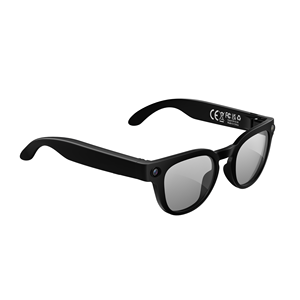
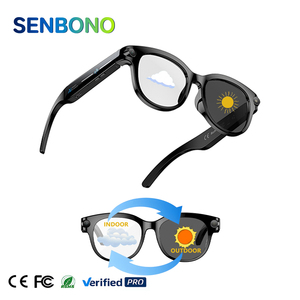
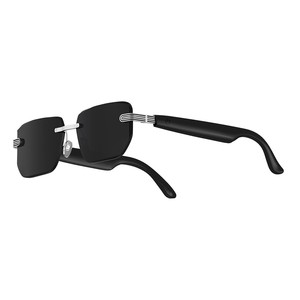
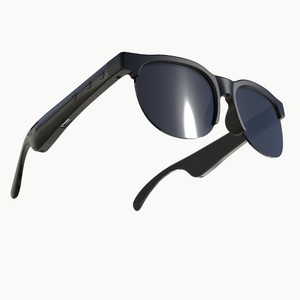
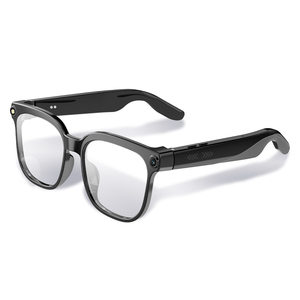
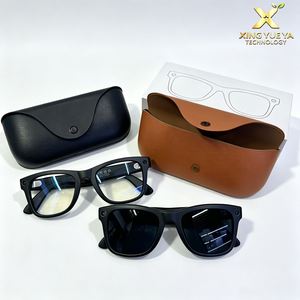
Explore our industrial-grade, OEM/ODM ready wearable AI solutions optimized for visual speech processing, real-time translation, and HD recording.

Manufacturing & Supply Chain Excellence
1. Executive Summary & Industry Overview
The global wearable technology ecosystem is undergoing a paradigm shift from simple audio wearables to spatial computing and context-aware artificial intelligence hardware. As a premier **trusted AI glasses manufacturer and original design factory (OEM/ODM)**, our enterprise architecture integrates cutting-edge optical systems, low-power edge computing chips, open-ear directional acoustics, and real-time computer vision engines into lightweight, daily-wear spectacle frames.
B2B procurement officers, accessibility program directors, enterprise technology distributors, and consumer electronics brands require manufacturing partners capable of delivering high-yield production, strict regulatory compliance (FCC, CE, RoHS, FDA accessibility guidance), and modular firmware adaptation. This technical whitepaper outlines the strategic trends, manufacturing benchmarks, and procurement methodologies essential for sourcing enterprise-grade smart eyewear solutions.
2. Enterprise OEM/ODM Manufacturing & Engineering Architecture
Building high-reliability smart eyewear demands sophisticated miniaturization, precise thermal distribution, and modular printed circuit board assembly (PCBA). Our dedicated manufacturing facilities utilize class-10,000 cleanroom environments for optical sensor alignment and acoustic tuning.
Edge-First Neural Processing
On-board Low-Power Neural Processing Units (NPUs) handle object recognition, optical character recognition (OCR), and scene segmentation locally, reducing cloud dependence and latency while maintaining maximum privacy.
Directional Open-Ear Acoustics
Dual micro-speakers engineered with phase-cancellation algorithms deliver crystalline audio narration to the wearer while suppressing ambient sound leakage, protecting user privacy during sensitive calls or translation sessions.
Ergonomic Weight Balancing
By distributing dual high-density lithium-polymer batteries into the rear temple tips, our frame design eliminates nose-bridge pressure, keeping total operational weight under 50 grams for comfortable all-day wear.
3. Global B2B AI Smart Glasses Procurement Trends (2025–2030)
As enterprise adoption of wearable AI accelerates across logistics, clinical healthcare, accessibility services, and cross-border commerce, global procurement protocols are shifting. Sourcing decision-makers must align with factories capable of adapting to five pivotal market trends:
1. Shift Toward Multimodal Vision Language Models (VLMs)
Modern procurement demands hardware optimized for VLM integration. Rather than simple text-to-speech, next-generation AI glasses interpret full contextual scenes, answering complex queries like "Summarize this document and compare it to the label on the table."
2. Growth in Visual Assistive & Accessibility Technologies
Government mandates and corporate accessibility initiatives are driving high-volume contracts for AI spectacles tailored to blind and low-vision users. Devices offering real-time obstacle detection, room layout navigation, and instant OCR reading are becoming standard clinical rollouts.
3. Modular OEM Firmware & White-Label Cloud Integration
Corporate clients require customized SDKs to connect AI glasses directly to proprietary enterprise ERPs, translation servers, or electronic health record (EHR) systems without routing sensitive image data through third-party servers.
4. Technology Roadmap: Next-Gen Optical & Sensor Evolution
To maintain market leadership, our OEM manufacturing roadmap prioritizes key technological breakthroughs over the next three design cycles:
- Diffractive Waveguide Integration: Transitioning from camera-to-audio feedback toward transparent Micro-LED waveguide visual displays while maintaining low power consumption and slim frame profiles.
- Ultra-Low-Power CMOS Image Sensors: Implementing sub-milliwatt image sensors capable of continuous ambient scene capture and motion detection without overheating.
- Photochromic & Prescription Lens Adaptation: Factory-level offering of optical corrective lenses, anti-blue light filters, and rapid photochromic tinting directly integrated with smart frame chassis.
- Sub-Second Cloud & Edge Hybrid Synchronization: Smart routing algorithms that decide instantly whether to execute image recognition on local NPUs or route complex tasks to low-latency edge servers over 5G/Wi-Fi 6.
5. Enterprise Advantages of Partnering with Our Manufacturing Operations
Choosing an established, direct-from-factory manufacturing partner reduces supply chain risk, minimizes unit Bill-of-Materials (BOM) costs, and accelerates time-to-market for branded consumer or enterprise hardware releases.
Strict Quality Control & Yield Optimization
Every pair of smart glasses undergoes rigorous environmental stress testing, drop testing, IPX5 water-resistance validation, and optical calibration to guarantee long-term field reliability.
Full OEM/ODM Branding Flexibility
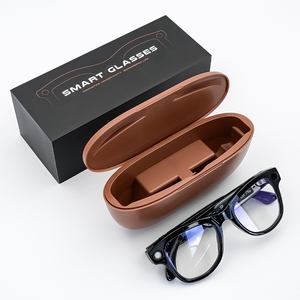
From custom frame colorways and temple engraving to custom boot screens, localized voice prompts, and bespoke packaging solutions, our factory provides turnkey white-label capabilities.
End-to-End Regulatory Support
We provide comprehensive technical dossiers, SAR testing reports, CE compliance documentation, and FCC certification assistance to streamline market entry across North America, Europe, and Asia-Pacific.
B2B Procurement & Technical FAQ
Key considerations for enterprise buyers, distributors, and OEM brand partners.
Partner with a World-Class AI Glasses Factory
Accelerate your wearable hardware strategy with direct factory support, competitive BOM pricing, and proven OEM/ODM manufacturing expertise.