The Global Evolution of Smart Assistance Manufacturing: 2026–2030 Strategic Report
The global wearable artificial intelligence and smart assistance hardware market is experiencing a profound paradigm shift. Driven by breakthroughs in edge computing, micro-optics, neural machine translation (NMT), and multimodal Large Language Models (LLMs), smart glasses are transitioning from peripheral gadgets to central productivity and accessibility infrastructure. For enterprise procurement officers, brand owners, and medical device distributors, identifying trusted manufacturing partners capable of delivering high-yield, ISO-compliant, and firmware-customizable smart assistance products has become a strategic priority.
Core Procurement Insight: Next-generation smart assistance sourcing is moving away from basic audio-only glasses toward fully integrated vision-audio multi-sensory devices equipped with sub-second latency on-device neural processing units (NPUs) and photochromic optical protection.
Modern smart assistance factories are deploying sophisticated surface-mount technology (SMT) lines and optical calibration cleanrooms to handle the extreme miniaturization required by contemporary users. Key architectural advances in our production lines include:
On-Device Edge AI Integration: Processing computer vision models and real-time OCR locally on ultralow-power chipsets to enable core functionalities—such as hazard detection and offline text-to-speech—without relying on active cellular networks.
Dual-Camera Optical Arrays: Integration of primary high-resolution sensors (up to 8MP/4K) alongside secondary wide-angle depth sensors for spatial mapping, obstacle awareness, and high-definition video capture.
Directional Open-Ear Acoustic Architecture: Micro-speaker drivers angled precisely toward the ear canal to prevent sound leakage while preserving environmental spatial awareness for outdoor safety and urban commuting.
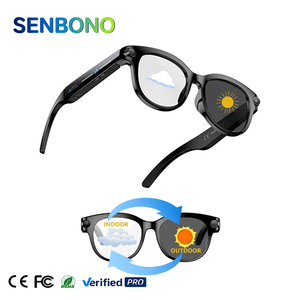
Adaptive Photonic & Prescription Integration: Utilizing specialized photochromic coatings, anti-blue light filtering, and frame chassis designed to accept custom prescription optical inserts for users with myopia, presbyopia, or age-related macular degeneration.
2. Dual Market Segmentation: Consumer Wearables vs. Assistive Medical Technologies
To maximize ROI, global buyers must distinguish between consumer-grade sports/business smart sunglasses and medical/rehabilitation assistive devices. Trusted factories maintain separate, specialized assembly processes for each product tier:
Feature Parameter
Consumer AI Business/Sports Glasses
Visual Assistive AI Spectacles (e.g., Sprhava Class)
Primary Target Audience
Business travelers, multi-language executives, outdoor sports enthusiasts.
Our OEM/ODM manufacturing facility adheres to rigid performance matrices, ensuring every batch shipped to international markets withstands rigorous environmental and operational stress testing:
Power Efficiency & Battery Chemistry: Utilizing high-density 290mAh to 450mAh lithium-polymer cells coupled with dual-temple weight distribution. Advanced power-cycling firmware extends active operational life to 8–12 hours, backed by magnetic fast-charging docks.
Frame Material Dynamics: Employing Swiss-formulated TR90 memory polymer, aviation-grade aluminum alloys, and skin-safe hypo-allergenic silicons to maintain overall frame weight below 50 grams for all-day wearability.
Multilingual Speech Models: Factory-flashed firmware supporting up to 164 regional languages and dialects, complete with custom cloud API hookups for enterprise enterprise clients.
Factory Competencies
Why Global Distributors Choose Our Manufacturing Network
Delivering end-to-end OEM/ODM manufacturing solutions backed by decade-long optical engineering experience and strict quality assurance protocols.
Custom Firmware & SDK Access
We provide open API hooks, customizable Bluetooth pairing IDs, pre-installed regional language packs, and custom boot logos tailored to your brand identity.
Rigorous IPX5/IPX7 Waterproofing
Precision sonic sealing and hydrophobic nano-coatings ensure internal PCBs, micro-cameras, and microphones remain operational under extreme weather and sweat conditions.
Co-Designed Accessibility Tech
Incorporating direct feedback from low-vision specialists and orientation mobility trainers to refine hands-free voice-prompt interfaces and obstacle alert algorithms.
Complete OEM/ODM Production Capabilities
From initial CAD mold design and optical engineering to automated SMT assembly, acoustic testing in anechoic chambers, and final packaging compliance for global entry.
1. Precision Optical Alignment Cleanrooms
Class 10,000 dust-free environments dedicated to mounting 8MP and 4K camera modules, preventing lens contamination and optical distortion.
2. Automated Machine Vision Quality Control
Every manufactured unit undergoes 100% automated optical inspection (AOI) for solder joints, photochromic transition testing, and dynamic range battery check.
3. Global Compliance & Certification Support
Full documentation suites provided for seamless customs clearance including CE, FCC, RoHS, REACH, MSDS battery transport certifications, and UN38.3.
4. Scalable Supply Chain Resilience
Strategic chip stockpiling and dual-sourcing contracts for key micro-processors ensure stable lead times even during global component shortages.
Procurement Guidance
Frequently Asked Sourcing & Technical Questions
Essential answers for B2B buyers, supply chain directors, and retail brand managers planning volume orders.
What is the Minimum Order Quantity (MOQ) for custom OEM branding?
Our standard factory MOQ for neutral inventory (with stock packaging) starts as low as 50 units. For custom logo silk-screening, custom Bluetooth pairing names, and tailored gift box packaging, the typical MOQ is 500 units per model variant.
How do real-time translation smart glasses handle offline connectivity?
Core speech translation engines operate via an integrated dual-mode system. When connected to mobile data or Wi-Fi, the smart glasses leverage ultra-fast cloud LLMs for 164+ languages. For offline environments (like flights or underground transit), on-device neural engines manage continuous translation for top primary languages (English, Spanish, Mandarin, French, German, Japanese).
Can these smart glasses be fitted with custom prescription lenses?
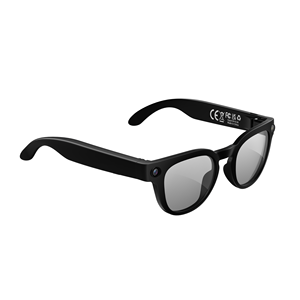
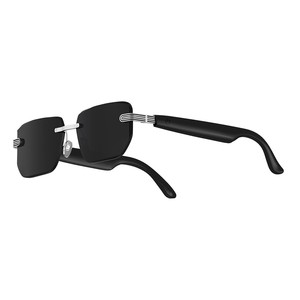
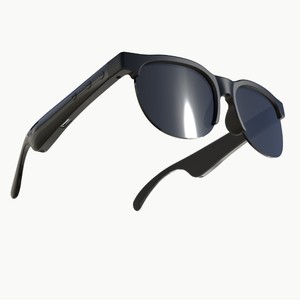
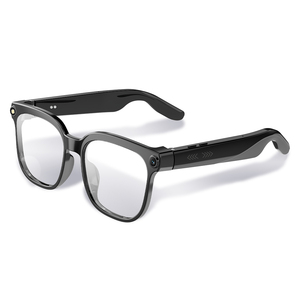
Yes. All our smart assistance frame designs (including MT3, SENBONO M89, and business half-rim series) feature modular optical rim structures. Optical shops and optometrists can easily swap standard photochromic or anti-blue light demo lenses with single-vision, progressive, or high-index prescription lenses without damaging internal electrical wiring.
What privacy mechanisms protect user data captured by on-frame cameras?
Privacy is embedded in our hardware architecture. Camera recording is activated solely by explicit user touch inputs or direct voice commands; continuous unauthorized recording is disabled. Furthermore, on-device image frames analyzed for object recognition or text reading are processed in volatile RAM memory and purged immediately after execution.
What warranty terms and RMA policies apply to bulk factory purchases?
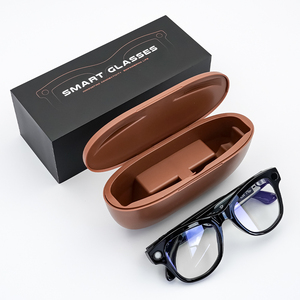
We provide a comprehensive 12-month factory warranty covering component defects, battery retention performance, and structural frame integrity. Spare parts (such as temples, nose pads, and charging cases) alongside 1% buffer units are provided for high-volume container orders to facilitate instant local RMA replacement.
Partner with a Leading Smart Assistance Manufacturer
Accelerate your product launch with industry-leading hardware, customizable AI software frameworks, and competitive factory-direct pricing.