
Featured AI Smart Glasses & Optical Assistive Devices
Explore our enterprise-grade smart visual hardware, incorporating multimodal AI translation, spatial obstacle recognition, 4K camera capture, and open-ear acoustic engineering for global distribution.
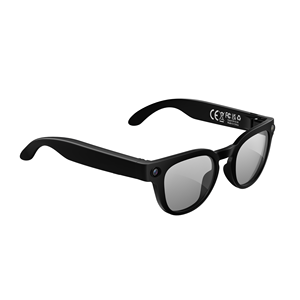
New Vision MT3 Smart AI Glasses With 8MP Camera HD Touch Button AI Translation Voice Assistant Fast Charging Sport BT Sunglasses
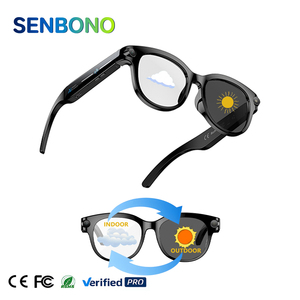
SENBONO M89 Smart Polarized Glasses Dual Camera 2MP IPX5 Waterproof Photochromic Lenses HD Video Recording 290mAh Battery AI

Professional AI Smart Translation Glasses 164+ Languages Real-Time Open-Ear Audio Anti-Blue Light Half-Rim Business Glasses
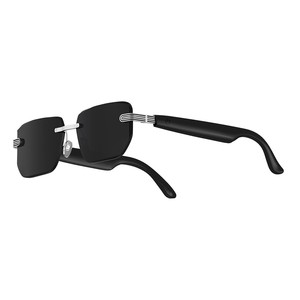
AI Smart Glasses Real-time Translation 145 Languages Photochromic Lenses Audio Video Calls Meeting Recording Voice Assistant
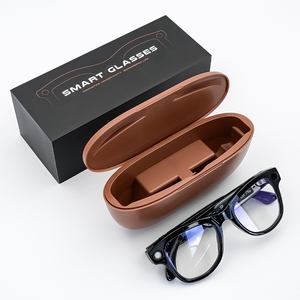
Newest SANVNET GS5 MAX 2026 AI Smart Glasses with Charging Case 8MP 4K Camera WIFI Smart Video Sunglasses Glasses Translation
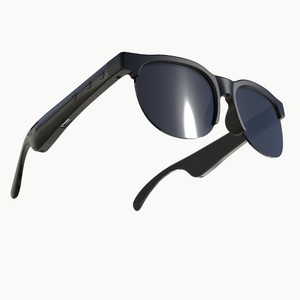
New Smart Glasses: Bluetooth Glasses with Open-Ear Bluetooth Calling for Outdoor Sports Cross-Border New Arrival
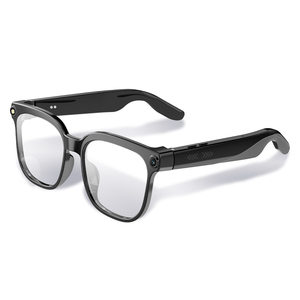
AI Smart Glasses with HD Camera Real-Time Translation Touch Operation Intelligent Recognition 16MB Camera Video Recording
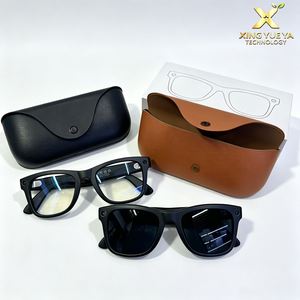
MT5-Ultra AI Smart Glasses Real-Time Trans 8MP Camera 1080P AI Translation Music Wi-Fi transmission with Charging case
Why Global Brands Partner with Our Manufacturing Ecosystem
As a top-tier visual device supplier, we bridge advanced micro-optics, edge computing algorithms, and medical-grade ergonomics to deliver white-label and custom OEM/ODM solutions worldwide.
Edge-First Embedded Neural Processing
Our smart visual devices deploy highly optimized lightweight Convolutional Neural Networks (CNNs) directly on specialized ultra-low-power NPUs. This guarantees that visual recognition, real-time Optical Character Recognition (OCR), and obstacle spatial detection run instantly on-device without requiring continuous active cellular cloud connectivity.
Open-Ear Directional Acoustic Drivers
Safety is paramount for visually impaired users and active outdoor consumers. Our proprietary dual open-ear directional audio architecture channels crisp localized voice narration and AI feedback straight to the wearer's auditory system while keeping the ear canal completely unobstructed for ambient environment situational awareness.
Precision Optics & Adaptive Low-Light Sensors
Equipped with custom high-MTF 8MP and 4K micro-sensor optical modules, our smart eyewear compensates dynamically for low-light indoor environments, direct sunlight glare, and hand-shake motion blur, ensuring high image fidelity for immediate cloud or edge multimodal vision model parsing.
Comprehensive Quality Standards & ISO Certification
Operating under rigid ISO 9001 and ISO 13485 (Medical Devices) quality management frameworks, every unit undergoes rigorous IPX5 water-resistance testing, drop impact endurance, thermal stress cycles, and optical alignment calibration prior to international export distribution.
Privacy-By-Architecture Protocols
Data security is directly engineered into our hardware firmware. On-frame cameras analyze localized imagery in real-time volatile RAM without persistent storage. All cloud communications are encrypted via TLS 1.3, enabling strict GDPR and HIPAA compliance for institutional low-vision deployment.
Full SDK & Firmware OEM Customization
We provide complete RESTful API and Bluetooth low-energy (BLE) SDK access for software developers, assistive tech distributors, and enterprise clients to flash custom branded voice packs, localized UX workflows, and specialized enterprise AI endpoints seamlessly.
Future Procurement & Technology Trends in Smart Eyewear (2025–2030)
The global market for visual assistive devices and wearable smart eyewear is shifting from monolithic display gadgets to lightweight, AI-first conversational companions. Bulk buyers and distributors must align procurement strategies with these core evolutionary vectors.
1. Hybrid Edge-Cloud Multimodal Large Language Models (LLMs)
Next-generation visual procurement demands hardware capable of driving multimodal vision-language models (such as GPT-4o and Gemini Vision). Modern devices utilize local NPU processing for immediate hazard warning, offloading complex scene description and continuous document analysis to secured cloud LLMs when Wi-Fi or 5G tethering is present.
2. Transition to Micro-OLED Waveguide Display Engines
While video-recording and audio-only smart glasses dominate current cross-border B2B trade, upcoming high-end optical procurement is transitioning toward diffractive optical waveguides coupled with Micro-OLED engines. This technology offers lightweight heads-up visual augmentation without obstructing normal field-of-view for low-vision users.
3. Split-Battery Temple Distribution & Ergonomic Weight Balance
Procurement directors prioritize wearer compliance above all. Modern designs isolate power cells into dual, symmetrical arm temples, keeping total frame weight strictly under 50 grams. Coupled with companion fast-charging battery cases (yielding 24+ hours of operational cycles), usability friction is fully eliminated.
4. Universal Prescription & Filter Lens Adaptability
B2B procurement programs serving medical clinics, veterans affairs, and rehabilitation centers require modular optical frame designs. Standard production units now incorporate magnetic clip-on optical inserts or standard bevels compatible with prescription lenses, photochromic tinting, and high-contrast filters for macular degeneration sufferers.
5. Stringent Global Regulatory & Electromagnetic Compliance
Cross-border distribution faces elevated regulatory inspection. Sourcing directors must ensure suppliers provide verifiable CE-RED (Radio Equipment Directive), FCC ID, RoHS, REACH, and FDA Class I medical device registry documentation to streamline customs clearance and commercial compliance.
6. Localized Offline Multilingual Neural Speech Engines
To capture market share in multilingual markets (Europe, Southeast Asia, Middle East), procurement contracts require onboard text-to-speech (TTS) and voice recognition engines supporting 100+ localized dialects without latency degradation during offline operation.
Standard Supplier Specification Framework
Refer to our baseline technical production benchmarks when evaluating high-volume smart vision and translation hardware orders.
| Optical System & Camera | 8MP to 4K CMOS sensor options; 120° wide-angle low-distortion lens; dynamic HDR auto-exposure; 1080p @ 30fps streaming. |
|---|---|
| Acoustic Architecture | Dual directional open-ear acoustic speakers; noise-canceling dual microphone array with DSP beamforming logic. |
| AI Vision Capability | Real-time text reading (OCR), face recognition, currency identification, spatial obstacle guidance, multilingual speech synthesis. |
| Connectivity & Processing | Bluetooth 5.3 LE, Dual-Band Wi-Fi (2.4GHz/5GHz), dedicated edge Neural Processing Unit (NPU) with sub-second execution. |
| Battery & Charging System | 290mAh – 450mAh high-density dual lithium polymer cells; continuous 4-6 hours runtime; magnetic fast charging + 2000mAh case. |
| Frame Materials & Protection | Ultra-light TR90 / Titanium alloy flex hinges; IPX5 water & dust resistance rating; photochromic & anti-blue optical lenses. |
| Certification Standards | CE, FCC, RoHS, REACH, ISO 9001, ISO 13485, UN38.3 (Battery Safety Transport certification). |
Frequently Asked Questions for B2B Sourcing & Procurement
Detailed answers to common questions asked by hardware importers, rehabilitation agencies, brands, and enterprise buyers.
Partner with a Leading Visual Device Supplier Today
Request comprehensive OEM/ODM pricing, engineering specifications, or sample evaluation units directly from our technical sales engineering team.