
Export-Grade AI Smart Glasses & Visual Assistive Devices
Engineered for seamless export to Brazil. Featuring real-time multimodal AI translation, spatial obstacle recognition, open-ear acoustics, and robust edge computing.
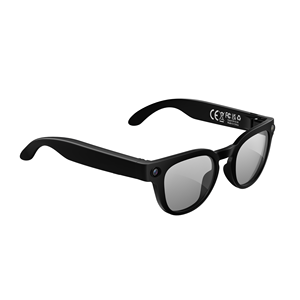
New Vision MT3 Smart AI Glasses With 8MP Camera HD Touch Button AI Translation Voice Assistant Fast Charging Sport BT Sunglasses
Get Catalog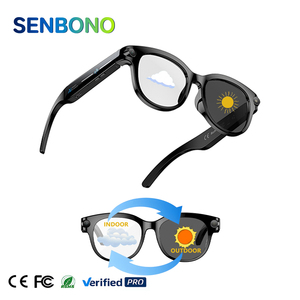
SENBONO M89 Smart Polarized Glasses Dual Camera 2MP IPX5 Waterproof Photochromic Lenses HD Video Recording 290mAh Battery AI
Get Catalog
Professional AI Smart Translation Glasses 164+ Languages Real-Time Open-Ear Audio Anti-Blue Light Half-Rim Business Glasses
Get Catalog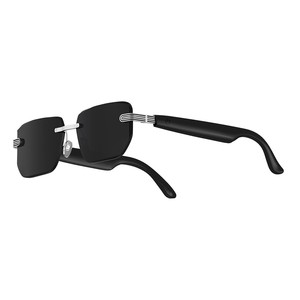
AI Smart Glasses Real-time Translation 145 Languages Photochromic Lenses Audio Video Calls Meeting Recording Voice Assistant
Get Catalog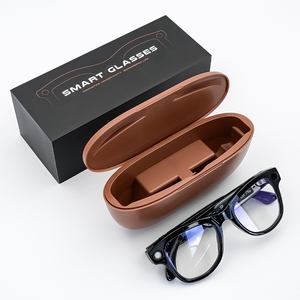
Newest SANVNET GS5 MAX 2026 AI Smart Glasses with Charging Case 8MP 4K Camera WIFI Smart Video Sunglasses Glasses Translation
Get Catalog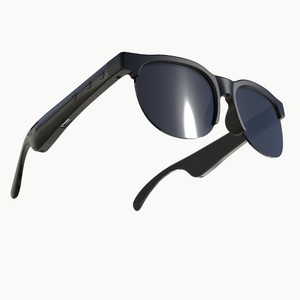
New Smart Glasses: Bluetooth Glasses with Open-Ear Bluetooth Calling for Outdoor Sports Cross-Border New Arrival
Get Catalog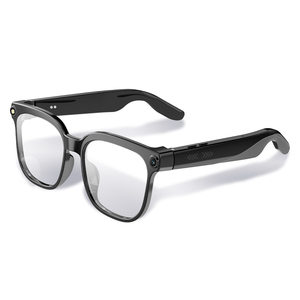
AI Smart Glasses with HD Camera Real-Time Translation Touch Operation Intelligent Recognition 16MB Camera Video Recording
Get Catalog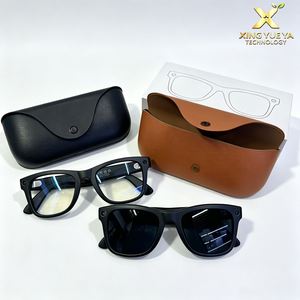
MT5-Ultra AI Smart Glasses Real-Time Trans 8MP Camera 1080P AI Translation Music Wi-Fi transmission with Charging case
Get CatalogBrazil Assistive Technology Market Landscape & B2B Sourcing Industry Report
A Comprehensive Whitepaper on Market Dynamics, Regulatory Compliance (ANVISA), SUS Public Sector Procurement, and Technological Integration for Visual Aids in Latin America.
Brazil represents one of the largest and most rapidly expanding markets for assistive technology (Tecnologia Assistiva - TA) in the Southern Hemisphere. According to data derived from the IBGE (Instituto Brasileiro de Geografia e Estatística), over 6.5 million Brazilian citizens live with severe visual impairment, among whom over 500,000 are completely blind. As the Brazilian federal government reinforces its commitment to accessibility through legislation such as the Lei Brasileira de Inclusão da Pessoa com Deficiência (Estatuto da Pessoa com Deficiência - Law Nº 13.146), public and private procurement channels are increasingly shifting from static optical aids to dynamic, AI-driven wearable technology.
For Brazilian medical equipment distributors, low-vision clinics, non-governmental accessibility organizations, and procurement directors navigating government tenders via SUS (Sistema Único de Saúde), sourcing directly from an established, ISO 13485-certified OEM/ODM original factory is critical to maintaining high margin compliance, obtaining long-term technical reliability, and ensuring full localized software support for Brazilian Portuguese (pt-BR).
Key Market Metrics: Assistive Wearables in Brazil
Strategic data insights for Brazilian B2B importers, supply chain managers, and clinical equipment procurers.
Technological Innovations in AI Smart Spectacles
Bridging spatial computer vision, offline edge inference, natural voice synthesis, and acoustic ergonomics.
Offline Edge AI & Computer Vision
Equipped with high-performance Neural Processing Units (NPUs) capable of running zero-latency visual inference directly on-device. This ensures continuous text-to-speech (OCR) reading and obstacle detection in rural areas or underground transport systems across Brazil where cellular networks may drop.
High-Precision Optical Modules
Integrating 8MP to 4K high-definition sensors with dynamic exposure adjustment and ultra-wide optics. Specifically tuned to capture printed text, handwritten notes, currency notes (Real - BRL), and street signage under high contrast or dim lighting conditions.
Safe Open-Ear Acoustic Architecture
Dual directional open-ear speakers or bone conduction drivers transmit voice prompts directly to the user's auditory canal without obstructing ambient environmental sound. This design is paramount for independent mobility and user safety on busy urban streets in cities like São Paulo and Rio de Janeiro.
Localized Application Scenarios across Brazil
How our smart vision technology seamlessly integrates into daily Brazilian infrastructure, education, and healthcare.
Urban Navigation & Commute in Brazilian Metropolises
Navigating complex pedestrian environments—such as uneven sidewalks, bus terminals (e.g., Terminal Tietê), subway entrances, and crosswalks. The frame's spatial hazard detection flags overhead obstacles, curbs, and approaching vehicles while reading bus route indicators aloud in Portuguese.
Educational & Professional Inclusion (Law 13.146 Compliance)
Brazilian universities and corporate employers utilize our text-to-speech smart glasses to fulfill accessibility mandates. Visually impaired students and workers can instantly read printed textbooks, whiteboards, computer monitor text, and physical documents without requiring pre-digitized formats.
Clinical Rehabilitation & Low-Vision Pathology Support
Ideal for ophthalmology clinics, rehabilitation centers, and specialized institutes (such as Instituto Benjamin Constant). Assisting patients suffering from Age-related Macular Degeneration (AMD), Glaucoma, Diabetic Retinopathy, and Retinitis Pigmentosa to regain independent orientation.
Multilingual Business & Tourism Interpretation
With real-time voice translation across 164+ languages (including Portuguese, English, Spanish, Mandarin, and French), these smart glasses serve as a powerful tool for foreign tourists, international business executives, and hospitality staff operating across Brazil's vibrant commercial sectors.
OEM Hardware Specifications for Export to Brazil
Factory-standard technical specifications across our smart vision and assistive translation product lines.
| Specification Parameter | Vision AI Series (e.g., GS5 MAX / MT5-Ultra) | Translation & Audio Series (e.g., MT3 / M89) |
|---|---|---|
| Primary Function | Scene Narration, Spatial Obstacle Detection, Real-time OCR | 164+ Language Translation, Hands-free Calling, Photochromic Sunglasses |
| Camera Sensor | 8MP 4K Ultra-HD Module with Low-Light Adaptation | 2MP HD / Photo Sensor for Rapid Document Snapshots |
| Battery Capacity | 290mAh + High-Capacity Rapid Charging Case (Up to 24hr total) | 220mAh - 290mAh Integrated Dual Temple Lithium Cells |
| Lens Compatibility | Accepts Custom Prescription Lenses & Blue-Light Blockers | IPX5 Waterproof Polarized / Photochromic Lenses |
| Portuguese NLP Engine | Native pt-BR Neural Voice Synthesis (Offline + Cloud Hybrid) | Real-Time Sub-Second pt-BR Conversational Speech Translation |
| Regulatory Standards | CE, FCC, RoHS, Compatible with ANVISA / INMETRO Import Guidelines | CE, FCC, RoHS, Telecommunication Anatel Protocol Ready |
Brazil Market Procurement Trends & Importing Guidelines (2025–2030)
Essential regulatory and strategic intelligence for procurement officers and medical equipment importers.
Importing electronic assistive devices into Brazil requires a precise understanding of tax structures, tariff classifications (Nomenclatura Comum do Mercosul - NCM), and regulatory pathways regulated by ANVISA (Agência Nacional de Vigilância Sanitária) and INMETRO. Assistive devices generally qualify for advantageous tax exemptions under federal programs designed to lower the cost of accessibility products for end consumers and public healthcare tenders.
- Tax Incentives (IPI / ICMS Exemptions): Assistive technologies designed specifically for individuals with disabilities often enjoy exemptions from the Imposto sobre Produtos Industrializados (IPI) and reduced rates for ICMS, significantly boosting profit margins for local Brazilian importers.
- NCM Harmonized Codes: Product classification under NCM 9021.90 or 8517.62 allows smooth customs processing through major maritime ports such as Santos, Paranaguá, and Rio de Janeiro, as well as air cargo via Guarulhos (GRU).
- ANVISA Registration Pathways: Non-invasive optical and visual assistive devices that do not deliver energy directly into the human body fall under lower risk classification pathways (Class I / Class II), allowing expedited notification procedures when partnered with an experienced manufacturer.
- Public Sector Procurement (SUS & FNDE): Government tenders heavily prioritize suppliers who offer localized firmware, Portuguese user documentation, local warranty support, and scalable OEM packaging options.
Why Partner with Our Original Manufacturing Facility
Direct factory sourcing, strict ISO quality control, custom firmware localization, and complete B2B export assistance for Brazil.
Custom Firmware & Language Localization
We provide full software localization tailored to the Brazilian market, including native Brazilian Portuguese voice packs, customized mobile companion apps, and bespoke UI branding for municipal contracts.
ISO 13485 & Strict Quality Control
Our automated production facilities comply with rigorous international manufacturing benchmarks. Every frame undergoes strict optical alignment, acoustic tuning, thermal dissipation testing, and drop tests before container dispatch.
End-to-End Logistics Support for Santos & GRU
We handle export documentation, certificates of origin, MSDS battery safety reports, and custom clearance paperwork to ensure seamless delivery directly to Brazilian ports or door-to-door facilities.
Frequently Asked Questions for Brazilian Buyers & Importers
Clear, technical, and regulatory answers addressing common procurement inquiries from Brazilian distributors.
How do these AI smart glasses support Brazilian Portuguese (pt-BR)?
Our devices incorporate dedicated Brazilian Portuguese natural language processing (NLP) models. Text-to-speech engine, optical character recognition (OCR), and voice command modules are pre-loaded with localized pt-BR phonemes, ensuring natural pronunciation for Brazilian street names, product packaging, and literature.
Do the glasses require an active internet connection to function in Brazil?
No, essential accessibility functions—such as real-time text reading (OCR), immediate obstacle warnings, and object identification—run locally on the internal Edge AI NPU chip. Cloud connectivity is only engaged when executing complex multi-sentence conversational scene analysis or online audio translation features.
Can Brazilian optometrists or optical clinics fit custom prescription lenses into these frames?
Yes, our smart spectacle frames are engineered with standardized optical rim dimensions. Local Brazilian optical labs and optometrists can easily cut and fit custom single-vision, bifocal, or progressive prescription lenses into the frames without damaging the internal electronics or temple cameras.
What are the Minimum Order Quantities (MOQ) for custom OEM orders bound for Brazil?
We offer flexible MOQ structures catering to both boutique medical distributors and large-scale public tenders. Standard wholesale orders start at small trial quantities, while full OEM customization (custom brand logo, specialized packaging, localized firmware) is available for bulk volume orders.
Are the battery components certified for international transport and ANATEL/INMETRO regulations?
Yes, all internal lithium-polymer batteries carry UN38.3, MSDS, and IEC62133 international air/sea freight safety certifications. They are designed to meet standard electronic safety requirements necessary for Brazilian customs importation and regulatory clearances.
How does your factory handle warranty, spare parts, and after-sales support for Brazilian partners?
We supply local distributors with a 12-month comprehensive factory warranty, modular spare parts (such as replacement temple arms, nose pads, and charging cases), software SDK access, and direct engineering technical support to facilitate swift local customer servicing.
Expand Your Assistive Technology Portfolio in Brazil
Partner directly with a leading AI smart glasses manufacturer. Request our complete wholesale product catalog, technical whitepapers, factory direct price list, and OEM customization options today.