
Sprhava AI-Powered Vision
Direct B2B supply, OEM custom firmware integration, and institutional export portfolios for low-vision rehabilitation centers, healthcare providers, and regional distributors in Kuala Lumpur and broad ASEAN territories.
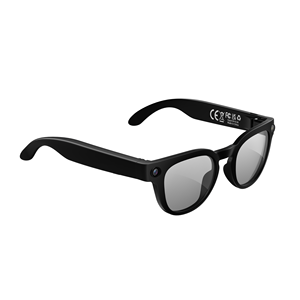

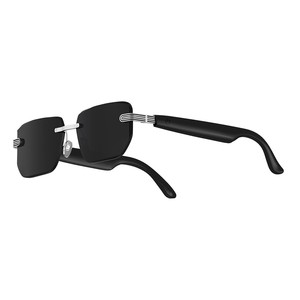
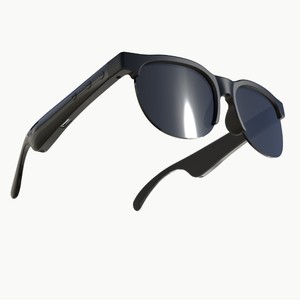
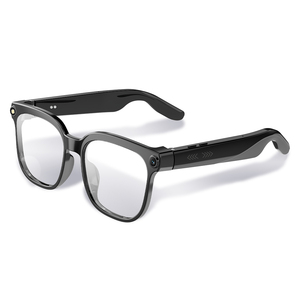
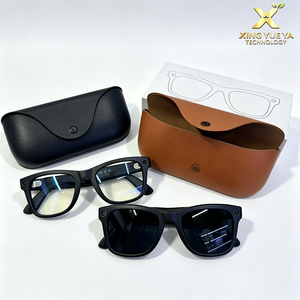
Empirical technical specifications and operational milestones established by Sprhava assistive technologies across global deployments and regional distribution networks in Kuala Lumpur.
Kuala Lumpur serves as the central economic engine and transport hub of Malaysia, where rapid urban development presents both immense opportunities and complex mobility challenges for visually impaired individuals (Orang Kurang Upaya - OKU Penglihatan). With an estimated population of over 210,000 blind or severely low-vision citizens across Malaysia—a significant proportion residing within the Klang Valley metropolitan area—the demand for advanced electronic orientation and mobility aids (e-OMA) has transitioned from passive tactile devices to active artificial intelligence wearables.
Traditional blind aids, such as long white canes and tactile paving (guiding blocks found in RapidKL LRT/MRT stations), provide baseline physical safety. However, they lack the capacity to deliver high-density contextual information, such as reading bus route signs along Jalan Ampang, interpreting digital clinic queue numbers at Hospital Kuala Lumpur (HKL), identifying currency notes (Ringgit Malaysia), or providing real-time room navigation within high-rise commercial structures in KLCC. Sprhava's visual assistive ecosystem bridges this information gap by deploying wearable artificial intelligence, computer vision engines, and directional acoustic soundscapes.
As a principal B2B supplier and exporter operating out of Kuala Lumpur, Sprhava aligns hardware manufacturing with stringent regulatory and procurement requirements set forth by the Ministry of Health Malaysia (MOH), Medical Device Authority (MDA), National Council for the Blind Malaysia (NCBM), and the Malaysian Association for the Blind (MAB). Our localized supply chain ensures rapid fulfillment, comprehensive after-sales clinical training, and firmware customization tailored specifically to the linguistic and environmental dynamics of Southeast Asia.
Designed to identify head-height hazards, outdoor scaffolding, low-hanging tree branches, and abrupt kerb drop-offs across urban construction sites in the Klang Valley that conventional white canes frequently miss.
On-device optical character recognition trained specifically to parse complex multilingual documents containing Bahasa Melayu, English, Simplified/Traditional Chinese, and Tamil simultaneously.
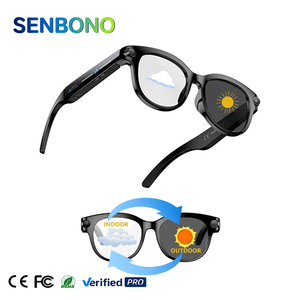
Built with IPX5 water-resistant sealing, heat-dissipating alloy frames, and photochromic optical transition lenses engineered to endure Kuala Lumpur's high humidity and sudden monsoon downpours.
To deliver true visual independence, assistive smart spectacles must perform reliably within the exact micro-environments where users conduct their daily lives. Sprhava smart AI glasses are tested across realistic public and private infrastructure scenarios across Kuala Lumpur and Selangor:
Navigating interchange hubs like KL Sentral, Pasar Seni, or Bukit Bintang requires parsing dense visual data: overhead direction signs, platform gate status, arriving train car numbers, and dense pedestrian flows. Sprhava's wide-angle 8MP camera feed processes these visual cues in real time, delivering directional audio cues directly to the user's temporal bone without blocking background railway announcements or oncoming passenger footsteps. The on-frame camera instantly reads platform display boards and guides the user toward clear walkways.
In large medical complexes such as Hospital Kuala Lumpur (HKL), University Malaya Medical Centre (UMMC), or government agency offices in Putrajaya, visually impaired visitors face significant navigation bottlenecks. Sprhava spectacles empower users to independently read printed queue slips, locate room numbers, decipher prescription bottle labels, and follow color-coded floor lines. By executing edge-based text-to-speech processing, patient privacy is strictly preserved while granting immediate auditory access to medical paperwork.
In alignment with Malaysia’s Persons with Disabilities Act and national employment inclusion initiatives, corporate offices and universities across Cyberjaya and Petaling Jaya are adopting assistive technology to support visually impaired students and professionals. Sprhava smart eyewear enables users to participate seamlessly in meetings by identifying speakers, reading whiteboard contents, reviewing printed reports, and identifying office door names—transforming workplace accessibility into a tangible, scalable operational standard.
| Deployment Context | Core Environmental Challenge | Sprhava AI Technical Solution |
|---|---|---|
| KL Public Transit (MRT/LRT) | Auditory masking, rapid crowded movement, variable ambient light. | Open-ear directional sound, adaptive sensor exposure, sub-second hazard alerts. |
| Public Wet Markets & Retail | Dense item arrangement, currency identification, tropical moisture. | Real-time currency & object recognition neural net, IPX5 splash protection. |
| Clinical & Administrative Centers | Small printed fonts, complex multilingual forms, high privacy mandates. | Local offline OCR engine, encrypted zero-cloud visual buffer execution. |
| Educational Institutions | Distance viewing of whiteboards, digital screen reflection, fatigue. | Dynamic zoom parsing, anti-blue light prescription-ready optical frame chassis. |
The market for visual assistive devices in Malaysia and the broader ASEAN economic zone is undergoing a fundamental structural transformation driven by three core policy and technology catalysts:
As a leading supplier and exporter based in Kuala Lumpur, Sprhava addresses these market trends by engineering frames that combine localized firmware, long battery lifespans, and highly competitive institutional bulk pricing options.
Sprhava stands at the forefront of assistive hardware innovation, pairing world-class optical engineering with localized technical support and distribution capabilities. Our facility partners operate under ISO 13485 medical device quality management standards, ensuring every unit delivered to our Kuala Lumpur distribution warehouse meets rigorous safety, ergonomic, and electronic parameters.
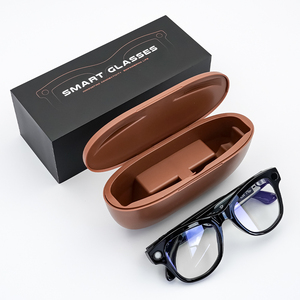
We supply turnkey OEM solutions for government agencies, NGOs, and medical brand distributors, offering customized box packaging, branded optical frames, localized voice firmware, and custom user manuals.
We prioritize all-day wearability. By utilizing ultra-light titanium alloys and memory polymers, our spectacles weigh under 50 grams, distributing frame mass evenly across the nose bridge and temporal bones.
Leveraging Kuala Lumpur’s strategic location near Port Klang and Kuala Lumpur International Airport (KLIA), Sprhava guarantees swift export logistics across ASEAN, the Middle East, and Asia-Pacific markets.
Our collaborative co-design philosophy involves direct feedback loops with blind orientation trainers, low-vision optometrists, and end-users. This guarantees that every feature—from tactile button placement to audio prompt cadence—serves a practical, life-enhancing purpose.
Comprehensive technical and commercial answers tailored for medical procurement officers, assistive tech distributors, government contractors, and clinical rehabilitators in Kuala Lumpur and export markets.
Partner with Kuala Lumpur’s leading supplier and exporter of AI-powered blind aids and visual assistive technology. Contact our enterprise sales engineering team today to request bulk product catalogs, clinical evaluation samples, OEM specifications, or competitive B2B tender pricing.