
Featured Sensor Glasses & AI Assistive Eyewear Portfolio
Engineered in high-precision Guangdong manufacturing hubs, fully customizable for Australian healthcare providers, NDIS distributors, and industrial safety suppliers.
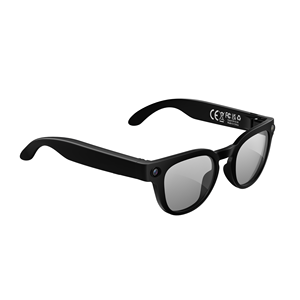
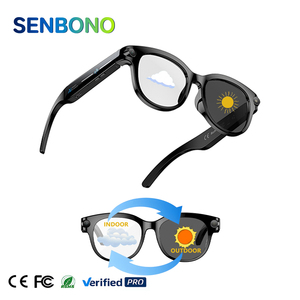

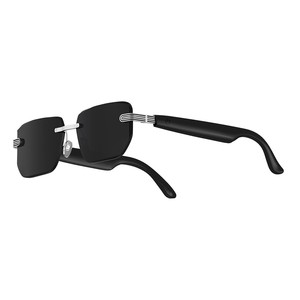
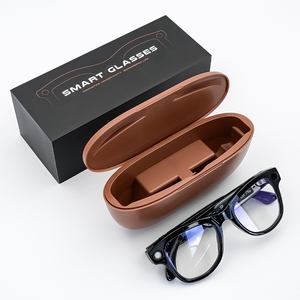
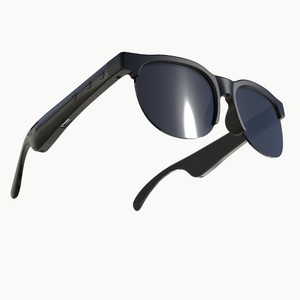
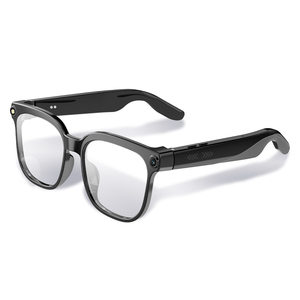
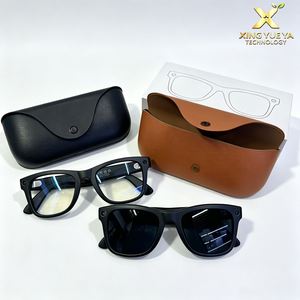
Strategic Overview: China's Sensor Eyewear Ecosystem & Australia's Technological Shift
The global wearable technology sector is experiencing a paradigm shift from passive audio wearables to contextual AI sensor glasses capable of real-time computer vision, depth sensing, environmental translation, and obstacle avoidance. Australia stands as one of the most mature high-value adoption markets for visual assistive devices, driven largely by government accessibility initiatives such as the National Disability Insurance Scheme (NDIS), rigorous workplace safety mandates in mining and industrial infrastructure, and an active outdoor population demanding UV-protective smart optical wearables.
China's Guangdong precision optics and micro-electronics cluster—headquartered in Shenzhen and Dongguan—has consolidated its role as the world's primary manufacturing backbone for smart sensor spectacles. By combining high-speed surface-mount technology (SMT), ultra-miniaturized camera sensors, directional bone-conduction acoustics, and low-latency edge AI computation into frames weighing under 50 grams, Chinese original equipment manufacturers (OEMs) provide Australian brands, B2B procurement networks, and medical assistive technology importers with unprecedented price-to-performance advantages.
To successfully capture market share in Sydney, Melbourne, Brisbane, and Perth, Australian importers require more than standard consumer gadgets. They demand enterprise-grade OEM customization, robust compliance with Australian Communications and Media Authority (ACMA) regulatory compliance marks (RCM), strict data privacy safeguards, and specialized localization for Australian English voice synthesis and terrain mapping.
Hardware Sensor Architecture & On-Device Edge Compute Engine
Our manufacturing facility integrates multi-modal sensor arrays and proprietary computer vision pipelines directly into lightweight, ergonomic spectacles.
Multi-Modal Optical Sensors
Features high-dynamic-range (HDR) CMOS modules up to 8MP/4K resolution, paired with wide-angle micro-lenses. Optimized for low-light indoor navigation, rapid text OCR capturing, and instant scene analysis without motion blur during transit.
Directional Open-Ear Audio
Incorporates dual acoustic micro-drivers with beamforming noise cancellation. Directs crystal-clear synthetic speech and spatial prompts into the user's ears without blocking ambient traffic sounds—a crucial safety requirement for Australian urban commuters.
Edge NPU & Neural Engines
Embedded neural processing units execute offline optical character recognition (OCR), obstacle detection, and facial recognition locally on-chip. Ensures sub-second feedback while strictly keeping sensitive spatial data offline to preserve privacy.
| Specification Parameter | Standard OEM Configuration | Enterprise / Medical ODM Customization |
|---|---|---|
| Primary Imaging Unit | 2MP - 8MP HD Sensor (1080p Video Recording) | 4K Ultra-HD Sensor with Optical Image Stabilization (OIS) |
| Depth & Proximity Sensing | Ultrasonic Proximity + 9-Axis IMU Spatial Motion Tracking | Micro-LiDAR / Time-of-Flight (ToF) Spatial Depth Module |
| Optical Lenses | TAC Photochromic / UV400 Polarized Anti-Glare Lenses | Custom Prescription Lenses (Presbyopia, Myopia, Astigmatism) |
| Wireless Connectivity | Bluetooth 5.3 Low Energy (BLE) + High-Bandwidth Wi-Fi | Sub-GHz Private Enterprise RF / Dedicated Mesh Protocol |
| Battery Architecture | 290mAh Lithium Dual-Temple Split Battery (4-6 Hours Active) | Fast-Charging Case with Integrated 2200mAh Power Reserve |
| Australian Regulatory Standard | ACMA / RCM Certified, IEC 62368-1 Electrical Safety | TGA Class I / ISO 13485 Assistive Medical Device Pipeline |
Target Application Scenarios Across the Australian Landscape
How local distributors, healthcare facilities, and industrial operators deploy our customized sensor glasses.
1. NDIS Assistive Technology & Low-Vision Support
In Australia, over 450,000 individuals live with visual impairment or blindness. Our sensor glasses serve as a non-intrusive electronic orientation and mobility aid. By detecting head-height hazards, reading printed prescription labels in real-time, recognizing Australian banknotes, and narrating pedestrian signals, the spectacles enable visually impaired users to navigate Brisbane streets or Sydney light rail stations independently. Fully compliant for NDIS funding procurement channels.
2. Industrial Safety & Mining Operations (WA & QLD)
In the resource-dense environments of Western Australia and Queensland, mining and heavy industrial sites require hands-free hazard auditing and remote expert guidance. Sensor glasses fitted with photochromic safety lenses allow technicians to stream real-time 1080p telemetry to remote engineering offices while receiving instant voice warnings regarding proximity to heavy machinery or dangerous temperature zones.
3. Multi-Lingual Healthcare & Aged Care Facilities
Australia's multicultural society demands real-time linguistic interpretation across healthcare systems. Our professional translation glasses support over 164 languages and dialects with dual-mic directionality. Doctors, care workers, and elderly patients can engage in natural two-way conversations without touching external translate handhelds, dramatically improving care efficiency in aged care homes across Victoria and NSW.
4. Outdoor Sports, Cycling & Extreme UV Protection
Australia experiences some of the world's highest ambient UV levels. Our sports-centric sensor frames feature high-grade photochromic lenses that tint dynamically within seconds under direct harsh sunlight. Equipped with open-ear Bluetooth 5.3 audio, cyclists and runners enjoy navigation cues, call handling, and music playback while remaining fully aware of surrounding traffic and ambient environmental sounds.
Why Source Sensor Glasses from Our Premier China Manufacturing Hubs
Combining scalable mass-production capacity with strict international quality control standards.
End-to-End R&D Integration
From optical ray-tracing and industrial aesthetic design to custom SMT board design and embedded firmware compilation, our in-house engineering team manages the complete product lifecycle under one roof.
Rigorous Quality Assurance
Every production lot undergoes 100% optical alignment testing, 48-hour continuous battery aging burn-in, IPX5/IPX7 water ingress testing, drop tests, and thermal shock evaluations prior to global export shipping.
Custom Localized Firmware
We assist Australian partners with firmware localization, including pre-installed Australian English text-to-speech engines, customized app branding, tailored SDK APIs, and cloud server provisioning hosted within Oceania datacenters.
Frequently Asked Questions for Australian B2B Buyers & Distributors
Essential operational, regulatory, and logistics answers for importing sensor spectacles into Australia.
What regulatory certifications are required to import and sell sensor glasses in Australia?
Sensor glasses imported into Australia must comply with ACMA electromagnetic compatibility (EMC) regulations and bear the Regulatory Compliance Mark (RCM). Wireless components must adhere to AS/NZS 4268 standards. For battery safety, UN38.3 and MSDS test reports are necessary for air freight clearance. As an experienced manufacturer, we provide complete compliance documentation dossiers to streamline your local Australian customs clearance.
Are these AI sensor glasses eligible for NDIS funding reimbursement?
Yes. Many of our assistive smart glasses fall under NDIS Category 03 - Assistive Technology (mid-cost or high-cost assistive vision technology). Australian medical equipment distributors and registered NDIS providers frequently configure our frames with localized text-to-speech software to fulfill client care plans.
Can the glasses operate offline in remote regional Australia without cellular connectivity?
Absolutely. Core safety features—including local optical character recognition (OCR), obstacle detection, spatial proximity alerts, and basic voice command controls—run directly on the embedded edge processor. Cloud connectivity is only required for high-level conversational AI or deep scene narration, making the glasses reliable even in outback regions with limited mobile coverage.
What are the Minimum Order Quantities (MOQ) and lead times for OEM/ODM orders?
Standard wholesale orders for existing stock models start at low MOQs (50–100 units). For custom OEM projects involving custom logo laser etching, bespoke frame coloration, and specialized packaging, the standard MOQ is 500 units. Turnaround lead time for mass production typically ranges between 15 to 25 business days, with express air freight delivery to major Australian airports in 4 to 7 days.
Do you support prescription lens fitting for Australian optical practices?
Yes. Our frames feature detachable magnetic or clip-in optical inner rings, allowing local Australian optometrists and optical labs to easily install prescription lenses tailored to the user's specific refractive index, presbyopia, or astigmatism needs.
How is post-purchase warranty and technical repair handled for Australian clients?
We offer a standard 12-month manufacturer replacement warranty on all electronics, optical sensors, and battery assemblies. For key regional distribution partners, we supply spare module kits (temple arms, charging cases, micro-cameras) along with technical repair training to enable localized RMA support within Australia.
Partner with China's Leading Sensor Eyewear Manufacturer
Expand your commercial portfolio with world-class smart glasses engineered for the Australian market. Contact our engineering team today to request product samples, factory audits, or custom OEM quotes.