
Sprhava AI-Powered Vision
Hardware configurations certified for export to Norway, integrated with real-time translation, computer vision obstacle detection, and low-temperature battery management systems.
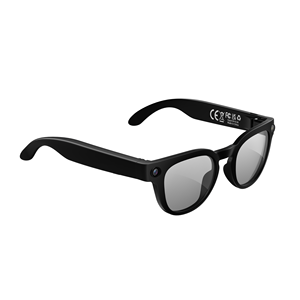
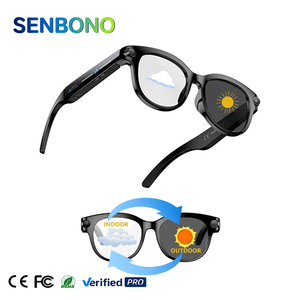

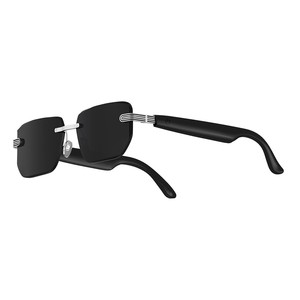
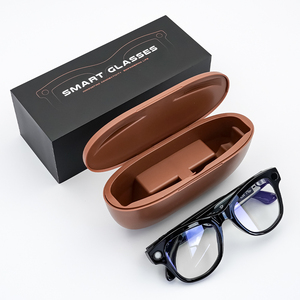
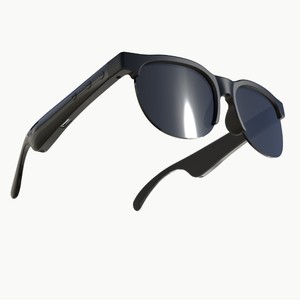
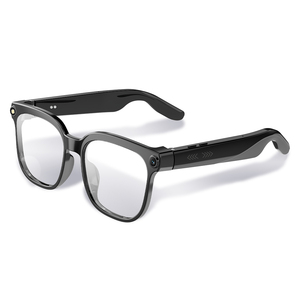
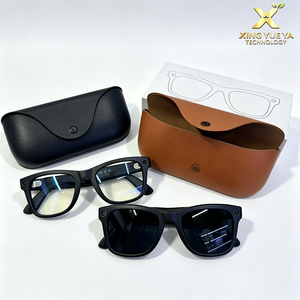
Norway represents one of the world's most sophisticated markets for welfare technology (velferdsteknologi) and sensory impairment assistive hardware. Managed primarily through the Norwegian Labour and Welfare Administration (NAV - Norges arbeids- og velferdsforvaltning) and distributed via regional central units (Hjelpemiddelsentralen), the demand for high-reliability, user-centric vision accessibility devices is expanding rapidly.
As a specialized original equipment manufacturer (OEM) and exporter, our engineering facilities bridge the gap between cutting-edge artificial intelligence smart eyewear and strict European regulatory standards. To successfully deploy wearable visual assistance hardware in Norway municipal regions—from urban Oslo and Bergen to arctic climates in Tromsø and Finnmark—OEM hardware must fulfill rigorous operational criteria:
How custom-engineered AI vision aids empower users across everyday Nordic public transport, employment centers, and educational institutes.
Navigating Oslo T-Bane, tram networks, and Vy regional trains requires rapid identification of platform numbers, real-time departure displays, and dynamic obstacle detection. Our OEM glasses utilize low-latency camera capture to convert physical digital signage and bus numbers into natural acoustic spoken cues.
Core Feature: Instant OCR & Platform Audio Cues
Snow drifts, icy pavements, uneven cobblestones in historic districts like Bryggen in Bergen, and drop-off kerbs present mobility hazards. The integration of downward-facing depth perception algorithms alerts wearers to changes in ground terrain and head-height obstacles such as low-hanging snow-laden branches.
Core Feature: Terrain Depth Mapping & Acoustic Beeps
In support of Norwegian municipal workplace inclusion initiatives (Inkluderingsdugnaden), visually impaired employees require hands-free document processing. Smart glasses provide offline scanning of printed Norwegian correspondence, invoices, computer monitors, and indoor room door signs without taking hands off white canes.
Core Feature: Offline Norwegian Bokmål/Nynorsk TTS
Comparing generic consumer smart glasses against enterprise-grade custom assistive technology engineered for Norway exporters.
| Evaluation Parameter | Consumer Off-the-Shelf Glasses | Sprhava OEM Assistive Device (Norway Spec) | Strategic Advantage |
|---|---|---|---|
| Operating Temperature | 0°C to +35°C (Battery throttles in cold) | -20°C to +45°C (PTC Self-heating Cell) | Reliable performance in Arctic Norwegian winters |
| Data Privacy & GDPR | Cloud-dependent, servers outside EU | Edge AI Local Processing, Zero Cloud Lock-in | Full compliance with Datatilsynet and EU GDPR |
| Acoustic Delivery | Standard Earbuds (Blocks ambient noise) | Directional Open-Ear / Bone Conduction | User maintains total acoustic traffic awareness |
| Optical Sensors | Standard RGB 1080p Lens | HDR Low-Lux Camera + IR Depth Mapping | Maintains recognition during Polar Nights (Mørketid) |
| Firmware Customization | Locked Proprietary Software | Custom SDK, NAV-specific Norwegian Voice Packs | Enables custom white-label branding for distributors |
Our manufacturing complex spans over 15,000 square meters of high-precision cleanroom facilities, housing SMT automated surface mount assembly lines, 3D optical testing labs, and rigorous acoustic calibration chambers. We offer end-to-end OEM/ODM customization services for Norwegian medical device importers, accessibility agencies, and technology integrators.
Lightweight TR90 and Swiss titanium alloy frames weighing under 49g, offering adjustable silicon nose pads and prescription optical clip-in adapters designed for extended daily wear.
Complete provision of CE declaration of conformity, RoHS/REACH chemical test reports, EMC immunity certification, and MDR Class I technical files required for NAV tenders.
Pre-flashing custom Scandinavian voice synthesis engines, localized user prompts, tactile button mapping for gloved hands, and custom distributor boot logos.
Key strategic insights driving technology adoption in Norway's public health and municipal accessibility sectors.
Norwegian municipal health policies heavily emphasize "living at home longer" (Bo trygt hjemme-reformen). Assistive smart eyewear allows visually impaired elderly individuals to independently manage medication labels, navigate home kitchens, and handle personal mail without relying on daily home-care visits.
The Norwegian Data Protection Authority (Datatilsynet) maintains stringent visual and biometric data privacy standards. Importers increasingly favor edge-AI solutions where camera video streams are processed instantly in volatile RAM and discarded immediately without persistent cloud transmission.
Norway’s legal mandate for Universal Design requires public services to be accessible to all. AI smart glasses act as a personal physical-to-digital bridge, interpreting physical spaces that lack adequate tactile paving or audible signal transitions.
Clear answers regarding certification, manufacturing lead times, minimum order quantities (MOQ), and Scandinavian market customization.
Our standard OEM factory MOQ starts at 100 units for laser engraving, custom packaging, and pre-installed Norwegian language firmware. For full custom frame tooling or bespoke PCB component layouts, MOQ starts at 1,000 units.
Yes. All export devices are manufactured in our ISO 13485 certified facility and carry CE marking fully compliant with the EU Medical Device Regulation (MDR 2017/745) Class I. We provide complete technical documentation packages required for registration in the NAV product database (Finnhjelpemiddel).
Our cameras feature high-sensitivity CMOS sensors paired with wide-aperture lenses (f/1.8) and adaptive HDR processing. They are specifically tuned to detect contrast and lift printed text in low-lux ambient environments common during Scandinavian winter months.
Yes. Core assistive functions—including real-time OCR text-to-speech, local obstacle frequency warnings, and currency identification—run directly on the internal neural processing unit (NPU). Network connectivity is only required for optional multi-modal cloud conversational AI queries.
Absolutely. The frame chassis features optical grooves compatible with standard prescription lens fitting by local opticians in Norway. Additionally, we manufacture magnetic clip-on photochromic solar filters designed to handle high glare from snow reflection.
Standard air freight lead time to major Norwegian hubs (Oslo OSL, Bergen BGO) is 5–7 business days. Bulk ocean shipments take approximately 28–35 days. Production lead times for custom OEM orders typically range between 15 and 25 calendar days.
Looking to expand your product catalog with high-margin, NAV-compliant smart vision aids certified for the Norwegian market? Contact our B2B engineering team to request sample units, technical specifications, and bulk pricing schedules.
Contact Us