

Whitepaper: Strategic OEM/ODM Mobility Aid Manufacturing for Melbourne & Greater Victoria
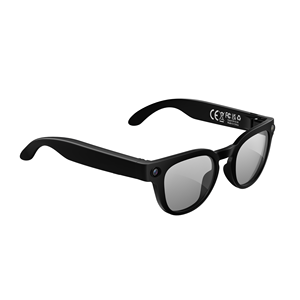
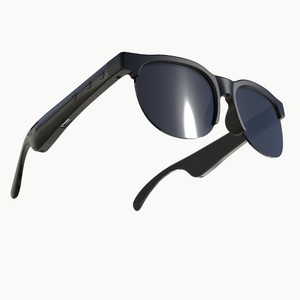
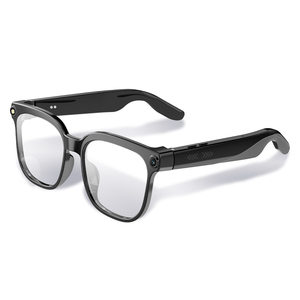
The assistive technology landscape across Australia, particularly in Melbourne and the surrounding Victorian metropolitan hubs, is undergoing a structural paradigm shift. Traditional physical mobility aids—such as white canes, static walkers, and unintegrated optical magnifiers—are rapidly converging with spatial computing, micro-optics, and real-time edge artificial intelligence. As an established OEM/ODM contract manufacturer specializing in advanced visual assistive technology and wearable AI spectacles, our engineering infrastructure is tailored to meet the exacting quality, safety, and regulatory benchmarks demanded by Australian healthcare distributors, NDIS registered providers, and occupational therapy networks.
Addressing Melbourne’s Unique Urban Navigation Infrastructure
Navigating the complex urban framework of Melbourne presents distinct environmental challenges for vision-impaired individuals and low-vision citizens. From the iconic, dense grid of the Melbourne CBD with its historic bluestone laneways and high-contrast shadow thresholds, to the multi-modal Public Transport Victoria (PTV) network—encompassing Yarra Trams, subterranean Metro Tunnel stations, and busy bus interchanges—standard passive mobility devices often fall short of delivering complete situational awareness.
Our OEM/ODM smart assistive spectacles incorporate high-dynamic-range (HDR) visual sensors coupled with localized neural computer vision. The system provides real-time auditory scene narration, head-height hazard detection, depth mapping, and immediate optical character recognition (OCR) for reading street signage, tram numbers, and building entrances. By processing scene geometry locally on low-power neural processing units (NPUs), our devices ensure sub-second response times without relying on continuous cellular connectivity in subterranean or low-signal areas across Victoria.
The Regulatory Framework: NDIS and TGA Compliance Standards
Procurement in Australia requires stringent adherence to safety and therapeutic efficacy standards. The Therapeutic Goods Administration (TGA) classifies electronic orientation and mobility devices under specific medical hardware frameworks, mandating certified manufacturing protocols, electromagnetic compatibility (EMC EN 60601-1-2), and biometric data privacy safeguards.
Furthermore, under the National Disability Insurance Scheme (NDIS), Capital Support funding for Category 3 (Customized Assistive Technology) and Category 4 (Complex AT Solutions) places a heavy emphasis on user-centric durability, ergonomic comfort, and measurable clinical outcomes. Our manufacturing facilities operate under strict ISO 13485 medical device quality management systems, providing white-label partners in Melbourne with full batch traceability, certified firmware architecture, and audited ethical supply chain guarantees required for government tenders and healthcare procurement.
On-Device Edge AI & Spatial Processing
Custom micro-NPU integrations enable real-time object classification, kerb detection, and facial prompt recognition locally without cloud latency or internet dependencies.
Directional Open-Ear Spatial Audio
Dual directional bone-conduction and micro-speaker options project crisp auditory feedback directly to the wearer while preserving 100% ambient situational ear hearing.
Instant Multilingual OCR Text Engine
Advanced optical character recognition optimized for immediate text-to-speech rendering, supporting print materials, medicine labels, menus, and digital displays.
Medical Grade Ergonomics & Materials
Biocompatible Swiss TR90 memory polymer frames weighing under 50g with customizable IPX5 water resistance for unpredictable Melbourne downpours.
White-Label iOS & Android SDKs
Fully open Bluetooth Low Energy (BLE) protocol suites and customizable mobile app frameworks allowing seamless brand integration and clinic portals.
TGA & ISO 13485 Certified Production
Rigorous quality controls, optical calibration benches, thermal dispersion testing, and drop-impact resistance tailored for clinical assistive device standards.
Localized Application Scenarios in Melbourne & Victorian Regional Networks
Understanding how assistive technology integrates into daily life requires analyzing real-world usage patterns across Melbourne’s diverse communities. Our OEM/ODM smart glasses are engineered to adapt dynamically to distinct operational environments:
1. Commuter Independence across Public Transport Victoria (PTV)
For individuals with age-related macular degeneration (AMD), glaucoma, or diabetic retinopathy, utilizing public transport independently is a key benchmark of mobility autonomy. Our custom vision algorithms are tuned to identify high-contrast elements unique to Victorian transit systems, such as yellow tactile ground indicators, platform edge warnings at Southern Cross and Flinders Street stations, and route numbers displayed on approaching trams and buses. The open-ear audio feedback ensures that critical audible announcements from platform speakers are never muffled.
2. Educational and Workplace Accessibility
Through partnerships with university accessibility departments (such as the University of Melbourne, Monash University, and RMIT) and corporate diversity initiatives, our ODM hardware can be pre-configured with dedicated workplace software profiles. These include fast whiteboard reading, printed document analysis, multi-column textbook parsing, and confidential meeting privacy modes where local encryption prevents sensitive workplace text from ever reaching external networks.
3. Low-Vision Clinical Rehabilitation Pathways
Leading low-vision agencies and rehabilitation providers—such as Vision Australia and Guide Dogs Victoria—require assistive tools that complement rather than disrupt existing orientation and mobility (O&M) training. Our smart eyewear functions as a secondary head-height sensor array that works alongside long white canes and guide dogs. It flags overhanging tree branches, structural scaffolding, and raised building steps that traditional ground-sweeping canes cannot detect, substantially lowering upper-body injury risks.
End-to-End ODM/OEM Manufacturing Capabilities
As a specialized original design manufacturer, we offer complete turn-key product lifecycle engineering from preliminary conceptual sketching to mass production assembly:
| Engineering Phase | OEM Customization Scope | Technical Implementation Standards |
|---|---|---|
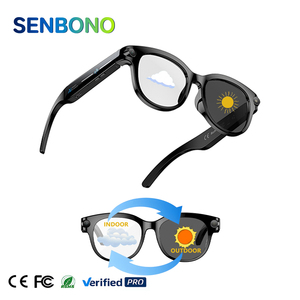
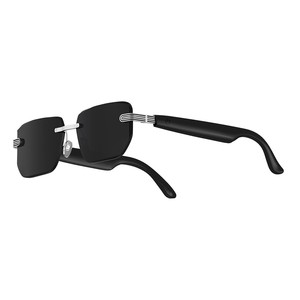
| Industrial & Optical Design | Custom frame geometry, lens tinting, clip-on filter modules, logo branding. | TR90 memory polymer, photochromic polycarbonate, blue-light filtering, Rx optical insert compatibility. |
| Printed Circuit Board (PCBA) | Custom chipset layout, NPU selection, dual microphone noise cancellation arrays. | Ultra-compact multi-layer HDI PCB, low-power BLE 5.3, high-density LPDDR RAM integration. |
| Firmware & AI Algorithms | Custom voice pack branding, localized accent neural TTS (Australian English voice packs), customized prompt phrasing. | Embedded Linux / RTOS architecture, encrypted local database storage, over-the-air (OTA) update security. |
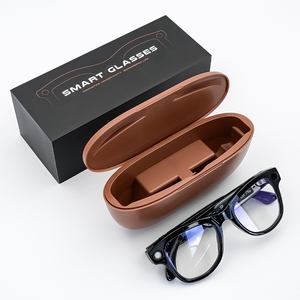
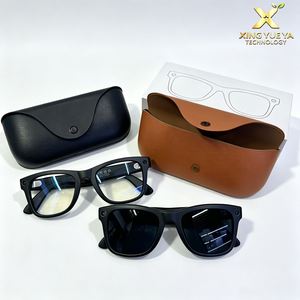
| Packaging & Accessories | Bespoke eco-friendly retail packaging, clinical storage cases, localized user manuals. | Full branding alignment, Braille embossed packaging elements, accessible quick-start audio guides. |
Our agile production lines allow for modular scaling, supporting initial low-volume clinical trial batches (MOQ starting at 500 units) up to full-scale commercial manufacturing exceeding 100,000 units per quarter. Every unit shipped undergoes rigorous multi-point optical sensor alignment, battery life strain testing, and drop tests to guarantee long-term field reliability under Australian environmental conditions.
Partner with a Leading OEM/ODM Mobility Aid Manufacturer
Expand your assistive device lineup in the Melbourne and broader Australian market. Contact our engineering team to request sample evaluation units, hardware specification sheets, and white-label manufacturing pricing schedules.
Get Catalog