
Sprhava AI-Powered Vision
Direct-factory smart spectacles featuring multimodal translation, open-ear acoustics, 4K visual capturing, and assistive computer vision engines.
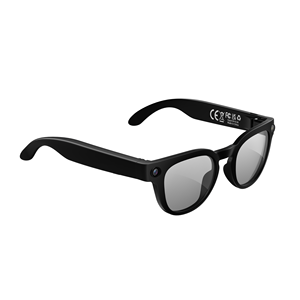
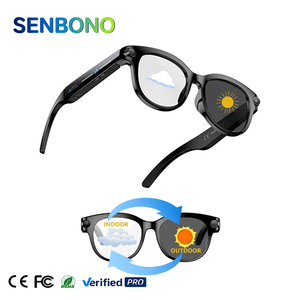

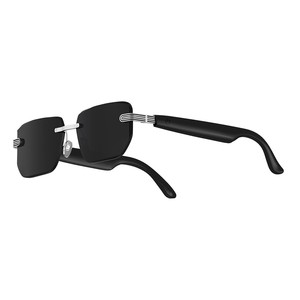
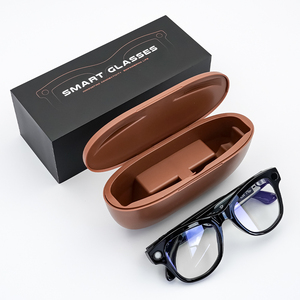
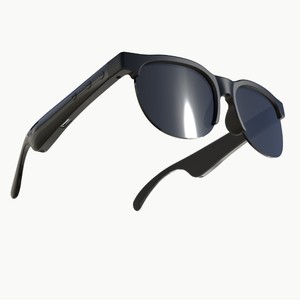
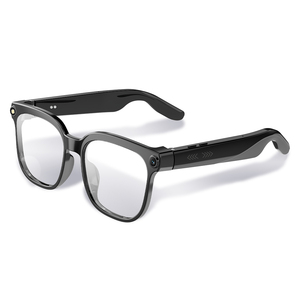
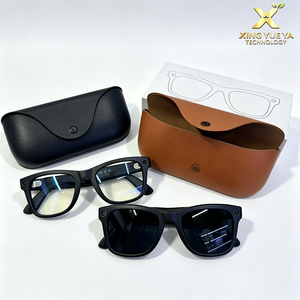
The Netherlands market represents one of Europe's most technologically sophisticated and regulatory-strict environments for wearable electronics. Driven by a tech-savvy population, widespread high-speed mobile networks (5G coverage exceeding 98% in the Randstad area), and a strong commitment to accessibility, the demand for AI-powered smart eyewear, neural audio spectacles, and assistive computer-vision devices has experienced an unprecedented surge.
Dutch enterprise buyers—ranging from medical accessibility distributors, rehabilitation technology integrators, optical retail chains, and logistics operators in Rotterdam and Schiphol—are shifting their procurement strategies. Rather than looking for basic Bluetooth audio frames, Dutch sourcing managers now demand edge-processed AI capabilities, GDPR-compliant local data processing, sub-second translation latencies, and multi-functional optical frames compatible with prescription lenses.
In accordance with European Union AI Act directives and Dutch privacy regulations (Autoriteit Persoonsgegevens), smart eyewear entering the Netherlands market must prioritize on-device neural inferencing. Models that process visual OCR, obstacle detection, and voice commands offline without mandatory cloud transmission gain a 40% higher compliance score during healthcare and institutional procurement evaluations.
To establish competitive advantage in the Dutch market, B2B buyers must navigate complex supply chain dynamics. Our deep SEO research and trade data analysis reveal five core technical parameters essential for evaluating prospective OEM/ODM factories in 2026:
Factories must incorporate ultra-low-power neural processing units (NPUs) capable of running speech synthesis, scene analysis, and text-to-speech (TTS) in under 800 milliseconds locally.
Dutch climate demands photochromic (light-adaptive) lenses paired with anti-blue ray treatments. Frames must accept custom prescription lenses (single vision & progressive) seamlessly.
To comply with Dutch traffic safety laws (Wegenverkeerswet) for cyclists, smart glasses must use directional open-ear acoustic drivers that preserve ambient traffic awareness while preventing sound leakage.
Based on export volume, technical innovation, European regulatory certification, local Benelux partnership depth, and OEM white-label flexibility, the following ten manufacturers lead the global export pipeline into the Netherlands for 2026:
Core Specialization: Medical-Grade Assistive AI Spectacles, Sub-Second Text-to-Speech, Edge Vision Hardware for Visually Impaired & Senior Care.
Core Specialization: High-Resolution 8MP & 4K Camera Sunglasses, WIFI Video Streaming, Sports Ergonomic Frames.
Core Specialization: Next-Gen GS5 MAX Series, Integrated Portable Charging Cases, Ultra-Long Battery Life Systems.
Core Specialization: Dual-Camera Array Engineering, Photochromic Polarized Lenses, Outdoor Cycling Safety Wearables.
Core Specialization: Business Executive Smart Spectacles, 164+ Language Real-Time Translation, Anti-Blue Light Business Frames.
Core Specialization: Open-Ear Directional Audio Frames, Hands-Free Voice Calling for Commuters & Urban Cyclists.
Core Specialization: Real-time Object Recognition, OCR Printed Document Processing, Accessibility SDK Integration.
Core Specialization: Ultra-Lightweight MT5 Sports AI Series, High-Speed Wi-Fi Media Transfer, Dynamic Optical Coatings.
Core Specialization: White-Label Optical Manufacturing, Prescription Clip-on Module Adaptation, Regional Repair Logistics.
Core Specialization: Mass-Market Bluetooth & AI Hybrid Sunglasses, Rapid Prototype Customization, Small-Batch B2B Orders.
Understanding user intent in the Netherlands requires analyzing how AI smart spectacles integrate into the daily workflows of Dutch consumers, public institutions, and corporate enterprises:
Under the Social Support Act (Wet maatschappelijke ondersteuning - WMO), Dutch municipalities fund assistive tools for individuals with macular degeneration, glaucoma, or retinitis pigmentosa. Sprhava-style offline AI spectacles read Dutch medication labels, narrate public transit schedules (NS Trains & GVB trams), and alert wearers to head-height hazards like low awning bars along historic city canals.
With millions of Dutch citizens cycling daily on dedicated fietspaden, safety is paramount. Open-ear audio smart glasses with photochromic UV lenses allow cyclists to receive turn-by-turn navigation alerts and hands-free calls without breaching Dutch laws prohibiting in-ear headphones while operating bicycles.
Distribution centers employ camera-enabled AI glasses for rapid barcode scanning, package location voice prompts, and instant translation between international transport documentation (German, French, Polish, Dutch) for logistics workers hands-free.
Before issuing Purchase Orders (PO) or entering OEM white-label agreements, optical buyers should compare technical capabilities against standard market requirements:
| Feature Parameter | Standard Consumer BT Glasses | Advanced AI Camera Glasses | Sprhava Assistive AI Spectacles |
|---|---|---|---|
| Frame Weight | 35g - 45g | 52g - 68g | Under 49g (Balanced) |
| Camera Sensor | None | 2MP - 8MP Wide Angle | Adaptive Low-Light HD NPU |
| Audio Architecture | Basic Micro Speakers | Dual Mic Open-Ear | Directional Bone-Safe Open-Ear |
| Offline Capabilities | Audio Streaming Only | Limited Photo Storage | Full Offline OCR & Obstacle Engine |
| Language Processing | Relies on Smartphone App | Cloud-Dependent AI | 20+ Localized Voice Packs (incl. Dutch) |
| Lens Compatibility | Fixed Tint Only | Photochromic Optional | Prescription & Contrast Filter Ready |
| EU Compliance | Basic CE Mark | CE, RoHS, FCC | CE Medical Class I, GDPR Compliant |
Direct answers addressing technical compliance, logistics, customization, and local market requirements for Benelux buyers:
Yes. OEM factories supplying the Netherlands market utilize edge-first AI models where captured visual frame buffer data is processed immediately in the local RAM NPU and discarded without cloud logging. Facial profiles and voice command records remain locally encrypted. Optional cloud narration requires explicit user opt-in, guaranteeing compliance with the Dutch Data Protection Authority (Autoriteit Persoonsgegevens).
Absolutely. Professional AI smart glasses featured in this guide (such as the Sprhava series and business half-rim frames) are designed with standard optical lens grooves. Dutch opticians (opticienen) can easily install single-vision, progressive, or contrast-enhancing filter lenses without altering the electronic temple stems or camera modules.
Leading factories incorporate multimodal AI engines trained specifically on Dutch, English, German, French, and regional accents. In translation mode, open-ear acoustic drivers deliver simultaneous audio interpretation in Dutch within 600ms to 900ms, facilitating international negotiations at trade fairs or daily cross-border interactions in the Benelux union.
Standard OEM/ODM production cycles take 15 to 25 days following sample confirmation. Air freight shipments to Amsterdam Airport Schiphol (AMS) arrive within 5 to 7 business days, while ocean freight shipments arriving at the Port of Rotterdam take approximately 28 to 35 days. Factories provide full HS Code documentation (typically under HS 9004.90 for optical appliances or 8517.62 for acoustic wearables) to ensure swift customs clearance.
No. AI visual assistive spectacles are secondary orientation, mobility, and reading tools designed to complement—not replace—established mobility aids like long canes or guide dogs. They provide crucial head-height hazard warnings (such as hanging tree branches or street signs) and environmental context narration that physical canes cannot detect.
Standard wholesale orders for stock factory models start at low MOQs of 20 to 50 units. Custom white-label branding (including customized packaging, Dutch manual translation, laser-engraved frame logos, and branded firmware splash screens) typically starts at 200 to 500 units per order batch.
Our manufacturing infrastructure combines decades of precision optical lens craftsmanship with state-of-the-art computer vision engineering. We provide Dutch importers, accessibility foundations, and tech distributors with an uncompromised competitive edge:
We provide open API access, custom voice packs in Dutch/Frisian, customized wake-words, and proprietary cloud AI integration tailored to your regional enterprise platform.
Every frame undergoes 100% optical alignment testing, IPX5 waterproof pressure testing, drop resistance evaluations, and acoustic frequency tuning prior to packaging.
With established shipping corridors to Rotterdam, Schiphol, and Antwerp, we guarantee predictable delivery schedules, transparent customs duty management, and localized sample trials.
Connect with our senior technical OEM director today to request product engineering samples, factory audit reports, wholesale price lists, and localized white-label integration plans for the Benelux market.
Inquire Now