
Export-Ready AI Visual Aid Product Portfolio
High-performance wearable smart spectacles engineered for low vision support, real-time spatial narration, and hands-free optical assistance.

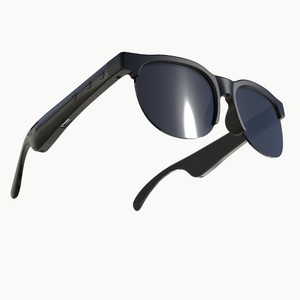
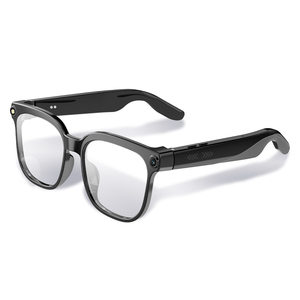
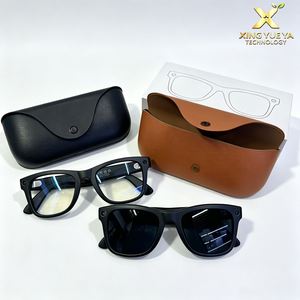
Executive Market Overview: The Visual Aid Ecosystem in Paris
An authoritative analysis of wearable assistive technology procurement, regulatory adoption, and supply chain integration across the Île-de-France region.
Demographic Shift & Demand Drivers in France
According to data from the Fédération des Aveugles de France and the French Ministry of Health, over 1.7 million individuals in France live with a visual disability, including approximately 207,000 who are profoundly blind or severely visually impaired. Within the densely populated Île-de-France region, Paris serves as the central node for specialized ophthalmic care, housing premier institutions such as the Hôpital National des Quinze-Vingts and the Institut de la Vision.
The demand for electronic orientation and mobility aids (EOMAs) and computer vision spectacles has accelerated rapidly due to an aging demographic experiencing age-related macular degeneration (AMD), diabetic retinopathy, and glaucoma. Sourcing teams, medical device importers, and optical retail procurement officers in Paris are actively seeking reliable manufacturing partners in China to deliver compliant, high-margin, next-generation visual assistive hardware.
Regulatory Compliance: European Accessibility Act (EAA 2025)
With the full enforcement of the European Accessibility Act (Directive 2019/882) taking effect in mid-2025, public sectors, transport authorities (such as the RATP), and healthcare institutions in Paris are under legislative mandates to provide accessible interfaces and sensory augmentation devices.
Suppliers from China must offer products that strictly align with European standards—specifically CE marking under the Medical Device Regulation (MDR EU 2017/745) Class I classification for visual aids, RoHS compliance, and EN 301 549 accessibility specifications. Our manufacturing lines implement rigorous quality controls, enabling Parisian distributors to achieve seamless registration on the French LPPR (Liste des Produits et Prestations Remboursables) for government reimbursement pathways.
Localized Application Scenarios across the Parisian Infrastructure
How AI-powered wearable vision aids solve real-world daily mobility and accessibility challenges across Paris urban environments.
RATP Transit & Metro Complex Navigation
Navigating major transit hubs like Châtelet–Les Halles, Gare du Nord, or Montparnasse presents severe physical and sensory obstacles for visually impaired commuters. Our AI smart glasses incorporate ultra-low latency camera modules and edge OCR engines capable of instantly capturing high-contrast overhead signs, platform numbers, and dynamic schedule boards in French, converting text into clear directional speech via open-ear audio transducers without blocking crucial ambient traffic noise.
Historic Urban Pedestrian Environments
The historic streets of Paris—such as the cobbled alleyways of Le Marais or the uneven pavement of Montmartre—present constant tripping hazards, unexpected sidewalk cafe barriers, and bollards. Integrated depth-segmentation vision algorithms flag waist- and head-height obstacles in real time, serving as an electronic travel aid that works in perfect synergy with traditional white canes or guide dogs.
Retail Autonomy & Document Reading
Whether purchasing groceries at a local Monoprix, identifying European currency notes, or reading handwritten menus at Parisian bistros, our smart glasses utilize on-device computer vision models to execute real-time text-to-speech reading and product label parsing in native French, preserving user privacy without requiring continuous cloud processing.
Key Industry Trends Shaping the French Market
Strategic insights for French B2B buyers evaluating Chinese manufacturing capabilities in wearable assistive intelligence.
1. Transition to On-Device Edge AI & GDPR Compliance
Privacy regulations enforced by France's CNIL (Commission Nationale de l'Informatique et des Libertés) demand strict protection of personal visual data. Modern visual aids are shifting from cloud-dependent streaming to high-efficiency edge processing. By deploying localized lightweight vision models on ultra-low-power silicon, our smart glasses execute face recognition, scene narration, and document scanning directly on the frame. Visual data is processed and immediately discarded, ensuring 100% GDPR compliance for European institutions.
2. Ergonomic Lightweight Design (<50g Frame Weight)
Historically, electronic visual aids were bulky, heavy, and aesthetically stigmatizing. French consumer preference strongly favors sleek, fashionable optical frames that blend seamlessly into daily life. Advanced titanium-polycarbonate alloys, split battery temple architecture, and micro-optical camera modules allow Chinese manufacturers to produce functional AI smart spectacles weighing under 49 grams—enabling comfortable all-day wearability.
3. Prescription Lens Integration & Photochromic Tech
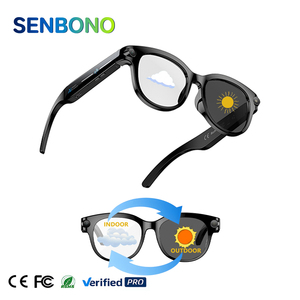
Over 80% of visually impaired individuals in France require custom optical correction or specialized contrast-enhancing filters to manage light sensitivity (photophobia). Modern B2B supply lines must accommodate prescription lens cutting (single vision, progressive, and anti-blue light) directly into smart frames, alongside photochromic lenses that automatically adjust tint when moving between exterior Parisian sunlight and interior metro lighting.
4. Multimodal Generative Scene Description (VLM Integration)
Moving beyond simple OCR and barrier detection, the integration of Vision Language Models (VLMs) allows smart glasses to provide contextual, natural-language descriptions of complex surroundings upon user voice inquiry. A wearer standing at a Paris crosswalk can ask, "Is the pedestrian signal green?" or "Is there an open seat nearby?" and receive immediate, natural French voice narration.
Why Partner with China's Premier Visual Aid Exporter
End-to-end OEM/ODM engineering expertise, stringent ISO 13485 quality systems, and robust supply chains dedicated to European distributors.
ISO 13485 Certified Production
Our state-of-the-art manufacturing facilities operate under strict medical device quality management standards. Every unit undergoes automated optical alignment, thermal stress testing, optical frame torque verification, and IPX5 moisture resistance testing before export.
Deep OEM/ODM Customization
We empower French optical brands and assistive technology vendors with white-label branding, customized localized firmware (native French TTS models), custom packaging design, and bespoke SDK integration for existing health platform applications.
Direct Express Logistics to Île-de-France
Established DDP (Delivered Duty Paid) logistics pipelines ensure seamless door-to-door delivery directly to warehouses in Paris, Charles de Gaulle (CDG) logistics zones, or regional distribution hubs across France with full customs clearance support.
Technical Comparison Matrix for B2B Sourcing
Detailed hardware and software specs across our core visual aid series for clinical and commercial evaluation.
| Model Series | Camera & Vision | Audio System | Battery Life | Weight | Key Feature | LPPR Pathway |
|---|---|---|---|---|---|---|
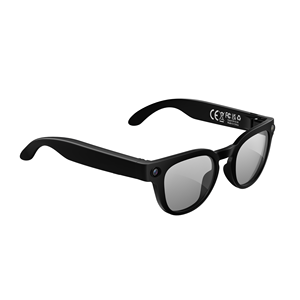
| New Vision MT3 | 8MP Ultra-Wide HD | Open-Ear Directional | 4.5 Hours Active | 48g | Touch Assistant & Fast Charge | Class I Medical |
| SENBONO M89 | 2MP Dual Camera | Dual Stereo Speakers | 290mAh (5 Hours) | 52g | IPX5 Water Resistant Photochromic | Class I Medical |
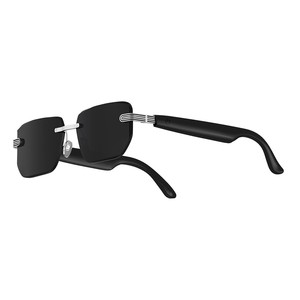
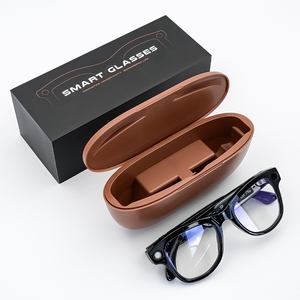
| GS5 MAX 2026 | 8MP 4K Video Optics | Noise-Canceling Audio | With Charging Case (18h) | 50g | High-Speed WiFi & Charging Dock | Class I Medical |
| MT5-Ultra AI | 8MP 1080P Low-Light | HD Acoustic Transducer | With Charging Case (20h) | 49g | Ultra-Fast On-Device French OCR | Class I Medical |
Frequently Asked Questions for French B2B Buyers
Clear, definitive guidance on import compliance, quality assurance, and distribution partnerships in Paris.
Our smart glasses are equipped with custom offline French NLP (Natural Language Processing) and OCR engines specially optimized for French typography, including accented characters (é, è, à, ç). Voice prompts and text-to-speech feedback utilize natural-sounding French voice models with adjustable speech rates tailored for low-vision users.
All exported models come complete with European CE Declaration of Conformity (CE-MDR Class I for visual aids), RoHS 2.0 safety reports, REACH chemical compliance for skin-contact frame materials, RED (Radio Equipment Directive) test reports, and UN38.3 battery safety documentation required by French customs and health agencies.
Yes. As CE-marked Class I visual assistive devices, our hardware is designed to meet the technical criteria established by the French Haute Autorité de Santé (HAS) for inclusion under LPPR reimbursement codes for low-vision optical equipment, facilitating subsidization through Sécurité Sociale and private mutuelles.
We offer flexible sourcing tiers: standard wholesale sample orders start at as low as 10 units for evaluation by local clinics and distributors. White-label OEM projects with custom packaging and firmware branding typically begin at 500 units, supported by dedicated engineering support teams.
We provide a standard 24-month manufacturer warranty on all core optical and electronic components. For high-volume regional distributors in Île-de-France, we supply modular replacement components (temples, frames, charging modules) and offer direct technical support to streamline localized RMA processes.
Expand Your Visual Aid Portfolio in Paris & Europe
Collaborate with China's leading OEM/ODM visual assistive technology manufacturer. Request technical whitepapers, sample evaluation units, and wholesale distribution pricing today.