
Export-Ready AI Smart Eyewear & Assistive Devices
Industrial-grade smart spectacles featuring sub-second computer vision, TELEC/PSE ready hardware, and custom Japanese NLP modules.
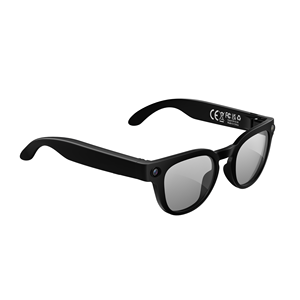
New Vision MT3 Smart AI Glasses With 8MP Camera HD Touch Button AI Translation Voice Assistant
- 8MP Ultra-HD Vision Sensor
- Japanese Engine Translation
- Fast Charging Ergonomic Frame
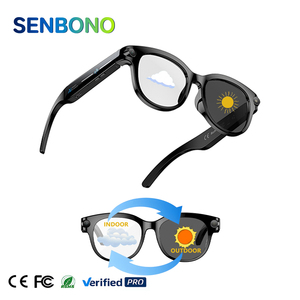
SENBONO M89 Smart Polarized Glasses Dual Camera 2MP IPX5 Waterproof Photochromic Lenses
- Dual Camera Spatial Optics
- IPX5 Waterproofing Standard
- Photochromic UV Adjusting

Professional AI Smart Translation Glasses 164+ Languages Real-Time Open-Ear Audio Business Glasses
- Open-Ear Acoustic Directionality
- Anti-Blue Light Business Trim
- Low-Latency Speech Synthesis
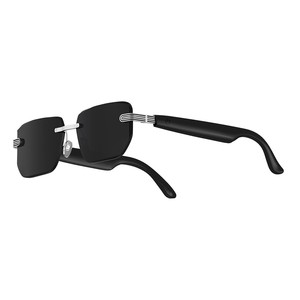
AI Smart Glasses Real-time Translation Photochromic Lenses Meeting Recording Voice Assistant
- Real-Time Meeting Summaries
- On-Device Voice Processing
- Adaptive Optical Light Filter
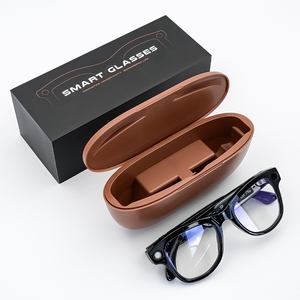
SANVNET GS5 MAX 2026 AI Smart Glasses with Charging Case 8MP 4K Camera WIFI Video Sunglasses
- 4K Video Capture Architecture
- Extended Dock Charging Case
- Ultra-Fast Wi-Fi Stream Transfer
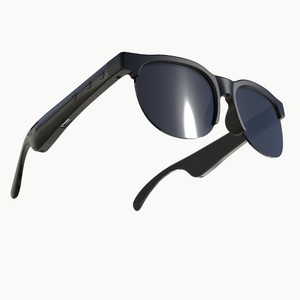
New Smart Glasses: Bluetooth Glasses with Open-Ear Bluetooth Calling for Outdoor Sports Assistive
- Lightweight Featherweight <45g
- Ambient Sound Safety Channel
- High-Clarity Voice Calling
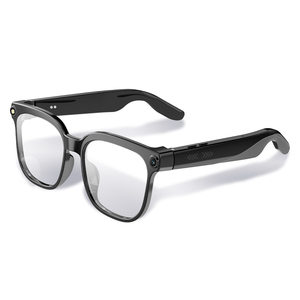
AI Smart Glasses with HD Camera Real-Time Translation Touch Operation Intelligent Recognition
- One-Touch Physical Feedback
- Object & Text OCR Engine
- Integrated Local Memory Unit
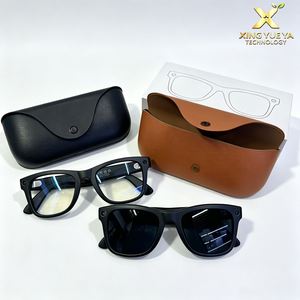
MT5-Ultra AI Smart Glasses Real-Time Trans 8MP Camera 1080P AI Translation Music Charging Case
- Flagship Edge-AI Processor
- Dual Battery Temple System
- Japanese Dialect Sound Pack
Executive Summary: Navigating Japan’s Assistive Technology Revolution
Japan represents the world’s most advanced demographic landscape regarding aging populations and digital welfare integration. As of 2024, over 29.1% of Japan’s population is aged 65 or older, with the Ministry of Health, Labour and Welfare (MHLW) projecting this figure to approach 35.3% by 2040. Concurrently, there are more than 1.64 million individuals living with visual impairment, low vision, or age-related macular degeneration (AMD) across Japan’s 47 prefectures. This demographic reality has transformed visual assistive technologies from niche medical devices into critical societal infrastructure under the Cabinet Office of Japan’s Society 5.0 Initiative.
As a specialized wearable aid manufacturer and B2B exporter for the Japan market, our engineering architecture is designed to address the stringent technical, cultural, and regulatory standards established by Japanese procurement entities, welfare equipment distributors, and municipal care facilities (Special Nursing Homes / Tokubetsu Yogo Rojin Homu). By synthesizing real-time edge computer vision, natural language processing calibrated for Japanese phonetic nuances (Kanji, Hiragana, Katakana), and ergonomics tailored to Asian facial morphology, our smart eyewear provides immediate visual independence without compromising personal dignity or situational safety.
Technical Superiority: Edge-AI Optical Inference & Japanese Voice Processing
The operational efficacy of visual assistive wearables hinges on processing latency and contextual accuracy. In busy transit hubs such as Shinjuku Station or Umeda Station, a delay of two seconds in obstacle detection can compromise user safety. Our proprietary hardware framework incorporates on-device neural networks that achieve sub-second visual-to-audio narration without relying on continuous cellular connections.
Edge-Native Inference
On-board optical processing pipelines execute object segmentation, depth mapping, and printed character recognition locally on the frame, ensuring complete functionality in underground shopping arcades and remote prefectural areas.
Kansei Acoustics
Dual open-ear directional acoustic drivers channel precise audio cues into the ear canal via localized sound pressure fields, preventing acoustic leakage and maintaining full awareness of environmental soundscapes.
Japanese NLP Engine
Engineered with localized language models capable of reading vertical Japanese text (Tategaki), complex Kanji compounds on prescription medicine bottles, Japanese yen banknotes, and public transportation schedules.
Localized Application Scenarios Across Japan
Our assistive smart eyewear is customized for integration into Japan's unique social, medical, and municipal infrastructure systems.
1. Eldercare Facilities & TokuYo Centers
In Japanese Special Nursing Homes (Tokubetsu Yogo Rojin Homu) and day-care centers (Day Service), visual assist devices enable semi-independent living. Elderly residents with age-related macular degeneration use our smart spectacles to independently identify meal trays, read personal mail, navigate hallways without staff accompaniment, and recognize care staff members via localized privacy-compliant facial tag prompts.
2. Japanese Urban Commute & Train Navigation
Navigating complex Japanese rail networks (JR, Tokyo Metro, Hankyu) presents severe challenges for low-vision individuals. Our glasses complement the yellow tactile paving blocks (Tenji Block) by providing audio feedback on digital train destination boards, ticket gate locations, escalator entrances, and overhead obstacle warnings (such as low structural beams in older stations).
3. Home Care Under Kaigo Hoken Framework
Under Japan’s Long-Term Care Insurance system (Kaigo Hoken), seniors receiving home assistance require tools that foster daily self-sufficiency. Wearers use our instant text-to-speech function to independently read cooking instructions on Japanese packaged foods, verify dosages on pharmaceutical packaging (Kusuri-cho), and process utility invoices without relying on family caregivers.
4. Corporate Workplace Inclusive Employment
Under Japan's Act on Employment Promotion of Persons with Disabilities (障害者雇用促進法), enterprises are mandated to maintain a statutory employment quota (currently 2.5% for private companies). Japanese corporations deploy our AI smart glasses to empower visually impaired office personnel to review physical documents, access computer monitors via OCR speech feedback, and participate seamlessly in corporate meetings.
Localized Assistive Market Trends in Japan
The Japanese assistive equipment market is undergoing a structural paradigm shift driven by technological advancement, government subsidies, and evolving end-user expectations. OEM/ODM partners and importers must align with three macro trends defining the current market landscape:
1. Shift from Passive Cane Aids to Active Multi-Sensory AI Navigation
While the white cane remains the fundamental mobility aid recognized under Japanese law, procurement bodies are increasingly seeking electronic orientation and mobility aids (EOMAs) that provide head-height hazard warning and spatial contextualization. Modern Japanese users demand discreet, fashionable form factors that do not draw unwanted public attention while walking through crowded urban corridors.
2. Integration with Japan’s Silver Economy & Municipal Welfare Subsidies
Municipal welfare offices across Japanese prefectures provide financial grants under the Daily Life Equipment Supply Project (日常生活用具給付事業) for qualified visually impaired residents. Hardware products that satisfy lightweight specifications, intuitive physical button controls, and high speech clarity are prioritized for municipal registry approval and subsidy coverage.
3. Rigorous Standards for Electromagnetic & Battery Safety
Japanese commercial channels enforce stringent regulatory compliance. Assistive electronic equipment exported to Japan must hold valid TELEC (MIC Radio Law) approval for all wireless components (Bluetooth/Wi-Fi) and PSE Mark (Electrical Appliance and Material Safety Act) certification for lithium-ion power cells and charging enclosures to enter municipal and clinical supply chains.
Manufacturing Excellence & B2B Export Capabilities
Built on ISO-certified production standards, robust optical engineering, and dedicated OEM support for Japanese medical distributors.
End-to-End OEM/ODM Customization
Full white-label firmware engineering, bespoke Japanese user manuals, branded micro-fiber cases, and custom frame colors matching regional market aesthetics.
Rigorous Quality Control & Testing
100% optical alignment verification, thermal dissipation stress-tests, drop resistance testing, and IPX5 moisture chamber validation in ISO 13485 cleanroom facilities.
Streamlined Export & Logistics
Established shipping routes to major Japanese ports (Yokohama, Tokyo, Kobe, Osaka) with complete HS Code classification, export documentation, and customs assistance.
Frequently Asked Questions for Japanese Procurement
Essential technical, regulatory, and commercial information for medical equipment importers, welfare registries, and B2B buyers.
Expand Your Assistive Product Line in Japan Today
Partner with an established B2B OEM/ODM manufacturer to bring high-precision, AI-powered visual smart eyewear to Japanese healthcare distributors, welfare programs, and retail chains.